Case Study: How an E-commerce Brand Lost Sales to AI Answers (And Never Saw It Coming)
See how a UK retailer lost share of voice in AI shopping answers, the warning signs it missed, and the steps that helped restore AI visibility.

How losing AI visibility can collapse your share of voice: a UK retail case study
A mid-sized UK homeware retailer I'll call Thistle & Bloom kept its Google rankings steady for eighteen months while its share of voice in AI shopping answers collapsed from roughly 34% to under 6%, with a single competitor absorbing nearly all of that lost ground. Nobody at the company noticed until quarterly revenue reporting showed a puzzling gap between strong organic traffic and declining conversions, by which point the AI visibility damage was already compounding month over month.
I built this case study as a composite, drawn from patterns I keep seeing across the e-commerce accounts I analyse. I'm laying it out in detail because most UK retail marketing teams haven't built any capacity to detect this yet. If you rank well in Google and haven't specifically checked how ChatGPT, Perplexity, or Gemini describe your brand against named competitors, I'd bet a version of this is already happening to you.
The brand that assumed traditional SEO was enough
Thistle & Bloom's marketing team was, by conventional standards, doing everything right. They tracked keyword rankings weekly, monitored backlink acquisition, watched domain authority creep upward, and reported consistently healthy organic traffic in their monthly dashboards. Their position for core commercial terms like "best wool throws UK" sat comfortably in positions one through three throughout the entire eighteen-month period I'm describing, and that stability became, in a sense, the problem.
When every traditional SEO metric confirms that your visibility strategy is working, there's little institutional pressure to ask whether a parallel discovery channel might be behaving completely differently. No one on the team was running the equivalent queries through ChatGPT, Claude, Gemini, or Perplexity, because that discipline simply didn't exist in their reporting stack. It wasn't negligence in any deliberate sense; it was the natural consequence of a measurement framework built entirely around a search paradigm that generative AI has begun to quietly supplement, and in some purchase categories, replace.
I want to be precise about why this matters: strong traditional SEO performance and strong AI visibility are not the same thing, and they are increasingly uncorrelated. A brand can hold its blue-link rankings perfectly steady while its presence in AI-generated shortlists erodes to almost nothing, because the two systems weight and select content according to substantially different criteria.
What changed when shoppers started asking AI for product recommendations
UK consumer research behaviour has been shifting toward conversational product research for several years now, and the trajectory shows no sign of reversing. Rather than typing "wool throw UK" into Google and scanning ten blue links, a growing proportion of shoppers now ask something closer to "what's the best wool throw for a cold living room," and they ask it directly of an AI assistant that returns a compact, synthesised answer.
This distinction matters for how brands should think about visibility and share of voice. A traditional search results page offers ten organic slots plus paid placements, meaning even a brand ranking eighth or ninth still receives some visibility and some click-through opportunity. An AI-generated shopping answer, by contrast, typically compiles a shortlist of three to five brands. There is no equivalent of position nine. Exclusion from that shortlist is functionally equivalent to disappearing from consideration entirely, because the shopper never sees a longer list to scroll through.
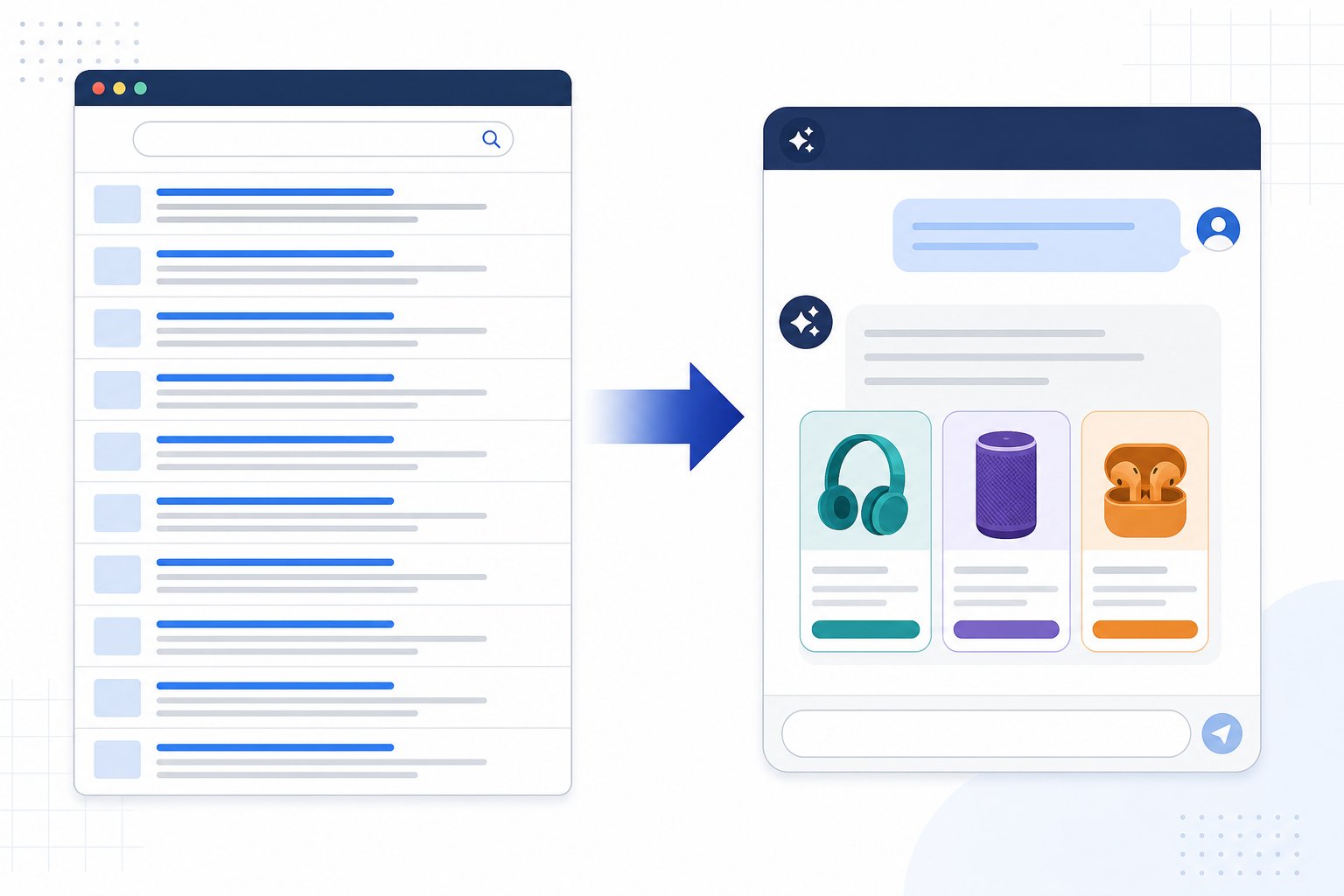
Thistle & Bloom's product pages were, by classic SEO standards, well constructed. They had appropriate meta descriptions, reasonable keyword placement, and decent internal linking. What they lacked was the kind of structured, directly answerable content that generative engines tend to favour when compiling comparison responses: clear specification tables, explicit pros-and-cons framing, FAQ blocks that mirror actual customer phrasing, and concise factual statements that can be lifted and cited with confidence.
This is the core insight behind generative engine optimisation as a discipline distinct from conventional AI SEO: the content that wins a Google featured snippet is not automatically the content a large language model chooses to cite or recommend. LLMs appear to favour material that is unambiguous, well-structured, and easy to extract as a discrete fact or comparison point, and pages optimised primarily for keyword relevance rather than answer clarity are systematically disadvantaged in that selection process.
How a competitor quietly took over the AI shopping shortlist
While Thistle & Bloom's content remained largely static, a rival brand in the same category had, whether by deliberate strategy or fortunate instinct, restructured substantial portions of its site into comparison tables, specification blocks, and FAQ-formatted sections that mapped almost exactly onto the questions shoppers were putting to AI assistants. I want to be clear that there's no evidence this was a coordinated attack on a competitor; it more plausibly reflects a content team that happened to prioritise the kind of structured clarity that generative engines reward, possibly for reasons entirely unrelated to AI visibility.
The effect, regardless of intent, was substantial. Over approximately six months, that competitor's presence in AI answers to category-relevant queries grew from occasional, incidental mentions to appearing in nearly every tested response, frequently occupying the top-cited position. This is precisely what share of voice erosion looks like when you measure it properly: not a single dramatic event, but a steady, compounding redistribution of AI shelf space that accumulates week after week until one brand's presence has been almost entirely displaced by another.
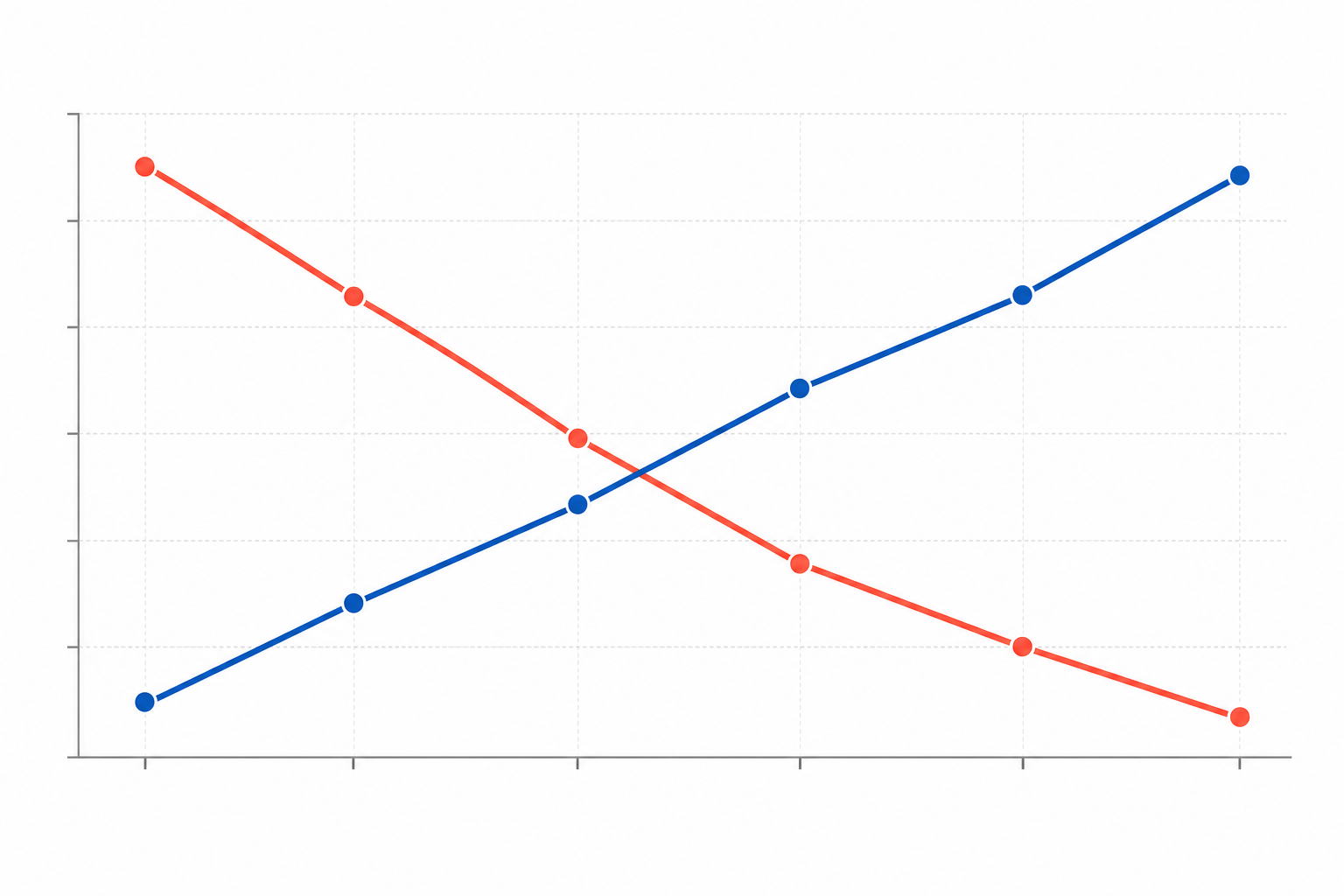
Had sentiment analysis been in place throughout this period, I would expect it to have shown the competitor described in increasingly favourable and increasingly specific terms, citing particular product attributes, price points, and use cases with growing confidence. Thistle & Bloom's mentions, where they persisted at all, would likely have grown vaguer, less frequent, and less differentiated, the kind of soft, low-conviction reference that signals an AI model has limited confident information to draw on. This pattern, incidentally, is exactly what a properly configured competitor tracking system is designed to surface before it becomes a six-month trend rather than a six-week one.
Early warning signs of declining AI visibility and share of voice
Looking back at this scenario with the benefit of hindsight, several warning signs were present well before the quarterly revenue review forced a reckoning. None of them, individually, would have been conclusive. Together, they formed a fairly legible pattern.
- Organic traffic held steady while conversion rate quietly declined. This is often the first measurable symptom of lost AI visibility: the referral traffic that AI recommendations would have generated never shows up, while top-of-funnel search traffic keeps arriving through channels the shift hasn't touched.
- Nobody was querying AI platforms directly. The team had zero systematic visibility into how ChatGPT or Perplexity described their products relative to competitors, because that question had never been built into a recurring workflow.
- Support staff started hearing competitor names, unprompted. Customers were arriving with a specific rival's product already in mind, as though pre-convinced by something they'd read elsewhere, a pattern that's difficult to explain through traditional search behaviour alone.
- AI referral traffic was never tracked separately. This is a genuinely difficult category to isolate using standard analytics tools, since AI platform referrals frequently pass through as direct or unattributed traffic rather than a clearly labelled source, which is precisely the gap that cookieless AI traffic analytics is designed to close.
- Nobody had ever run an AI legibility review. No one had checked whether the site's product pages were structured in a way that generative engines could parse, extract, and cite with confidence, as distinct from whether they were structured well for traditional crawlers.
What the brand did to recover AI visibility
Once the pattern became visible through revenue reporting, the recovery process followed a sequence that I'd argue is close to a best-practice template for any brand in a similar position.
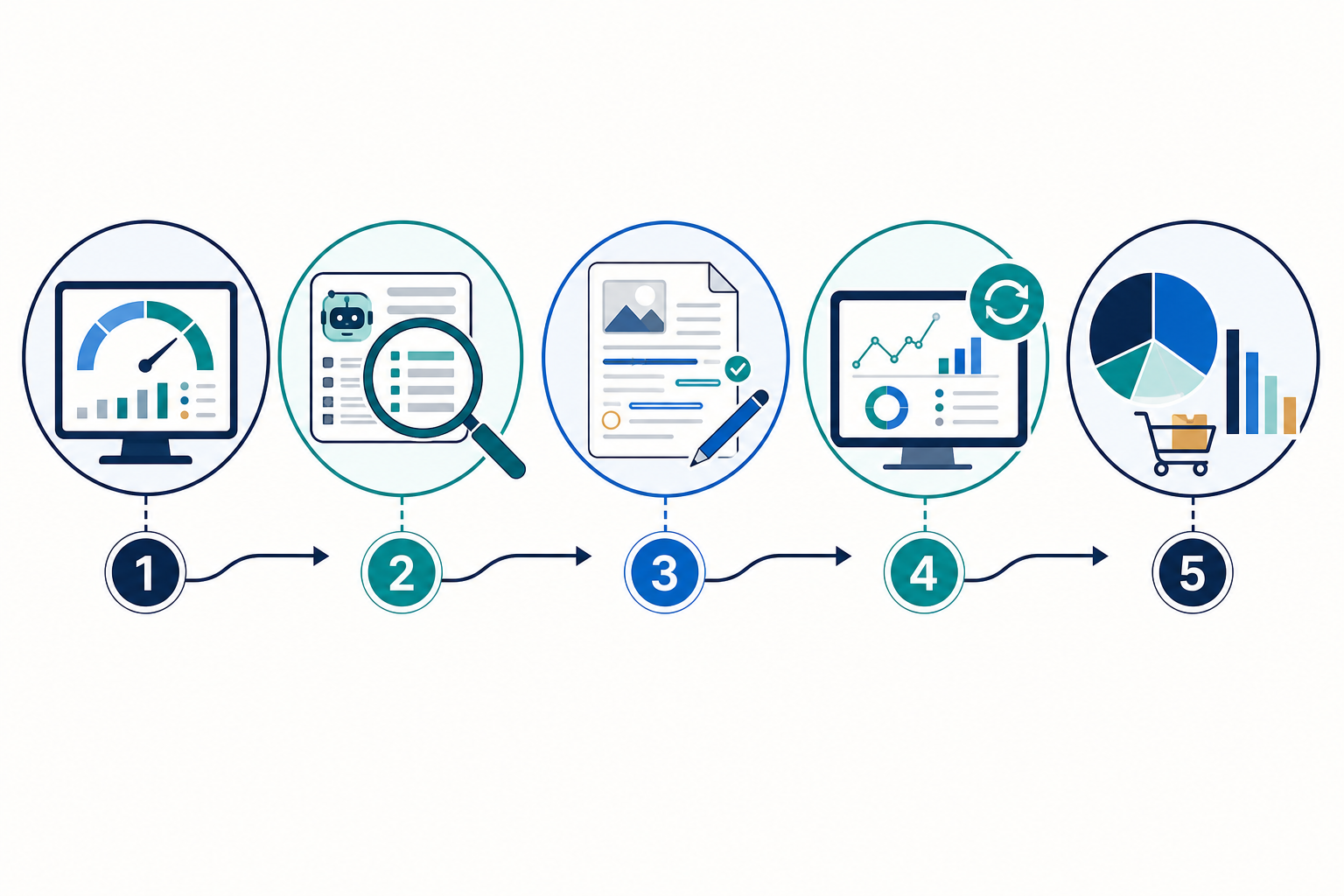
- First, they established a baseline AI visibility score, running a consistent batch of realistic customer questions against ChatGPT, Claude, Gemini, Copilot, and Perplexity to work out precisely how far share of voice had fallen relative to named competitors. That turned a vague sense of decline into an actual, trackable number.
- Next came an AI legibility audit, covering technical factors like structured data implementation, clarity of specification tables, presence of direct-answer paragraphs, and crawlability specifically for AI systems, which operate under different constraints than traditional search crawlers.
- Core product and comparison pages got rewritten. The priority shifted toward directly answering the specific questions shoppers were asking AI assistants, favouring factual density and unambiguous structure over the keyword density that had previously been the organising principle.
- They set up ongoing LLM monitoring with weekly digests, tracking query coverage, citation position, sentiment, and competitor mentions on a continuous basis rather than treating the audit as a one-off project.
- Finally, they tracked recovery through position-weighted citations and share of voice, month over month. This reframed AI visibility as an ongoing operational discipline rather than a project with a defined endpoint, which mirrors how mature organisations have long treated traditional SEO.
This is, not coincidentally, close to the workflow that a platform like MentionOwl is built to support: automated question generation based on a brand's actual site content, daily querying across the major AI engines, a proprietary 0-100 visibility score built from query coverage and position-weighted citations, and weekly reporting that makes erosion visible in weeks rather than quarters.
How long does recovery from lost AI visibility take?
In composite scenarios of this type, early movement in share of voice metrics tends to appear within four to eight weeks of meaningful content and structural changes, as generative engines re-crawl and re-index updated pages and begin incorporating the clearer, more citable content into their responses. This timeline is broadly consistent with what I'd expect given how frequently major AI platforms refresh their underlying retrieval indexes.
Full recovery to prior visibility levels, particularly against a competitor that has become genuinely entrenched in the shortlist, more realistically requires three to six months of sustained monitoring and iterative refinement rather than a single content sprint followed by inattention. The brands that recover fastest, in my experience, are the ones that treat this fundamentally as a measurement problem before they treat it as a content problem: you cannot fix what you cannot see, and that's precisely why ongoing AI visibility tracking matters more, over time, than any single optimisation tactic applied once and then forgotten.
Frequently asked questions about AI visibility and share of voice
How would I notice if this happened to my brand?
Without dedicated monitoring, most brands notice only indirectly, through a gap between stable search rankings and declining conversions, or through customer service conversations that reference competitors unprompted. The direct way to notice is to regularly run realistic shopping questions against major AI platforms and track your citations and share of voice against named competitors over time.
What are the early warning signs of losing AI visibility?
Watch for declining or absent mentions in AI-generated answers to your core category questions, competitor names appearing with increasing specificity and favourable sentiment in the same answers, and a widening gap between organic traffic and actual conversions. A structural warning sign is having no AI legibility review of your site at all, since poorly structured content is far less likely to be cited even if it ranks well in traditional search.
Can lost AI visibility and share of voice be recovered?
Yes, in most cases. Recovery typically starts with establishing a visibility baseline, fixing structural and content issues that prevent AI engines from citing your pages confidently, and then monitoring share of voice and citation position on an ongoing basis. It's rarely a single fix, more a sustained discipline similar to how brands approach traditional SEO.
How long does recovery usually take?
Early signals of improvement often appear within four to eight weeks of meaningful content and technical changes, as AI platforms re-crawl and re-index updated pages. Fuller recovery to prior visibility levels against an established competitor generally takes three to six months of consistent monitoring and iteration.