Sentiment Matters: Why AI Mentions Aren't Enough for Founders
AI mentions don’t always mean endorsement. Learn how UK founders can track sentiment, spot negative framing and turn AI visibility into conversions.

AI mentions vs recommendations: tracking sentiment behind AI visibility
A practical guide for UK founders on why being named by ChatGPT, Gemini, or Perplexity isn't the same as being endorsed, and how to tell the difference.
Being mentioned by ChatGPT, Gemini, or Perplexity isn't the same as being recommended. I've spent months going through AI-generated responses to purchase-decision queries, and the pattern holds up: these models frequently surface brands using neutral, hedging, or subtly negative framing. To be precise about what that means, it's a directional signal worth watching, not proof that any single mention has cost you a sale. For solo founders and small UK businesses, tracking AI visibility without also tracking sentiment means you could be celebrating exposure that's quietly working against you.
This is the blind spot I see most often among founders who've just started paying attention to how AI platforms describe their business. They run a query, spot their brand name in the response, and treat it as a win. I get the instinct: after years of SEO where any ranking felt like progress, a mention feels like validation. But AI search doesn't behave like traditional search, and that difference matters enormously if you're relying on ChatGPT citations, Perplexity answers, or Gemini summaries to bring in qualified leads.
What are AI mentions, and how do they differ from recommendations?
Founders often conflate two very different outcomes when reviewing AI responses, so it's worth being precise about the terminology.
An AI mention is simply the appearance of your brand name within an AI-generated answer, regardless of context or tone. This could happen in passing, your name listed alongside four competitors in a "here are some options" response, or comparatively, where you're named specifically to be contrasted against something the AI treats as superior. Either way, a mention only confirms that your business was surfaced as relevant to the query. It says nothing about trust.
A genuine recommendation positions your brand as a strong fit for the user's specific need, using affirmative language: "X is particularly well-suited for small teams because..." Most AI responses actually fall somewhere between these two poles: plain inclusion, a qualified mention with a caveat attached, a strong-fit description with minor reservations, or an explicit recommendation.
A caveat isn't automatically a red flag. An AI noting that a product "works best for teams under ten people" is offering fair, useful qualification, not damaging your reputation. The problem isn't caveats themselves; it's caveats that misrepresent, understate, or redirect attention towards a competitor without basis.
When you type a query into ChatGPT and read the response, there's no scoring system in front of you. No indicator of tone, no flag distinguishing a fair caveat from a redirect. You either see your name or you don't, and that present-or-absent framing is exactly how most people read traditional search results. It's natural to import that mental model into AI search, but it obscures the more important variable: how you were framed.
This is why MentionOwl's visibility score weighs position within the response (named first or buried in a list) alongside context, sentiment category, and how the framing compares with competitor mentions in the same answer. To be transparent about the method: we classify each mention into one of five bands, explicit recommendation, strong fit, qualified mention, neutral inclusion, or negative/comparative redirect, using a combination of rule-based language detection and human review. Tone classification is genuinely subjective, and no automated system gets it right every time.
A brand mentioned once with strong endorsement can outperform a brand mentioned three times with lukewarm language. Raw AI mention frequency without context is a misleading metric on its own.
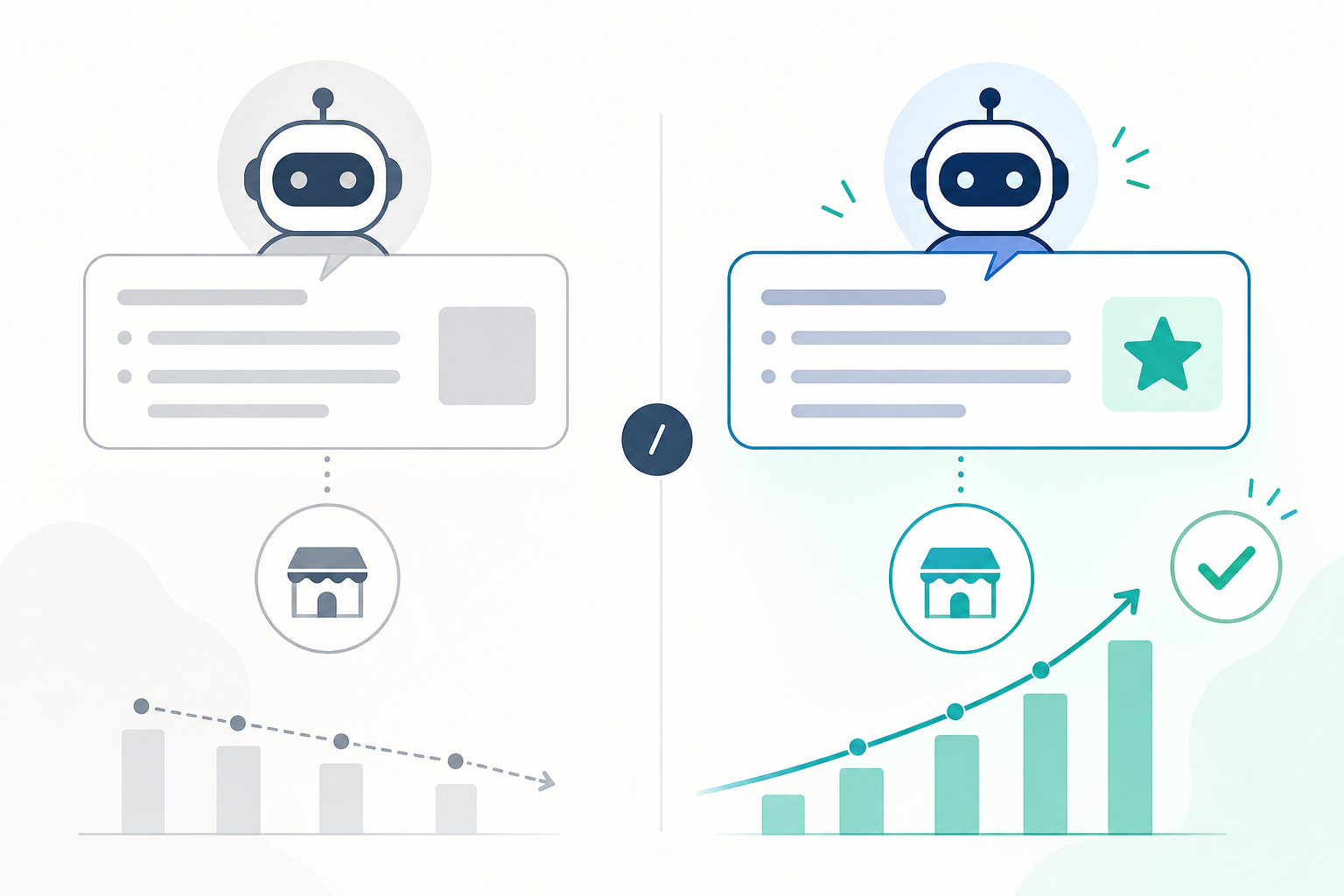
How AI tone can undercut your brand visibility
To understand why tone varies even when product quality doesn't, it helps to separate three things that often get blurred together: what a model learned during training, what it retrieves live from the web when answering a query, and what it generates by inference when neither source is definitive.
Platforms differ here. Perplexity and Copilot lean heavily on live retrieval and cite sources directly, while ChatGPT and Gemini blend trained knowledge with retrieval depending on the query. The practical effect is similar across all of them: the response tends to reflect aggregated web sentiment, including Trustpilot and G2 reviews, Reddit and niche forum threads, and comparison articles written by affiliate marketers, rather than the polished narrative on your own website.
Here's a concrete, illustrative example based on a pattern I keep running into. The wording below is paraphrased rather than a verbatim capture, since exact outputs shift between sessions. Asked "what's a good invoicing tool for a UK sole trader," a model might respond: "X is a solid choice, though some users report it's less feature-rich than Y, which has become the more established option for freelancers."
Nothing here is necessarily false. But the sentence structure directs attention towards Y, using X mainly as a stepping stone to the comparison. That's the pattern worth watching for, not any single hedge in isolation.
Comparative framing compounds this. When a model is asked to compare your brand with competitors, it often favours whichever business has accumulated more third-party citations and comparison content, regardless of whether that popularity reflects actual product quality.
This matters disproportionately for solo founders. Large brands benefit from sheer content volume: thousands of reviews and dozens of comparison articles create a statistical buffer, so even a meaningful amount of negative content gets diluted by the remaining positive signal. A solo founder with a handful of Trustpilot reviews and no comparison coverage has far less buffer. One outdated negative review or one lukewarm forum thread can visibly skew how a model frames the brand, simply because there isn't enough countervailing signal to dilute it.
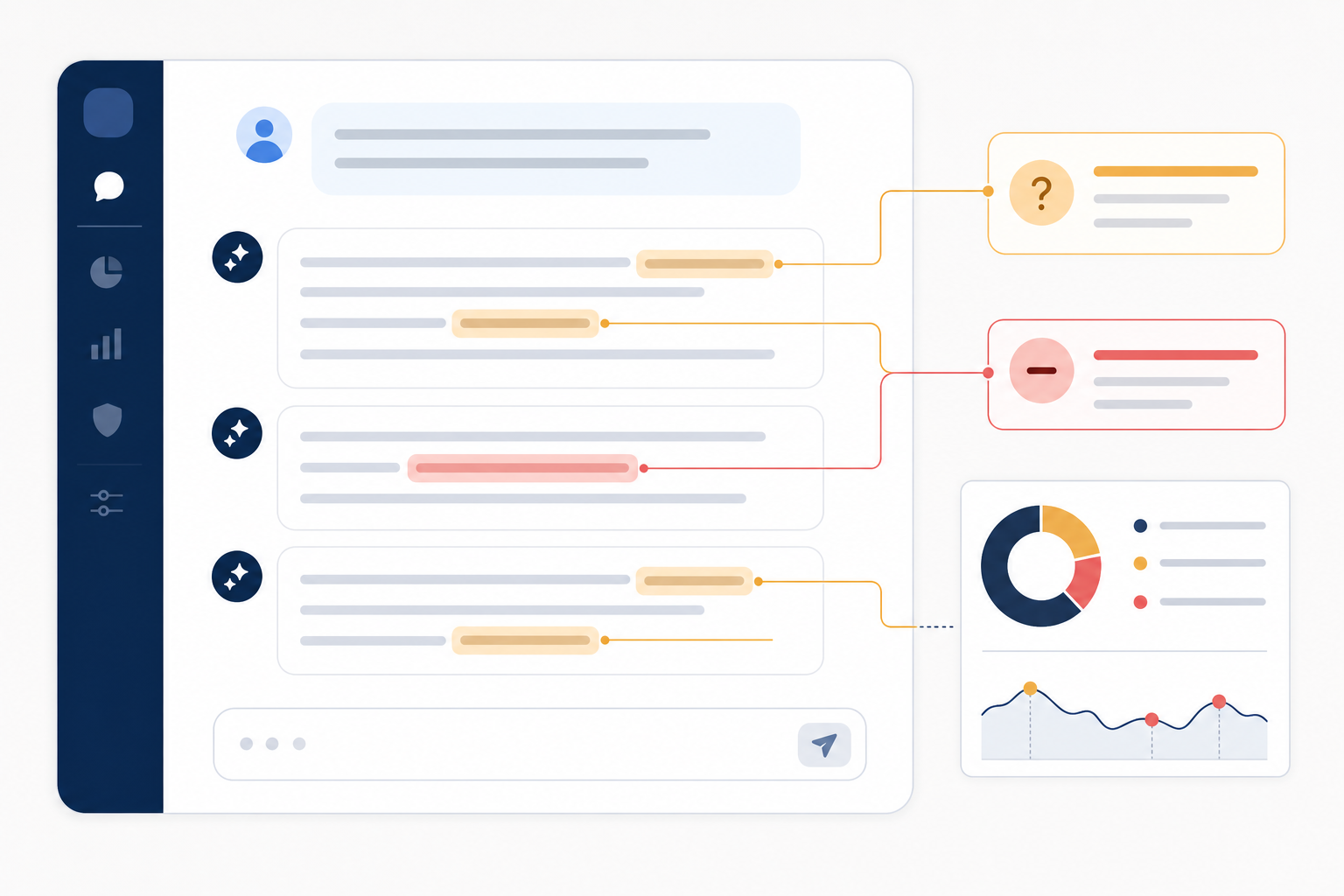
Examples of subtly negative AI mentions
These are illustrative patterns drawn from recurring themes I've observed across ChatGPT, Claude, and Perplexity responses to purchase-decision queries, not verbatim transcripts. Wording varies by session, model version, and query phrasing.
- "X is a solid choice, though some users report it's less feature-rich than Y." Technically a mention, and the surface tone sounds fair. Functionally, it's a redirect towards Y.
- "X offers basic functionality suitable for beginners." This reads as neutral, but to a buyer evaluating growth options, "basic" and "beginners" can signal a ceiling on capability.
- "X has received mixed feedback regarding customer support." This may be pulled from outdated reviews that no longer reflect the current team, yet it's presented with the same confidence as a factual product specification.
- "While X exists in this space, most professionals recommend Y or Z." This is the most damaging pattern because it's a mention that actively deprioritises you.
- "X is a straightforward option that covers the essentials and works best for smaller teams who don't need advanced reporting." This one is worth including precisely because it isn't negative. It's a fair, accurate qualification. Not every caveat is reputational harm; some are simply honest scoping.
What matters for founders is where these patterns concentrate: overwhelmingly in comparison-style and "best tools for X" prompts, which sit at the purchase-decision stage of the buyer journey. This is the moment someone is actively choosing between you and a competitor, which is why AI framing can meaningfully influence consideration, even though it isn't the only factor in whether someone eventually buys.
Why track AI visibility and sentiment as a solo founder?
Most solo founders and small UK teams don't have a PR function checking how ChatGPT, Claude, Gemini, Copilot, and Perplexity each describe their business every day. Manual checking doesn't scale to the frequency required, particularly because outputs aren't static. The same query can return different framing from week to week as retrieval sources and model versions shift.
The risk with sentiment issues is that they're easy to miss because no single query looks alarming. A hedged or neutral description repeated across several AI platforms may shape how a prospect thinks about your brand before they speak to you directly. I'd stop short of claiming a precise, measurable causal chain here. This is a monitoring risk worth taking seriously, not an established formula.
What I can state with more confidence is the practical value of tracking trends over time. It lets you catch factual errors, spot when a competitor's new content shifts the comparison, and see whether changes you've made to your own website are actually moving the needle.
This connects to AI share of voice, how often you appear relative to competitors across relevant queries. Raw share of voice can mislead on its own: if you're mentioned as often as a competitor but consistently framed with more hedging, you're matching their visibility while losing the share of voice that actually converts. Volume and framing need to be read together.
It's also worth tracing sentiment back to its root cause, which is often technical rather than reputational. We run an AI legibility audit covering 16 technical factors, things like structured data and content clarity, and it can reveal when a model is misreading your site's structure or encountering contradictory information across pages. These issues frequently show up downstream as vague, hedged descriptions.
Fixing AI legibility issues can resolve sentiment problems closer to the source than content marketing alone. Clear, consistent information helps AI platforms understand what your business does, who it serves, and how it differs from competitors.
A brief UK-specific note: if you're a small SaaS business, consultancy, or ecommerce brand based in the UK, remember that AI models weighting Trustpilot, Google Business Profile, and UK-specific comparison publishers will reflect regional review patterns that differ from US-heavy training data. A query phrased with a UK qualifier, for example "best accounting software for a UK limited company," can return noticeably different framing from the generic US-centric version of the same question. It's worth checking both.
How to improve sentiment behind your AI visibility
- Start by tracing where the negative or neutral sentiment actually originates: outdated reviews, thin website content that leaves AI to guess at details, or competitor comparison articles dominating the signal for your category.
- Fix technical legibility before you touch on-site content. These are related but distinct problems. Legibility issues, such as missing structured data, inconsistent product descriptions, and crawl barriers, stop AI from reading your site accurately in the first place. Content clarity removes the ambiguity that causes hedging once AI can actually read the page properly. Address the technical layer first, since it tends to have the faster, more direct effect.
- Publish honest, evidence-led comparison content of your own. Rather than letting AI infer your positioning entirely from third-party sources that may favour competitors, state your comparative case directly. Keep it factual and acknowledge genuine limitations. Self-serving claims without evidence tend to get filtered out or ignored by models trained to weigh corroborating sources.
- Monitor AI sentiment on a rolling basis. A single query result tells you very little; a trend across several weeks tells you whether your changes are actually shifting how AI frames your brand.
- Track competitor sentiment alongside your own. A shift in how AI frames a rival, whether from new content, improved legibility, or fresh reviews, can quietly affect your relative position even when nothing about your brand has changed.
Frequently asked questions about AI mentions and visibility
Can AI mention my brand but still hurt my reputation?
Yes, and this is more common than most founders expect. AI models often mention brands with hedging language, comparative framing that favours a competitor, or outdated details pulled from reviews. A mention confirms visibility; it doesn't confirm that the visibility is helping. Check the actual sentence structure around your brand name, not just whether it appears.
How do I check the sentiment of an AI mention?
Run the same purchase-decision queries across ChatGPT, Claude, Gemini, and Perplexity and read the tone of each response for yourself as a starting point. Look specifically at whether your brand is the subject of the sentence or a stepping stone to a competitor.
Doing this daily by hand isn't realistic long term, which is why tools like MentionOwl automate the process and track sentiment trends over time rather than relying on one-off snapshots.
What should I do if AI describes my product inaccurately?
Start by identifying the source of the confusion. It's often ambiguous website copy, missing structured data, or thin content that leaves AI to infer rather than read details directly. An AI legibility audit can flag these gaps.
Rewriting key pages with clear, specific language about what your product does and who it's for can help correct AI descriptions over subsequent crawl cycles, although changes rarely take effect immediately.
Is negative AI sentiment something I can fix?
In most cases, yes, though it takes time because models don't update instantly. Sentiment tends to improve when you address the underlying signals: clearer website content, better structured data, stronger third-party review presence, and comparison content that states your case directly rather than leaving AI to fill gaps from competitor sources.
Ultimately, the founders who benefit most from AI visibility monitoring are the ones who treat sentiment as a distinct, trackable metric rather than an afterthought to raw mention counts. 🦉 Visibility gets you into the conversation. Sentiment can influence whether a prospect keeps considering you or quietly explores someone else instead, and that's worth watching closely, even if it's one factor among several in any eventual decision.