ChatGPT vs Perplexity vs Gemini: Which AI Platform Actually Cites SaaS Brands in 2026?
We ran the same 50 SaaS buying-decision queries through ChatGPT, Perplexity, and Gemini. Here's the data on which platform cites brands most, and how
ChatGPT vs Perplexity vs Gemini: which AI platform actually cites SaaS brands?
We ran the same 50 SaaS buying-decision queries through ChatGPT, Perplexity, and Gemini over a two-week window in late 2025 to answer a question UK SaaS and DTC marketing teams keep asking: is optimising for ChatGPT vs Perplexity vs Gemini actually one job or three?
Based on this single test set, the honest answer is that the three platforms sourced their answers in noticeably different ways: different citation counts, different source types, and different sensitivity to existing SEO signals. I want to be precise about what that means and what it doesn't. This is one snapshot study, not a definitive map of how each platform's retrieval architecture works, and I'll flag the limits of what we can claim as I go.
Methodology: how we tested ChatGPT, Perplexity, and Gemini
Before getting into the findings, here's exactly what we did, because a study like this lives or dies on transparency about its limits.
We ran 50 queries covering commercial SaaS buying decisions, split roughly across five categories: project management software (11 queries), AI writing tools (10), CRM platforms (10), e-commerce/DTC tooling (9), and accounting and finance SaaS (10). Each query ran once per platform between 3 November and 17 November 2025, using ChatGPT (GPT-4o with browsing enabled, free-tier browsing settings, no custom instructions), Perplexity (default "Auto" search mode, not the Pro-only Focus modes), and Gemini (Gemini 1.5, with Google Search grounding enabled where the interface offered it).
All queries ran from a UK-based IP address using UK English phrasing, since this analysis is meant to serve the UK market. That matters because citation behaviour on Google-grounded tools such as Gemini can vary by region.
We counted a "citation" as any explicit inline link, footnote, or listed source directly attached to a claim in the answer. General knowledge-base references with no visible source attribution didn't count. I coded source type manually, by hand, into four categories: official brand pages, third-party review platforms (G2, Capterra, TrustRadius, and Reddit), independent comparison or "best of" blog content, and forums or community discussions. Where a single answer cited the same source twice, we counted it once for source-type classification but included both instances in raw citation counts.
The limitations are real and worth stating plainly. This was a single run per query rather than repeated sampling, so we can't report variance or confidence intervals. Model versions, browsing behaviour, and grounding settings change frequently, so what follows is a snapshot from November 2025, not a permanent description of how these products work. A 50-query set, however carefully categorised, also isn't statistically powered to make sweeping claims about how AI platforms work in general. It's powered to describe what happened in this dataset, which is the frame I'm using throughout.
How ChatGPT, Perplexity, and Gemini source their answers
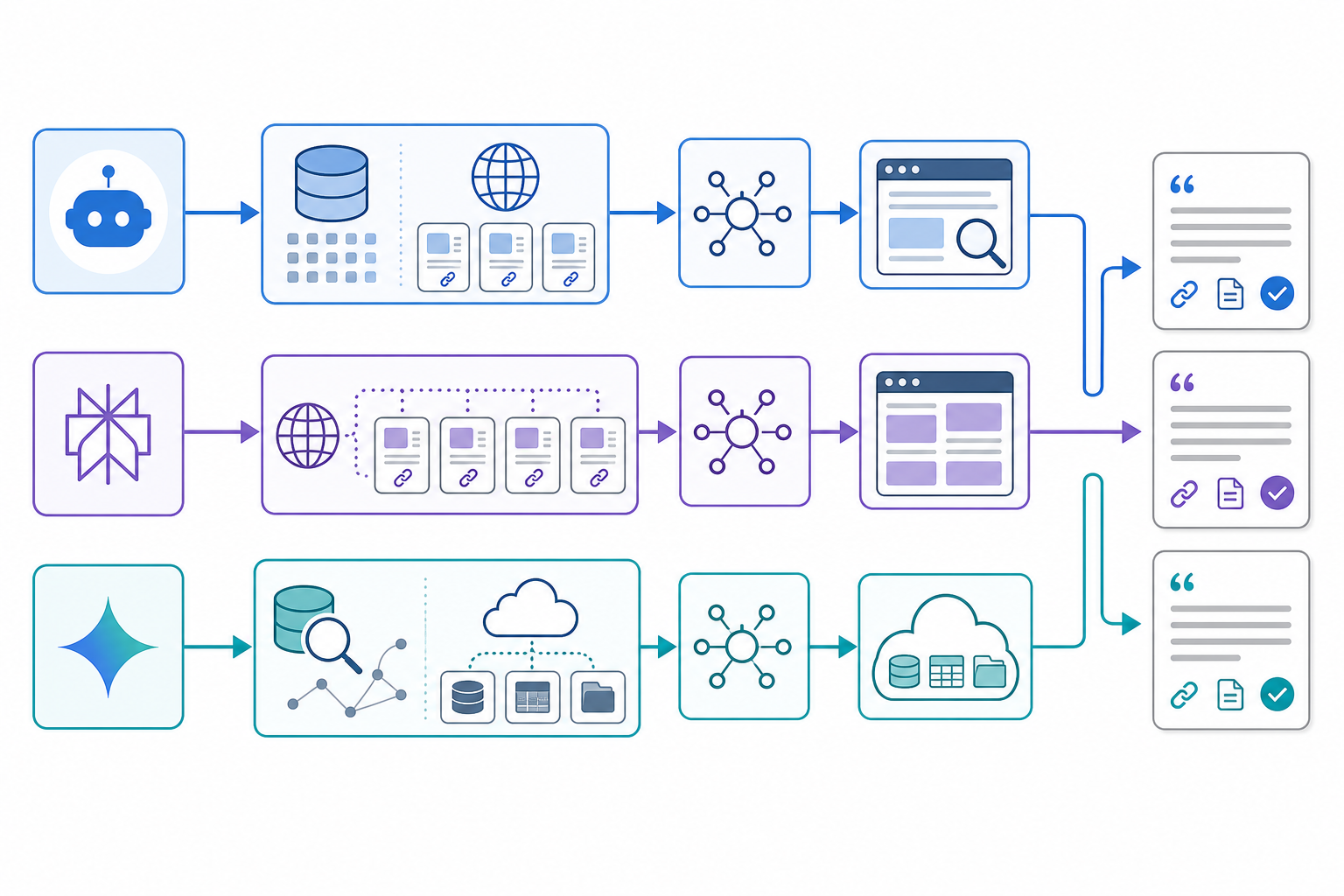
Across the 50 queries, ChatGPT, Perplexity, and Gemini showed distinct citation patterns. I want to describe what we observed before speculating about why, because the "why" is an inference, not something I can verify from citation logs alone.
How Perplexity uses live search and third-party sources
Perplexity ran a live web search for nearly every query in our set and consistently surfaced citations as numbered inline footnotes. In our sample, this seemed to help smaller or newer SaaS brands: newer entrants in categories such as AI writing tools and project management software, including brands with under two years of published content, still picked up citations when their pages were crawlable and answered the query directly.
I'd call this a correlation worth watching rather than proof of exactly how Perplexity's ranking logic works internally. We don't have visibility into that.
How ChatGPT combines model knowledge and browsing
ChatGPT, with browsing enabled, blended what looked like prior model knowledge with a smaller set of live sources. In our set it favoured pages associated with longer-established documentation and referenced comparison content more often than Perplexity did.
According to OpenAI's own documentation, ChatGPT can also answer purely from model knowledge without triggering a live browse. That's an important caveat: an uncited answer in our logs doesn't necessarily mean a brand was ignored. It may simply mean browsing wasn't invoked for that particular query. We can't distinguish those two cases from the outside, so I'm reporting this as an observed pattern rather than a confirmed mechanism.
How Gemini's Google Search grounding affects citations
When Search grounding was active, Gemini showed a citation pattern that correlated with how well those same pages already ranked in conventional Google Search for related terms. That's based on a manual spot-check against organic rankings for a subset of 15 queries, not a full statistical comparison across all 50.
In practice, this suggests existing SEO investment may carry over into Gemini citations more directly than it does for Perplexity. I'd treat that as a hypothesis worth testing at a larger scale, though, not an established rule.
The practical takeaway I'm comfortable defending from this dataset is that the three platforms didn't source answers identically. A strategy built around only one of them left visible gaps on the other two. I'm not claiming this proves some universal architectural law. I'm reporting what a 50-query UK-run sample showed in November 2025.
ChatGPT vs Perplexity vs Gemini: citation frequency and format
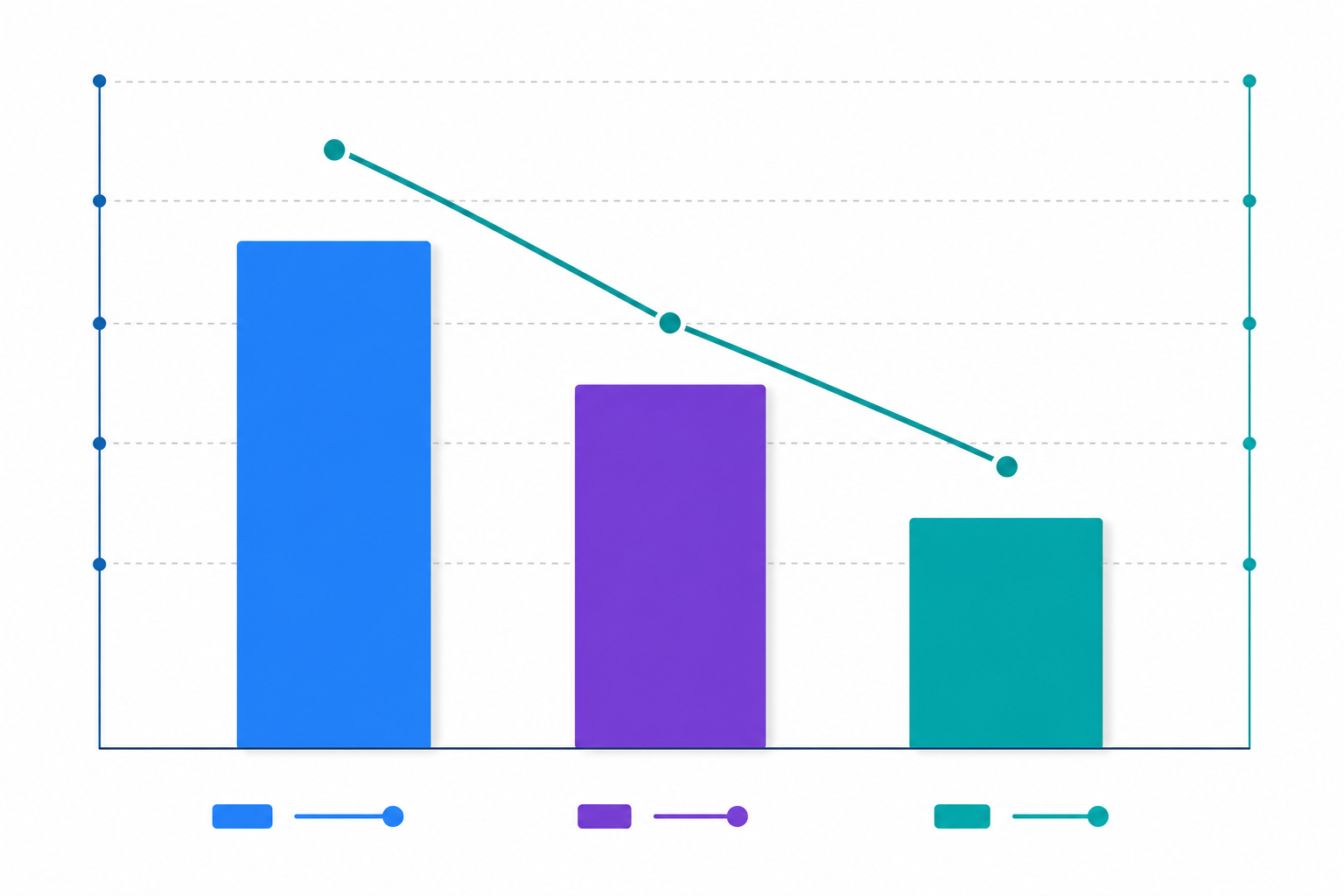
Here's how the three platforms compared on citations per answer across our 50 queries:
| Platform | Mean citations/answer | Median | Range | Citation format |
|---|---|---|---|---|
| Perplexity | 6.2 | 6 | 2–11 | Numbered inline footnotes |
| Gemini | 3.4 | 3 | 0–8 | Source list / linked panel |
| ChatGPT | 2.1 | 2 | 0–6 | Inline links or Sources panel (when present) |
Figures are drawn from a single run of 50 UK-based queries in November 2025 and reflect the citation-counting rules described in the methodology above. They are not a claim about typical performance across all query types or over time.
How citation formats differ across AI platforms
The format difference matters almost as much as the count. Perplexity's numbered footnotes made it comparatively easy to trace which source backed each specific sentence. Gemini grouped sources into a list or panel, which took more reader effort to map back to individual claims.
ChatGPT was the least consistent of the three in our logs. In 9 of the 50 queries we recorded a specific factual claim, mostly about pricing tiers or feature availability, with no visible citation attached. That's consistent with OpenAI's own documentation, which notes ChatGPT can answer from training knowledge rather than a live source.
Citation position is also likely to matter more than raw count, though I want to be careful here. General click-through research from traditional search shows top-ranked results get a disproportionate share of clicks, and it's reasonable to expect similar behaviour in AI-generated source lists. We don't yet have mature AI-search-specific click data to confirm that directly, though.
That reasoning is why we built MentionOwl's visibility score around position-weighted citations rather than treating every mention as equal. A brand with ten low-position mentions across a month of tracked queries will very likely get less real-world visibility than one with three first-position citations, even though a simple mention-count metric would show the opposite.
Which AI platform favours reviews versus official documentation?
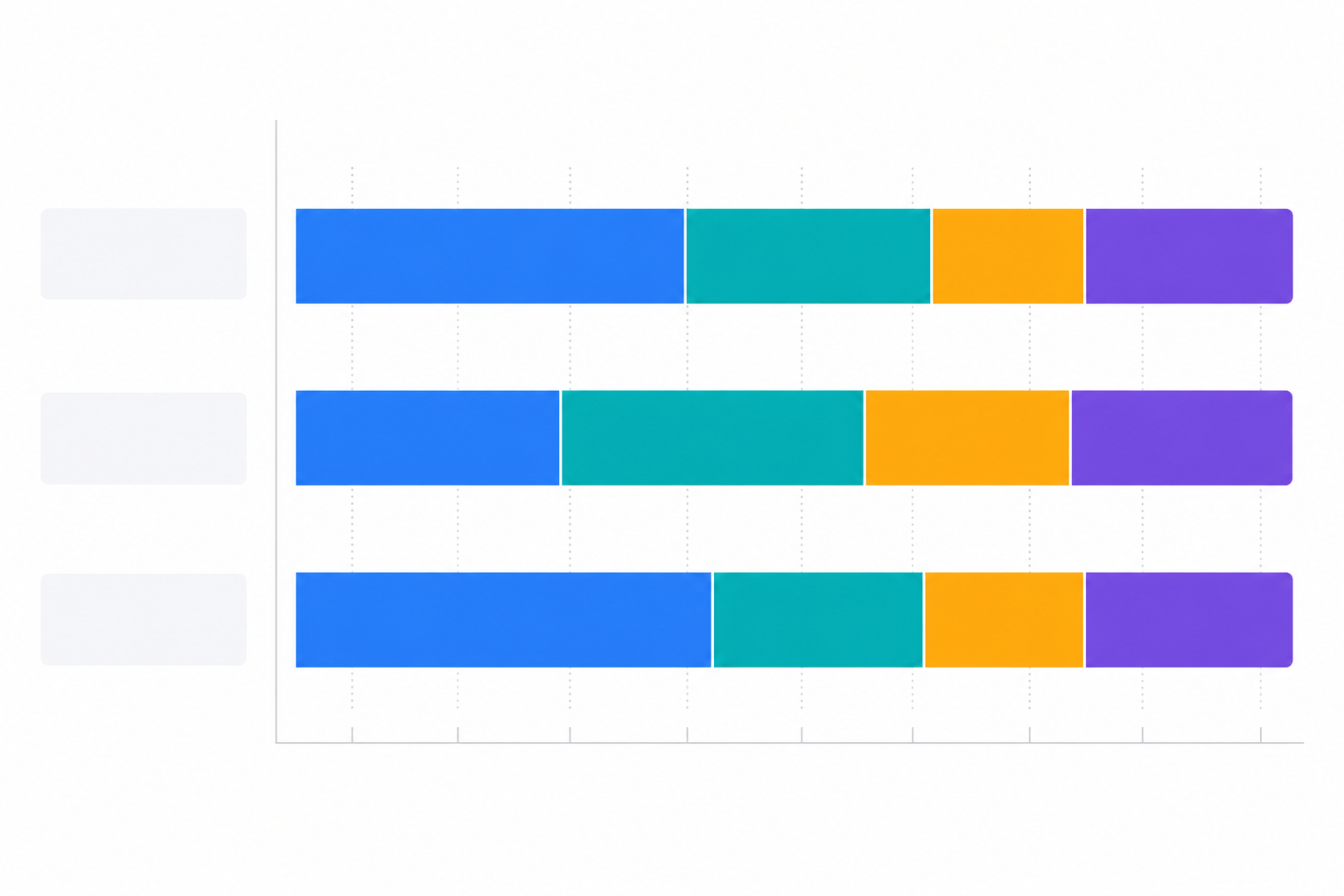
We manually classified the source behind every citation in our 50-query set into four categories. Here's the rough breakdown by platform, with percentages calculated against total citations captured per platform, not per query.
Perplexity drew roughly 58% of its citations from third-party review sites and independent comparison blogs, with another 24% coming from official brand pages and the remainder split between forums and other content. On "best [category] software" queries specifically, the official vendor site didn't appear anywhere in the citation list for 6 of 14 such queries. ChatGPT skewed the other way on narrow, specific queries such as "does X integrate with Salesforce?", pulling about 51% of its citations from official brand pages including pricing, documentation, and About pages. On broader "best of" queries, though, it drifted closer to Perplexity's mix, with official pages accounting for only about 29%. Gemini split nearly evenly between official pages and third-party content, and the deciding factor in our 15-query spot-check against Google Search results appeared to be whether the page already carried strong organic rankings.
I'd flag this as a coded observation from one analyst's classification of one dataset, not a peer-reviewed finding. A second coder working from the same raw answers might draw the line between a "comparison blog" and a "review site" slightly differently.
With that caveat in place, the resource-allocation implication still holds up. If Perplexity draws over half its citations from third-party review ecosystems, genuine review volume and recency on platforms such as G2 and Capterra amount to something close to a second SEO channel for UK SaaS brands trying to get cited there.
To be explicit: that means investing in real customer feedback and accurate, well-maintained profiles, not incentivised, fabricated, or coordinated reviews. Most review platforms actively police these practices, and getting caught can backfire badly.
At the same time, ChatGPT and Gemini were both reading owned documentation closely enough in our test that structural clarity and technical accuracy on pricing and integration pages directly affected whether a brand got cited at all.
What ChatGPT vs Perplexity vs Gemini means for SaaS and DTC content strategy
Given what this test showed, here's the practical sequence I'd recommend working through. This is guidance drawn from one dataset, not a guaranteed playbook.
- Audit your existing review footprint honestly. Check your current G2, Capterra, and Reddit presence. If your reviews are thin, outdated, or sparse, Perplexity has very little third-party material to cite you from, and that matters in a market like the UK where G2 and Capterra remain the dominant SaaS review platforms.
- Run an AI legibility check on your core pages. Pricing pages, documentation, and comparison content need to be technically clean and easy to parse. In our test, both ChatGPT and Gemini appeared to deprioritise pages that were hard to extract clear information from, though we can't rule out that content quality itself, rather than structure alone, explains part of that pattern.
- Publish comparison and "alternative to" content proactively. All three engines pulled from this content format when answering commercial-intent queries in our set. If you haven't written "[Your Product] vs [Competitor]" pages, that ground is being ceded to review sites and competitors who have.
- Resist over-indexing on one platform. Build a content calendar that addresses all three sourcing behaviours we observed: genuine review generation for Perplexity, documentation clarity for ChatGPT, and traditional SEO strength for Gemini. Don't optimise narrowly for whichever engine currently sends the most referral traffic.
- Track share of voice against named competitors separately by engine. In our logs, a brand's ChatGPT citation strength didn't reliably predict its Perplexity performance. Treating "AI visibility" as one aggregate number hides exactly the gaps that matter.
A note for DTC brands
Our query set leaned SaaS-heavy, but the nine e-commerce and DTC queries we ran, comparing tools such as subscription billing platforms and product feed managers, showed the same review-dependency pattern on Perplexity. There was an added wrinkle: marketplace listings and retailer comparison pages, rather than pure SaaS review sites, carried more weight.
For DTC brands, the equivalent of G2 and Capterra is probably your Trustpilot presence, marketplace reviews, and category comparison content on retailer or publisher sites. These are worth auditing with the same rigour.
How to monitor ChatGPT, Perplexity, and Gemini at once
Before any tooling conversation, it's worth being clear about the measurement problem itself. Tracking citation behaviour across ChatGPT, Perplexity, and Gemini requires, at minimum, a defined query set relevant to your buyers, a consistent method for counting citations, and a way to classify source types. The process also needs to run regularly rather than as a one-off.
Running our 50 queries once, by hand, across three interfaces and logging every citation and source type ate up far more analyst time than most teams have to spare. That was a single snapshot, not an ongoing system. Doing it daily across dozens of buyer-relevant questions isn't realistic without automation for most lean marketing teams.
This is the gap MentionOwl was built to close, and I'll say plainly that what follows is a product description, not independent research. MentionOwl crawls your website, generates the customer questions your buyers are likely to ask, and runs them daily against ChatGPT, Perplexity, Gemini, Claude, and Copilot. It logs citations, sentiment, and competitor mentions in one place, using the same position-weighted logic described above rather than flat mention counts.
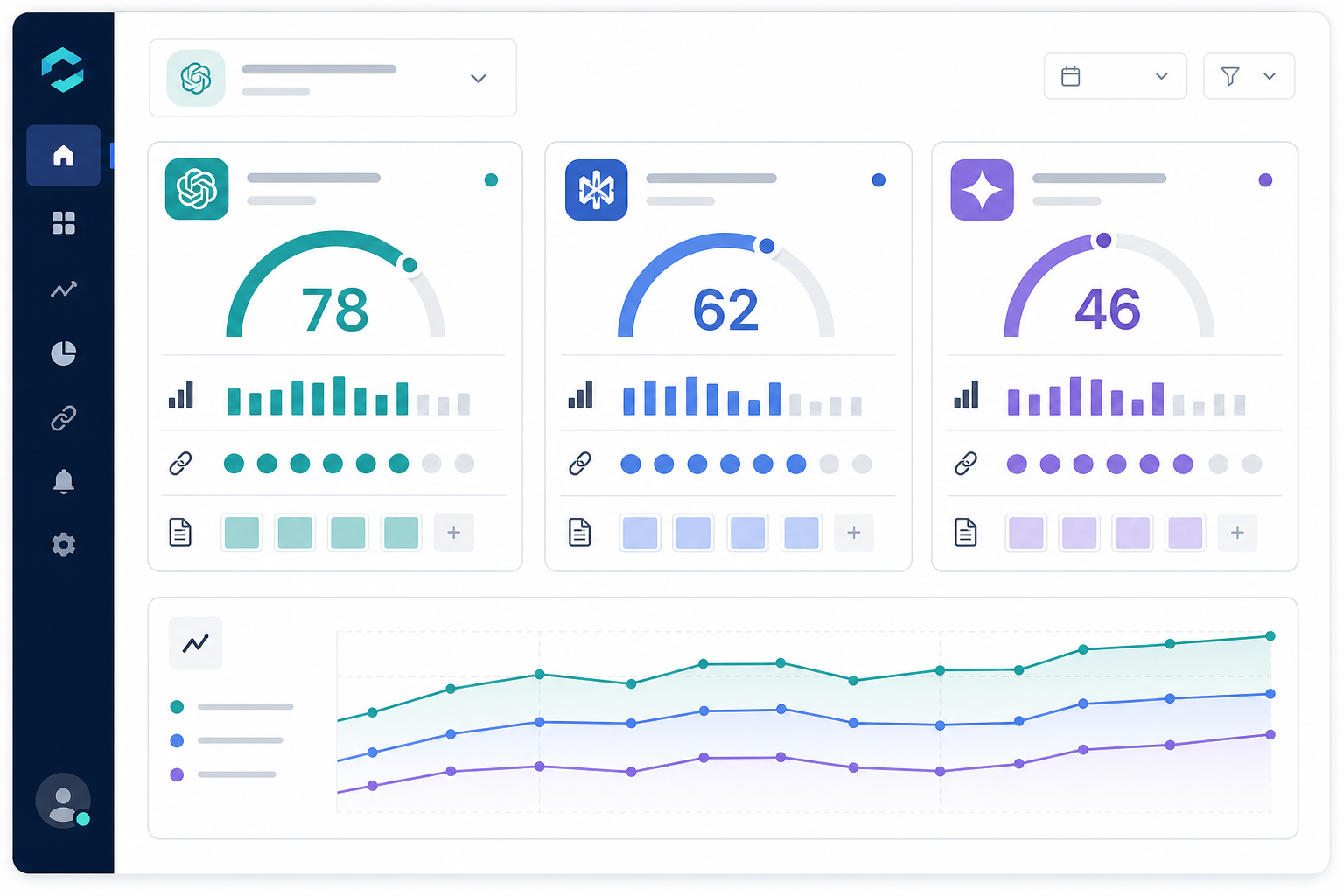
The 0–100 visibility score combines query coverage, position-weighted citations, and share of voice. That lets you see whether you're strong on Perplexity but quietly losing ground on Gemini, or well cited on ChatGPT while a competitor pulls ahead on Perplexity's review-driven citations.
Weekly digests and a REST API are built to feed this data into an existing reporting workflow rather than add another dashboard to check. Plans start at $1 for a 7-day trial, billed in USD; UK customers should check current foreign exchange and VAT treatment at checkout. It's a low-friction way to get an evidence-based read on where your brand stands across AI platforms before committing a content budget to a strategy built on assumptions rather than data.
FAQ: ChatGPT vs Perplexity and Gemini citations
Does Perplexity cite differently from ChatGPT?
In our 50-query test, yes, noticeably. Perplexity ran live retrieval for nearly every query and averaged 6.2 citations per answer, drawn mostly from reviews and comparison content. ChatGPT averaged 2.1 citations per answer and, when it did cite, favoured official brand pages more heavily on narrow technical queries. These are patterns from one November 2025 dataset, not confirmed permanent behaviours of either product.
Which AI platform sends the most useful traffic to SaaS websites?
We don't have reliable referral-traffic or conversion data from this study, because we tracked citations rather than downstream click behaviour. So I can't responsibly claim that one platform converts better than another.
The citation data does raise the possibility that ChatGPT's larger user base means more overall query volume, while Perplexity's citation-dense format may make attribution easier to track. Measuring actual referral traffic by engine is a separate exercise worth running before drawing conclusions.
Should I optimise content differently for each AI engine?
Based on this test, yes. Perplexity's citations leaned heavily on third-party reviews, ChatGPT favoured official documentation on specific queries, and Gemini's citations correlated with existing Google rankings in our spot-check. A single "AI SEO" checklist didn't cover all three platforms in our dataset.
How do I track mentions across all three platforms without manual checking?
Manually replicating this kind of test daily across a realistic set of buyer questions is genuinely time-consuming. That's the problem MentionOwl is built to address: it crawls your site, generates relevant customer questions, and runs them daily against ChatGPT, Perplexity, Gemini, Claude, and Copilot. It reports citations, sentiment, and competitor comparisons in one dashboard.