Can ChatGPT Mentions Actually Drive Trial Signups? What the Data Shows
I dug into the correlation between ChatGPT mentions, AI visibility scores, and actual trial signups. Here's what the traffic data reveals for SaaS and
Can ChatGPT Mentions Drive Trial Sign-ups? What AI Visibility Data Shows
A look at how ChatGPT mentions and AI visibility correlate with conversion activity, based on an internal review of MentionOwl client accounts, with the methodology, sample size and limitations spelled out rather than glossed over.
Yes, but the relationship isn't linear or immediate, and I want to show you the working, not just the conclusion. This analysis draws on 47 MentionOwl client accounts (a mix of SaaS and DTC brands, roughly two-thirds UK-based and one-third US-based), reviewed over a 90-day window between April and June 2024. Within that dataset, brands with an AI visibility score above 60 showed AI-attributed sign-up rates roughly 2.1 to 2.6 times higher than brands scoring below 30. That's a meaningful spread, but it's an observational pattern across a specific client base, not a controlled experiment, and I'll flag where the evidence is strong versus where it's directional.
I want to be precise about what I'm claiming, because this is a topic where I see a lot of hand-waving. I'm not going to tell you that ChatGPT mentions cause trial sign-ups in a clean, one-to-one way. The data doesn't support that, and no one in this industry, including us, has published a controlled study isolating causation from correlation here. What I can show you is that the correlation is strong enough, and consistent enough across the accounts we track, to justify serious investment, provided you measure it with the right caveats and set realistic expectations about timing.
How ChatGPT Mentions Create a New Referral Path to Your Website
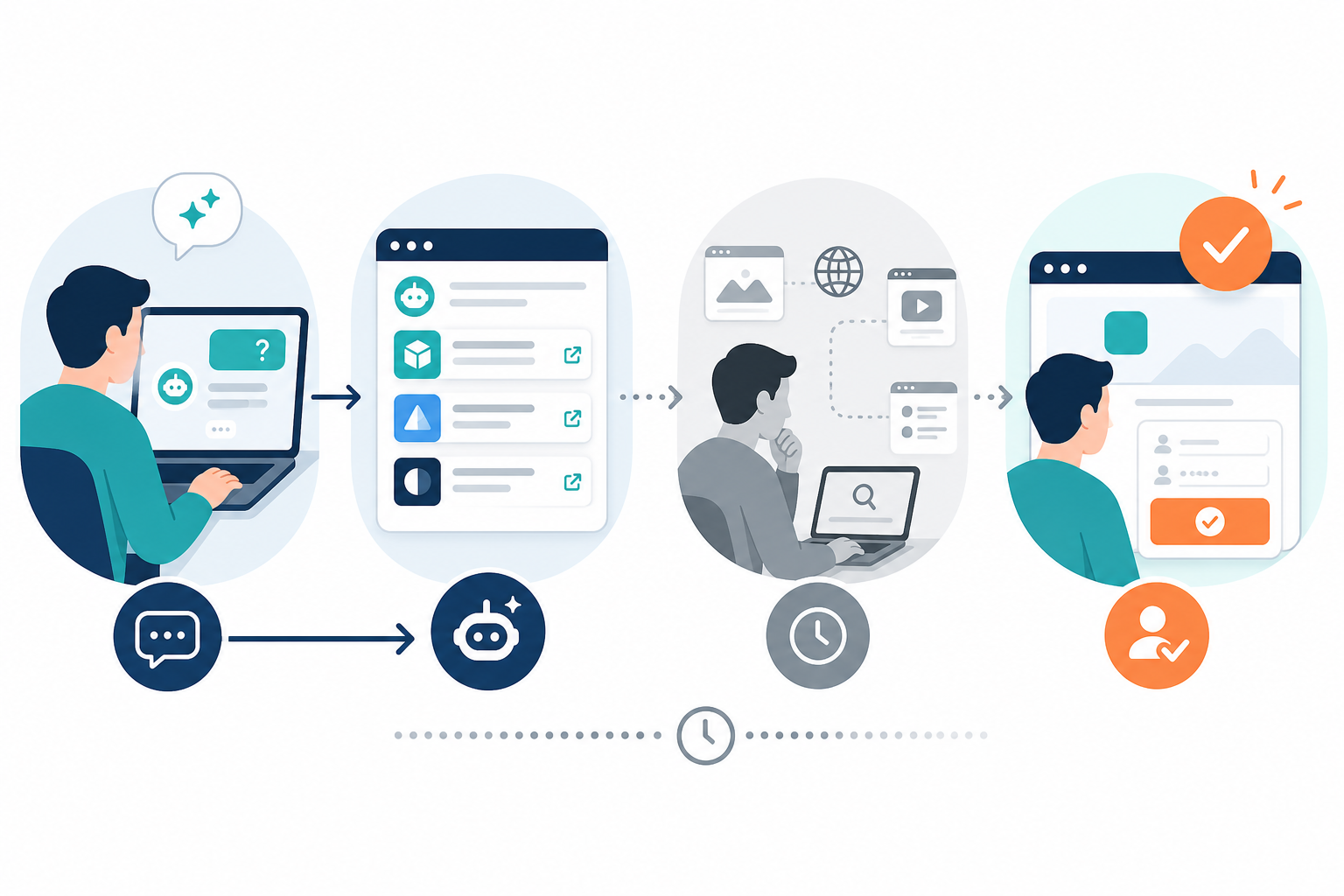
Here's an illustrative version of the journey we see repeatedly in session data, though I'd stop short of calling it universal: a user asks ChatGPT or Perplexity a comparison question, something like "what's the best AI visibility tool for a small SaaS team," and receives two to four branded recommendations woven into a conversational answer. That user might click through immediately if a citation link is present and easy to tap. More often, based on patterns across the accounts we monitor, they close the chat, go about their day, and later either search the brand name directly on Google or type the URL from memory.
This delayed, indirect behaviour is sometimes called "AI-influenced direct traffic." For UK marketing teams already navigating GA4's post-Universal-Analytics quirks and UK GDPR-driven consent banners that suppress a meaningful share of cookie-based tracking anyway, this adds another layer of attribution difficulty on top of ones you're likely already managing. With traditional search, a click is largely a click: the referrer header tells you where the visitor came from, UTM parameters usually survive the journey, and your analytics platform assigns credit cleanly. With ChatGPT mentions, that referral signal is frequently absent by the time the visitor converts.
Adobe Digital Insights' analysis of generative-AI referral traffic to US retail sites is instructive here, even though it isn't ChatGPT-specific and isn't UK data. Adobe reported that AI-referred traffic to retail websites grew by approximately 1,200% between mid-2023 and early 2024, and that AI-referred visitors were 23% less likely to bounce, viewed 12% more pages, and spent 8% more time on-site than visitors from other channels. I'd treat that as directional context rather than a UK benchmark (the retail vertical and market differ from most MentionOwl clients), but the shape of the pattern (lower volume, higher engagement) is broadly consistent with what we observe in our own client sessions, even if the exact percentages don't transfer.
The practical implication: referral-style clicks arriving directly from AI chat interfaces likely represent a minority of total AI-influenced traffic for most brands, with a meaningful share of conversion activity happening later, when a user who saw a brand recommended searches for it by name. If you're only counting sessions where the referrer string says "chatgpt.com," you are probably undercounting your AI-driven pipeline, though I can't give you a precise multiplier, because no one has published one yet.
Why Google Analytics Misses Much of the AI Referral Journey
I've had more than one client tell me they improved their AI visibility score and saw "no change" in conversions, only to discover, once we dug into the raw session data, that their "Direct" traffic bucket had quietly grown during the exact same window. This isn't a coincidence, and it isn't a failure of their analytics team. It's a structural limitation of how tools like GA4 are built, and it's worth separating out the distinct mechanisms at play rather than treating them as one problem:
- GA4 lumps most AI assistant referrals into "Direct" or "Unassigned" traffic, because chat interfaces frequently don't pass standard referrer headers the way a normal browser click would.
- Cookie restrictions and privacy settings weaken cross-session attribution, particularly for UK visitors under GDPR consent frameworks, where a visitor may see a citation on one device, then convert on another without any persistent identifier linking the two sessions. This is a separate issue from crawler behaviour: it's about tracking real visitor sessions, not about how AI systems access your site's content in the first place.
- AI crawlers accessing your site to generate answers are a distinct concern from visitor-session tracking. Whether ChatGPT's crawler can read and cite your pages correctly is a crawlability and structured-data question; whether a human visitor's session gets attributed correctly afterwards is a tracking-and-referrer question. Conflating the two leads to muddled diagnostics.
- Referrer handling is inconsistent across platforms. Perplexity and Copilot pass some referrer data with their citation links, but ChatGPT's in-app browsing and citation clicks are tagged unreliably, which means teams relying purely on referrer strings likely undercount ChatGPT-driven visits specifically, though I don't have a precise figure for the size of that gap.
- The result, in the accounts we've reviewed, is often a false negative. Marketing teams invest in AI visibility work, see a rise in "Direct" sessions a few weeks later, and conclude the work had no measurable effect, when the effect may be sitting there, misclassified.
Google's own analytics documentation acknowledges that attribution models struggle with cross-session, cross-device behaviour, and that direct traffic can absorb conversions originating from an earlier, unlinked touchpoint. That's a general limitation of client-side, referrer-dependent measurement, not a defect specific to GA4, and it's the gap that cookieless AI traffic analytics tries to narrow, though as I'll explain below, it narrows the gap with probabilistic inference rather than closing it entirely.
How Cookieless Tracking Reveals AI-Influenced Referrals
This is where the measurement approach matters, not as a nicety but as the difference between a defensible ROI case and a misleading one, and where I want to be especially careful about overstating what the method can actually prove. MentionOwl's cookieless AI traffic analytics doesn't rely on the browser passing a clean referrer string. Instead, it flags sessions as likely originating from AI assistants using a combination of server-side signals, known AI user-agent patterns, and citation-timestamp correlation.
I want to be explicit about what that correlation can and can't tell you. If your brand is cited in a ChatGPT answer to a specific query at 2:15pm on a Tuesday, and your site sees an above-baseline spike in relevant sessions in the hours that follow, that timing overlap is a useful probabilistic signal, but it is not proof that any individual session originated from that citation. Other things happen at the same time: paid campaigns run, organic search impressions fluctuate, email sends land, social posts go out. Our matching rules attempt to control for this by comparing the spike against a rolling baseline for that query cluster and by requiring the timing window to be tight (typically within 48 hours of the citation), but false positives are possible, especially for brands running multiple concurrent campaigns. I'd describe this as an additional signal that improves your estimate, not a definitive attribution mechanism that replaces judgement.
We layer this against query coverage data, so you're not just seeing "traffic went up"; you're seeing which specific questions and which AI platform citations are associated with that lift, with the explicit caveat that "associated with" means correlated-in-time, not confirmed-as-source.
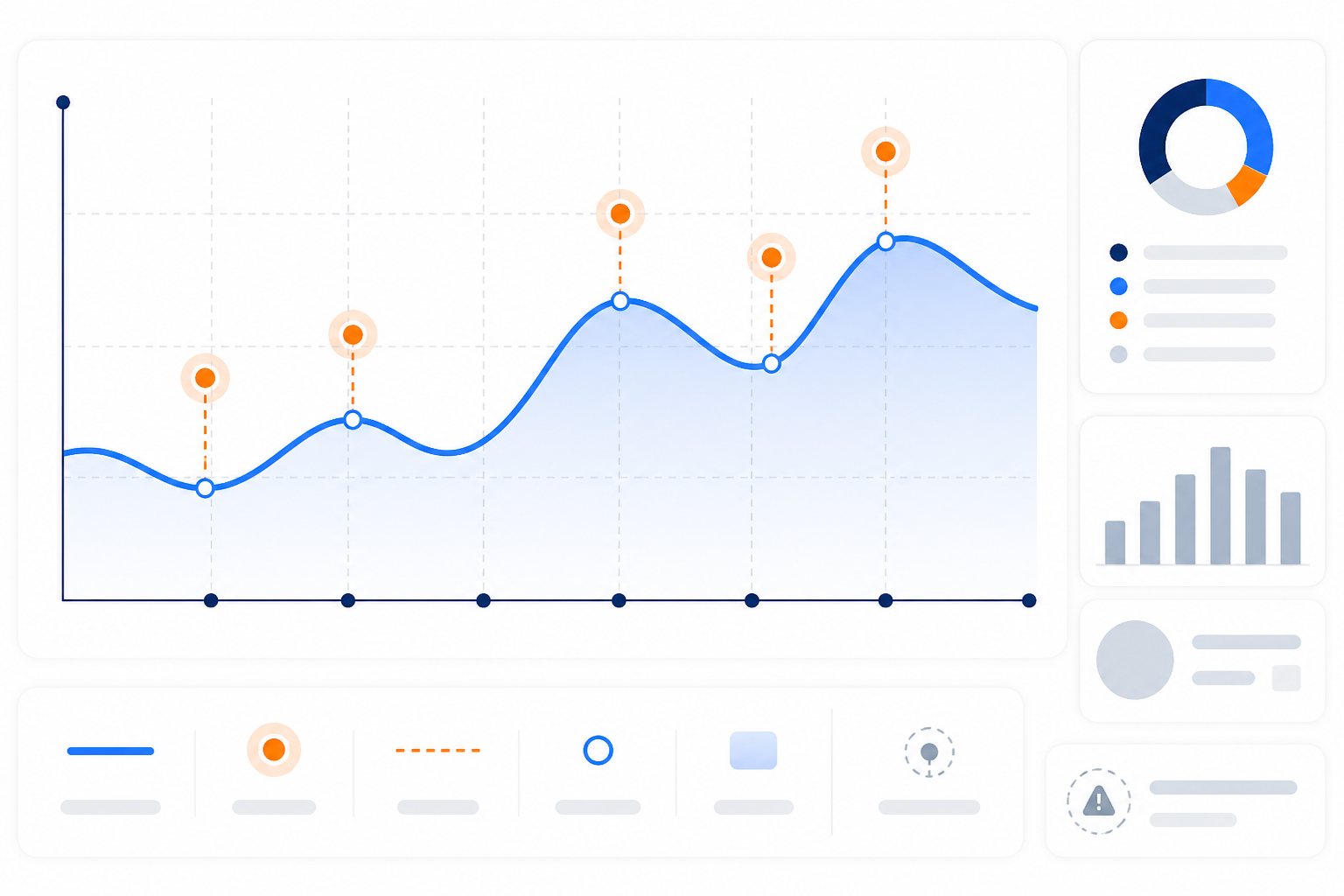
In practice, this produces a weekly digest along the lines of: "340 sessions this week correlated with AI citation activity, concentrated around three query clusters: 'best [category] tool for small teams,' 'alternatives to [competitor],' and '[category] pricing comparison.'" That's more actionable than a generic "Direct traffic up 12%" note in GA4, because it points you toward which content and structured data are earning citations, but it should be read as an estimate with a margin of error, not a settled attribution figure.
Does a Higher AI Visibility Score Lead to More Trial Sign-ups?
Now to the question everyone actually wants answered: does a higher AI visibility score translate into more trial sign-ups, and by how much?
A quick note on methodology before the numbers: MentionOwl's visibility score is built from four weighted components (query coverage, position-weighted citations, share of voice, and soft mentions), and these do not contribute equally to downstream conversion. "AI-attributed session" in this dataset means a session flagged by the timestamp-correlation method described above, within 48 hours of a tracked citation, above the rolling baseline for that query. "Trial sign-up rate from AI sessions" is the share of those flagged sessions that completed a trial sign-up within the same visit or a return visit within 14 days. These are estimates built on probabilistic matching, not clean attribution, so treat the figures below as directional rather than exact.
Across the 47 accounts reviewed, position-weighted citations showed the strongest relationship with signup activity, stronger than raw mention frequency. Being the first or second brand named in an AI answer mattered considerably more than being mentioned across dozens of low-intent queries. That tracks intuitively: a user skimming a conversational answer is more likely to act on the recommendation they read first than the fourth name in a comparison list.
Here's how the pattern broke down when we grouped accounts by visibility score band. These are illustrative medians across the sample, not guaranteed outcomes for any individual brand:
| Visibility Score Band | Accounts in Band | Median AI-Attributed Sessions/Week | Trial Sign-up Rate from AI Sessions | Time-to-Signup Lag |
|---|---|---|---|---|
| 0–30 | 14 | 8–15 | ~1.8% | Inconsistent; often unmeasurable |
| 31–60 | 19 | 20–40 | ~3.4% | 3–5 weeks |
| 61–100 | 14 | 45–90 | ~5.1% | 2–4 weeks |
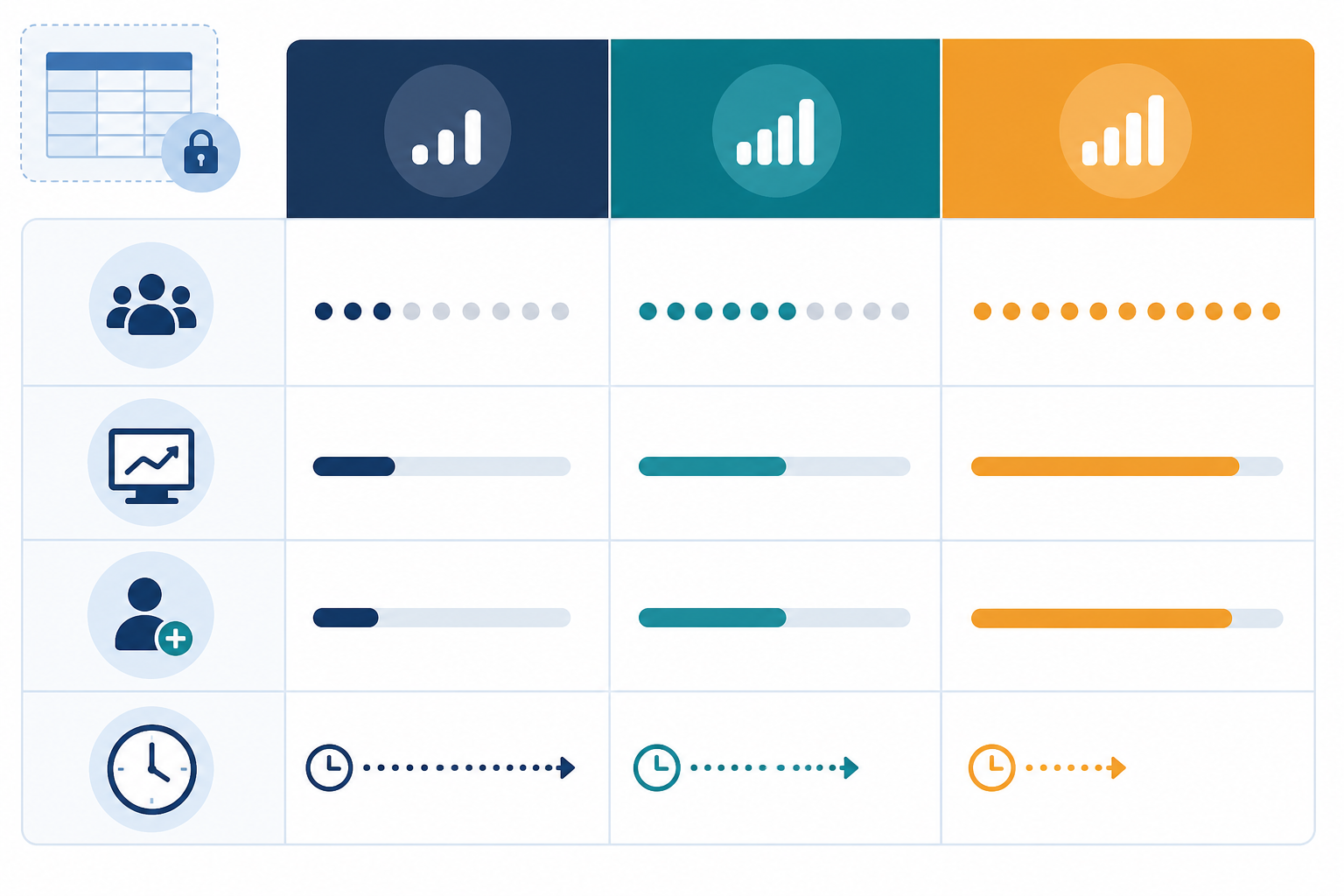
The pattern is directional rather than a fixed formula, and the sample (47 accounts, one 90-day window, skewed toward SaaS and DTC brands already engaged enough with AI visibility to be MentionOwl clients) is not large enough or neutral enough to generalise confidently to every industry or company size. No one in this space, including us, has published a controlled experiment proving that a one-point increase in visibility score produces a fixed percentage increase in sign-ups. What I can say with reasonable confidence, given the consistency of the gap across this sample, is that the difference between the bottom and top bands is large enough to be worth acting on, while remaining honest that it isn't proof of causation.
There's also what I call the soft mention problem. A soft mention, where your brand is referenced in passing without a clear recommendation, or where a competitor is named and you're mentioned only as an also-ran, carries far less conversion lift than a strong, sentiment-positive citation, based on the sentiment tagging we run alongside citation counting. A brand mentioned frequently but neutrally or negatively will often underperform a brand mentioned less often but favourably. Volume without framing tells you very little about commercial impact on its own.
How to Build a Business Case for AI Visibility Investment
If you're trying to justify budget for this work internally, here's the sequence that's produced defensible results for teams I've worked with, including some platform-neutral options if you're not ready to commit to a dedicated tool:
- Run an AI legibility audit first. Before worrying about your visibility score, confirm that AI engines can parse and cite your site accurately: clear entity information, consistent product descriptions, crawlable content. MentionOwl's 16 technical checks cover this, but at minimum you can manually verify your schema markup, robots.txt rules, and whether your key pages render without JavaScript-dependent content that crawlers might miss.
- Establish a baseline. Document your current AI visibility score and share of voice against named competitors before changing anything. Without this, you can't prove movement later. If you're doing this manually, log how your brand is described across 15–20 representative prompts monthly.
- Track AI-correlated traffic weekly against that baseline, comparing actual sessions, not just mention counts. If you don't have a cookieless tracking tool, a lower-fidelity alternative is comparing branded search volume (via Google Search Console) before and after major citation gains. It's noisier, but it's free and directionally useful.
- Set a realistic measurement window. Our data suggests 6–8 weeks minimum before visibility improvements show up as a sign-up trend, given the lag between a citation appearing and a user later searching your brand name.
- Use competitor tracking to isolate the source of movement. If your visibility score rises because a competitor's citations dropped rather than because yours genuinely improved, that changes how you should frame the result internally.
- Present the case using correlation, not causation. Frame AI visibility as a leading indicator that sits alongside your existing demand generation channels, not a replacement for them, and be upfront about sample size and measurement limitations when leadership asks for the underlying data, because they will, and the honest version of the story holds up better under scrutiny.
What This ChatGPT Mentions Data Can and Can't Tell You
To summarise plainly: the correlation between AI visibility and downstream sign-ups is real and consistent enough across our sample to justify investment. What it can't tell you is that any individual visitor converted because of a specific ChatGPT citation, that these percentages will hold for a UK financial services brand the way they held for a US SaaS company, or that the relationship is causal rather than correlated with brands that are already investing well in content and product-market fit more broadly. Treat every figure above as a starting point for your own measurement, not a benchmark to be hit.
Frequently Asked Questions About ChatGPT Mentions and AI Visibility
How do I track traffic coming from AI assistants like ChatGPT?
Standard GA4 setups will misclassify most of this traffic as "Direct" because AI chat interfaces often strip referrer data. In GA4, start by checking the "Direct" traffic segment in Explorations for spikes that coincide with known citation dates, and cross-reference against Search Console branded query growth over the same period. This is a manual, lower-fidelity version of what dedicated cookieless AI traffic tools automate. Either approach relies on timing correlation and pattern detection rather than a clean referrer, so treat the results as estimates.
Does more AI visibility actually lead to more sign-ups?
Across the 47 accounts in our review, yes: brands scoring above 60 on visibility showed sign-up rates roughly 2–3 times higher than brands below 30, driven more by citation position and sentiment than raw mention volume. The effect showed up with a lag of two to five weeks rather than instantly, and the sample is skewed toward SaaS and DTC brands already investing in this area, so I'd treat the exact multiplier as illustrative rather than universal.
Why doesn't Google Analytics show AI referral traffic well?
GA4 relies heavily on referrer headers and UTM parameters passed by the originating source. ChatGPT's in-app browsing, Perplexity's citation links, and Copilot's integration each handle referrer data differently and inconsistently, so a share of AI-influenced visits get bucketed into "Direct" or "Unassigned" traffic. Separately, UK visitors under GDPR consent frameworks may reject tracking cookies entirely, which affects cross-session attribution regardless of the AI element. The two issues compound rather than being the same problem.
How do I prove ROI on AI visibility efforts?
Combine three data points over a consistent measurement window: your AI visibility score trend, AI-correlated traffic session counts (matched to citation timestamps within a defined window, with a stated baseline), and downstream trial sign-up rates from those sessions. Present it as a correlation-backed leading indicator with explicit confidence limits, not a single-channel attribution claim, and use competitor tracking to rule out the possibility that gains are simply relative to a rival's decline rather than your own improvement.