Why ChatGPT Answers Change Daily and How to Track Your Brand: A Guide for Marketing Teams
ChatGPT answers change with prompts, models and context. Learn how LLM monitoring, repeated sampling and daily AI visibility tracking reveal reliable trends.
Why ChatGPT answers change: stop reporting one screenshot and sample instead
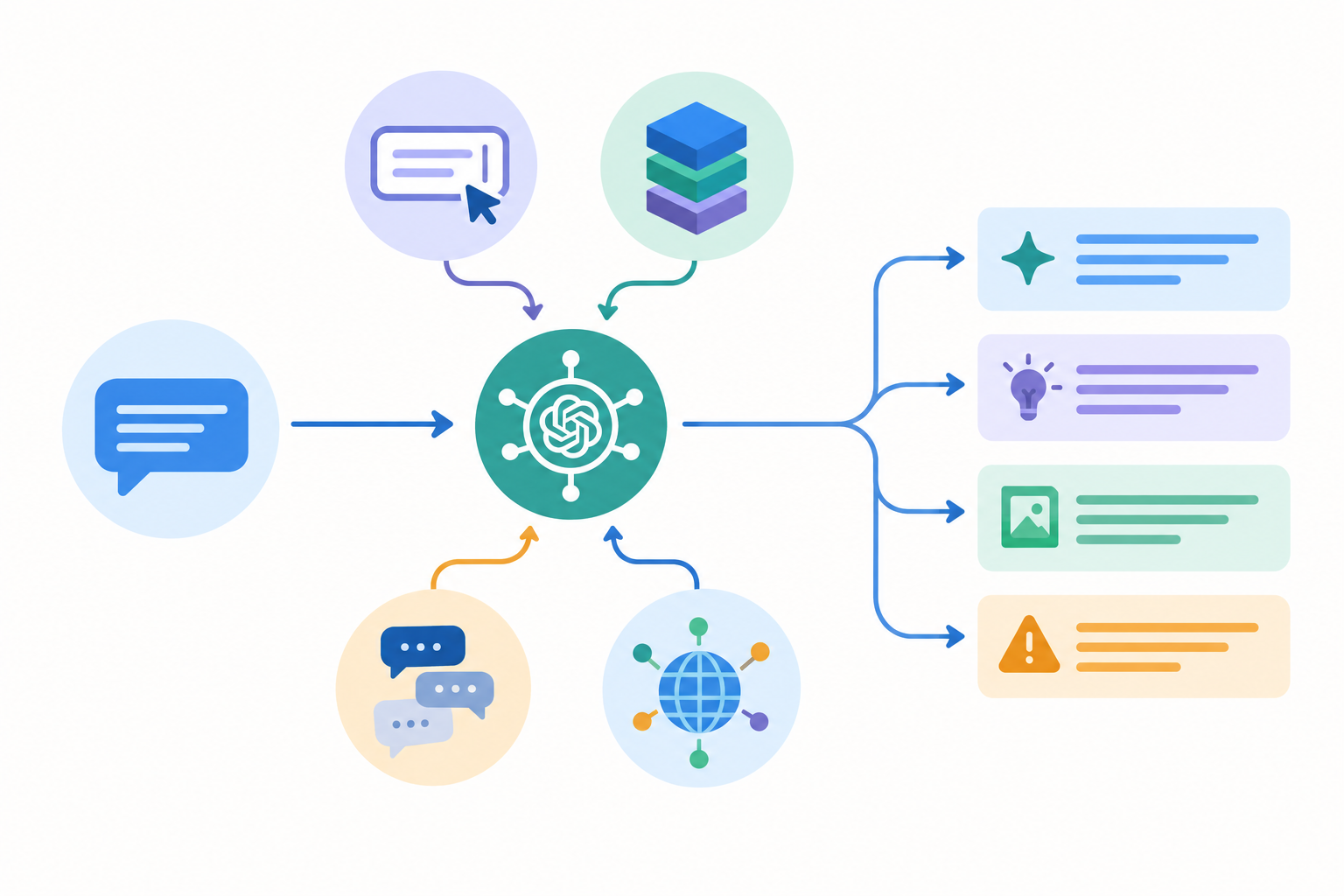
ChatGPT answers change because large language models generate responses probabilistically, and the output shifts with prompt wording, model version, session context, and whether live retrieval is used. A single screenshot therefore captures one draw from a distribution, not your brand's real position. Reliable reporting needs many relevant questions, run repeatedly across engines, and summarised as trends, averages, and share of voice. In this guide I explain why the variation happens, what it means for the numbers you put in front of leadership, and how to build a sampling method that survives scrutiny, limits included.
Why ChatGPT answers change: different responses to the same question
You ask ChatGPT for the best tool in your category, and your brand is third on the list. You ask again ten minutes later and you are first, or missing entirely. The wording has shifted, the order has changed, and a competitor you had never seen mentioned has appeared. The natural reaction is to suspect something has broken or that your brand has been dropped. In almost every case, neither is true.
A language model produces text one token at a time, sampling each next word from a probability distribution rather than looking up a stored answer. Temperature and related sampling settings control how much randomness enters that process, so identical inputs can legitimately yield different outputs. OpenAI's guidance on reproducible outputs says that outputs are nondeterministic by default. Even when a developer fixes the seed parameter and the request settings, determinism is only mostly achievable, not guaranteed, and the API returns a system_fingerprint precisely because backend changes can alter results. That guidance concerns the API, but the same sampling principle applies to the consumer ChatGPT product.
Variation is simply how generative AI works. It is not a defect and it is not evidence of a penalty. The idea I want you to carry through the rest of this article is that each answer is one observation from a range of possible answers. Our job as analysts is not to capture a single observation and treat it as truth. It is to estimate the range: how often your brand appears, how prominently, and how that pattern moves over time.
What causes ChatGPT answer variability? Wording, models, and retrieval
Sampling randomness is only the first layer. Several other factors move answers, and a credible method has to control or at least record each one.
- Prompt wording. 'Best CRM for small UK businesses' and 'top CRM tools for a startup' sound equivalent to a person but can surface different brands in a different order. Research supports the general point. Zhu et al. (2023, arXiv:2306.04528) tested the robustness of 13 large language models across 6 datasets to prompt changes, and Sclar et al. (2023, arXiv:2310.11324) reported accuracy differences of up to 76 percentage points on some tasks purely from formatting choices. Neither study measured brand mentions, so I cite them as evidence of prompt sensitivity, not as a brand-visibility statistic.
- Model version and updates. ChatGPT is a changing product, not a fixed endpoint, and OpenAI records changes in its ChatGPT release notes. A concrete example: an updated GPT-4o went live in ChatGPT on 25 April 2025 and was rolled back within days after it proved overly agreeable, as OpenAI explained in its post on sycophancy in GPT-4o. Style, emphasis, and recommendations can move with no change on your side.
- Session and personalisation. Conversation history, memory, custom instructions, and location signals can all supply context beyond the question you typed. A test run from a logged-in account with a long history is not comparable with one from a clean session.
- Retrieval and live search. When ChatGPT's search feature (introduced by OpenAI in 2024) or another engine browses the web, the answer depends on which pages are retrieved that day. Retrieval-augmented generation, described by Lewis et al. (2020, arXiv:2005.11401), combines a model with external documents. That means content edits, new competitor pages, and index changes can all flow through to the answer.
- Differences between engines. Engines differ in how much they lean on live citations, and the difference often depends on the mode in use. At the time of writing, Perplexity is built around cited web sources, whereas ChatGPT, Copilot, Claude, and Gemini behave differently depending on whether search or browsing is active. These products change quickly, so check the current behaviour of each mode you track and give each engine its own baseline.
One caveat on the evidence: the published research I have cited concerns prompt robustness and reproducibility in general. I am not aware of a rigorous, public figure for how often consumer ChatGPT brand recommendations overlap between repeated runs, and I would treat any such statistic you see quoted with caution until you have checked the original methodology.
The risk of reporting a single ChatGPT screenshot to leadership
The habit is familiar. Someone asks ChatGPT a question, sees the brand ranked first (or conspicuously absent), screenshots it, and the image lands in the board deck. I understand the appeal, because a screenshot is vivid and quick. It is also statistically weak, and it fails in two ways.
- False confidence. A lucky answer flatters the brand. If your true appearance rate for a question is 30%, roughly three in ten runs will show you, and one of those is the screenshot that gets circulated.
- False alarm. An unlucky answer suggests a collapse. With the same 30% rate, seven in ten runs will not show you, and a worried executive may demand action on what is ordinary variation.
A screenshot also hides everything that makes a measurement interpretable: the sample size (one), the exact prompt, the model, the date, whether search was on, and the competitor context that determines share of voice. The credibility cost arrives when a director re-asks the question, gets a different answer, and concludes that the whole channel is unreliable. That distrust is hard to reverse.
So does a single mention in ChatGPT mean your brand is visible? No. One mention shows that appearing is possible, not that it is likely. Visibility is consistent presence: how often, how prominently, and across how many relevant questions your brand shows up over time.
Why query coverage and repeated sampling beat one-off AI visibility checks
Two ideas replace the screenshot. The first is query coverage, meaning the breadth of realistic customer questions in which your brand could appear. These include category questions ('what is the best accounting software'), comparisons ('X versus Y'), problem-led queries ('how do I stop chasing late invoices'), and purchase-intent queries ('accounting software for a UK limited company'). Checking one question tells you nothing about the others.
The second is repeated sampling: running each question many times so you can report an appearance rate instead of a yes or no. Before the arithmetic, one design point matters. Your data has two different sources of change, and they should not be mixed.
- Within-batch variation is the randomness you see when you repeat the same prompt, on the same engine and mode, in fresh sessions, within a short window (say, one sitting). Repeated runs let you estimate this.
- Change over time reflects model updates, retrieval changes, new competitor content, and your own work. If you spread runs across several days, you capture both kinds of variation at once and cannot tell which is which.
My recommendation is to treat each day (or each scheduled run) as its own batch with conditions held constant, record the date and conditions alongside the resulting rate, and then compare batches across time. That way, spread within a batch is sampling noise, and drift between batches is what you investigate.
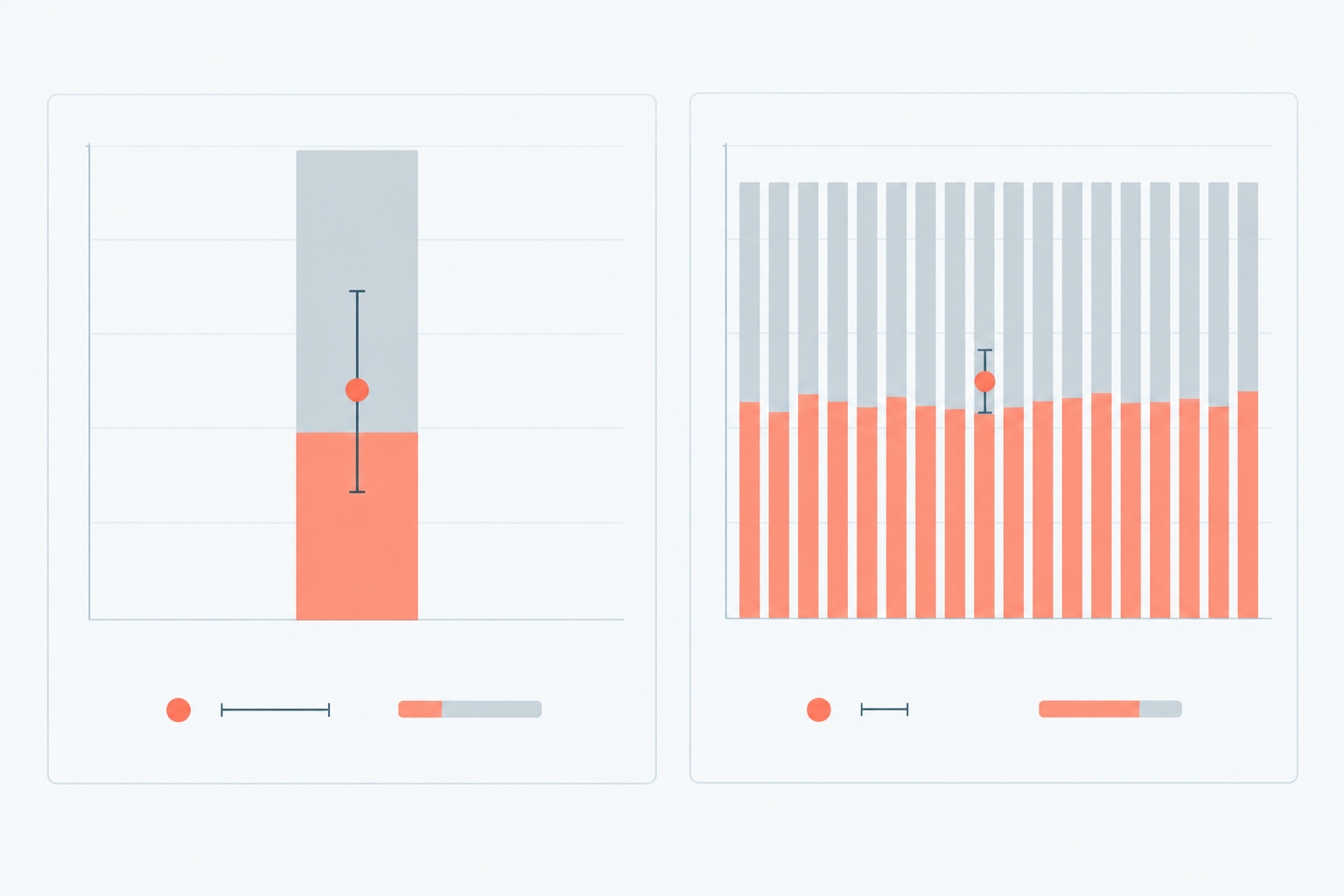
Here is a simple binomial illustration of why batch size matters. Suppose your brand's true appearance rate for a question is 40%, and suppose each run in a batch behaves as an independent draw. That independence is an assumption, not a guarantee. Runs sharing a model snapshot, a retrieval index, or a cached source may be correlated, which would make the real uncertainty wider than shown. Using the normal approximation for a 95% confidence interval, the margin of error is roughly:
| Runs in a batch | Approximate margin of error (illustrative) |
|---|---|
| 1 | Meaningless (result is 0% or 100%) |
| 10 | about ±30 points |
| 20 | about ±21 points |
| 50 | about ±14 points |
| 100 | about ±10 points |
So 8 appearances in 20 runs gives a 40% rate with a plausible range of around 19% to 61%. That is still wide, but it is far more informative than one run. The interval narrows only with the square root of the sample, so returns diminish. Treat the table as an illustration of the arithmetic, not a measurement of any particular engine. The normal approximation is also rough at small batch sizes, and a Wilson interval is a better choice if you want to report precise ranges.
There are other signals a screenshot rarely captures. Position-weighted citations recognise that being the first recommendation or first cited source is worth more than appearing fifth. Soft mentions, where the brand is named without a link, matter because many answers recommend a company without citing it. And because OpenAI states that ChatGPT's search answers draw on sources retrieved for that query, I recommend logging cited domains and URLs alongside the mention itself.
How many runs do you need? There is no validated threshold. As a pilot heuristic, I suggest 10 to 20 runs per important question per engine per batch, with more for questions that flip between presence and absence and fewer for stable ones. Use the interval above to judge whether that is precise enough for the decision in front of you, and always publish the rate together with the run dates, engine, mode, and sample size.
How to read an AI visibility score, citations, and share of voice over time
Once you are collecting repeated samples, the question becomes how to read them. These are the principles I apply.
- Use a composite AI visibility score for the headline, but treat it as an index, not a standard. There is no standardised industry definition of an AI visibility score, and providers differ in prompt sets, weighting, and scales. A purely illustrative formula would be 0.4 × query coverage + 0.3 × position-weighted citation score + 0.2 × share of voice + 0.1 × soft-mention rate, each scaled 0 to 100. The weights are hypothetical. What matters is that any score embeds judgements you should be able to inspect. Compare trends only within one methodology, document any change to it, and keep the components visible, because a brand appearing in an answer is not the same as its website being cited.
- Report share of voice. This is your brand's mentions as a proportion of all brand mentions across the tracked question set. Leadership already understands it from SEO and PR, which makes it the natural bridge. State the denominator and whether multiple mentions in one answer count.
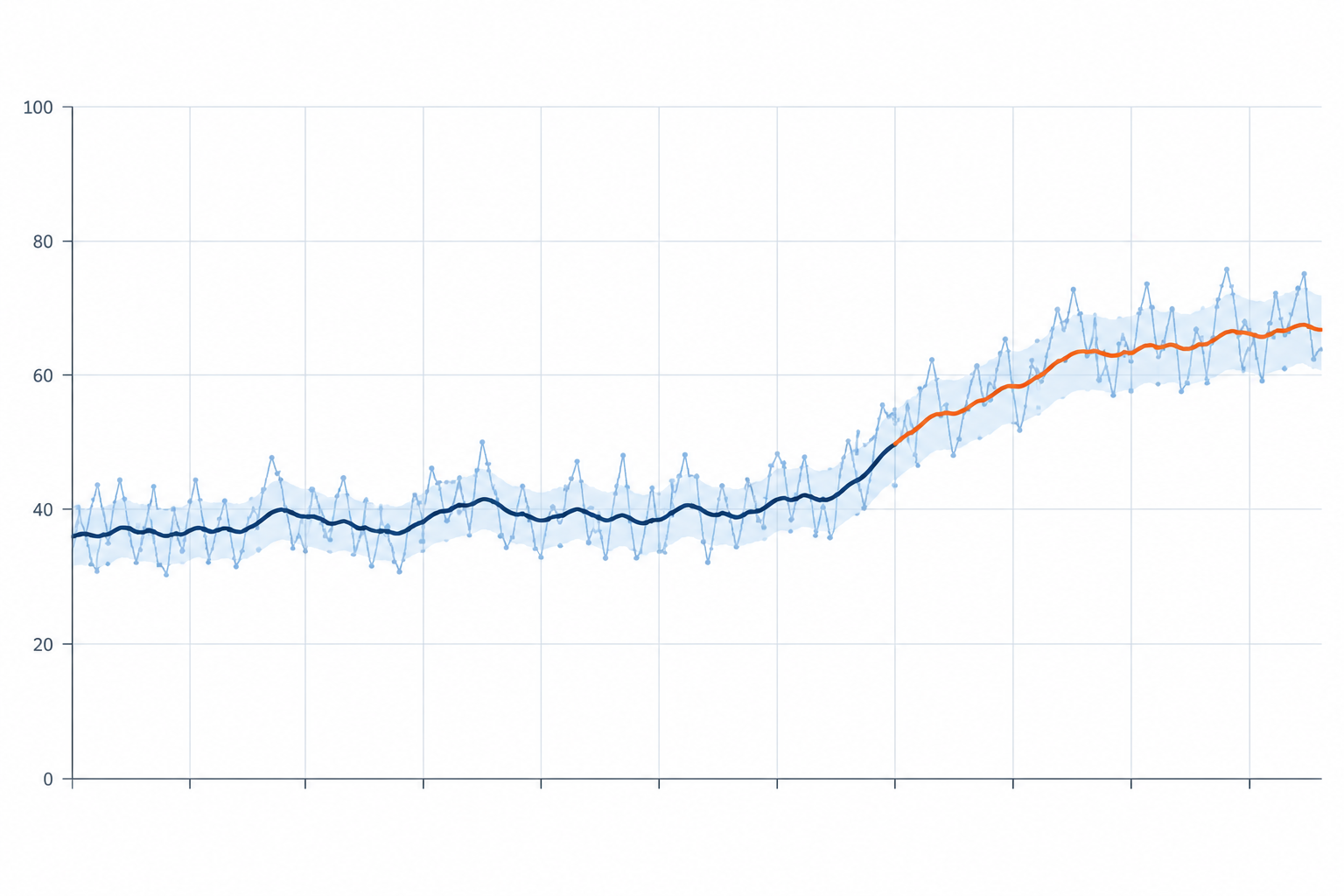
- Smooth with rolling averages. A 7-day average removes daily noise, and a 28-day average shows the underlying direction.
- Separate signal from noise. Look for sustained movement beyond your normal day-to-day variation, and for movement that shows up across multiple engines and multiple question groups.
- Apply a threshold rule of thumb. This is my heuristic, not a validated standard: treat a shift as real when it persists for two to four weeks and exceeds the baseline fluctuation band you measured in your first few weeks.
- Add sentiment and competitor tracking. A rise in mentions with negative framing is not a win, and a rise in your share of voice means little if it came from one competitor's page temporarily dropping out of retrieval.
- Annotate known changes. Mark model releases and product updates on the chart so that a step change is not misread as a marketing result.
A short worked example, with invented numbers, shows how this plays out. Suppose that over the first three weeks your 28-day average appearance rate for a question group sits between 22% and 30%, which becomes your baseline band. In week six the 7-day average reaches 38% and stays there for three weeks, on two engines, across three question groups. That meets my heuristic: sustained, outside the band, and visible in more than one place. If the rate had touched 38% for a single day on one engine, I would log it and wait.
What counts as a real change versus noise? Sustained, beyond your band, and visible in more than one place. Do engines vary by the same amount? Not necessarily, so chart each separately before combining them.
It is also worth keeping the wider context in proportion, and being clear about its geography. Pew Research Center's 2025 analysis of 68,879 Google searches by 900 U.S. adults found AI summaries in about 18% of searches, and users clicked a traditional result in 8% of visits with a summary versus 15% without. Gartner forecast in 2024 that traditional search engine volume would fall 25% by 2026, though that is a global forecast, not an outcome. Neither measures UK behaviour or ChatGPT brand mentions, and UK patterns may differ. They do help explain why answer-engine visibility deserves a place alongside conventional metrics. Google's documentation on AI features in Search explains that this traffic is counted within Web search in Search Console. It does not tell you what ChatGPT says about you, so do not conflate the two.
A simple AI visibility sampling method your team can follow
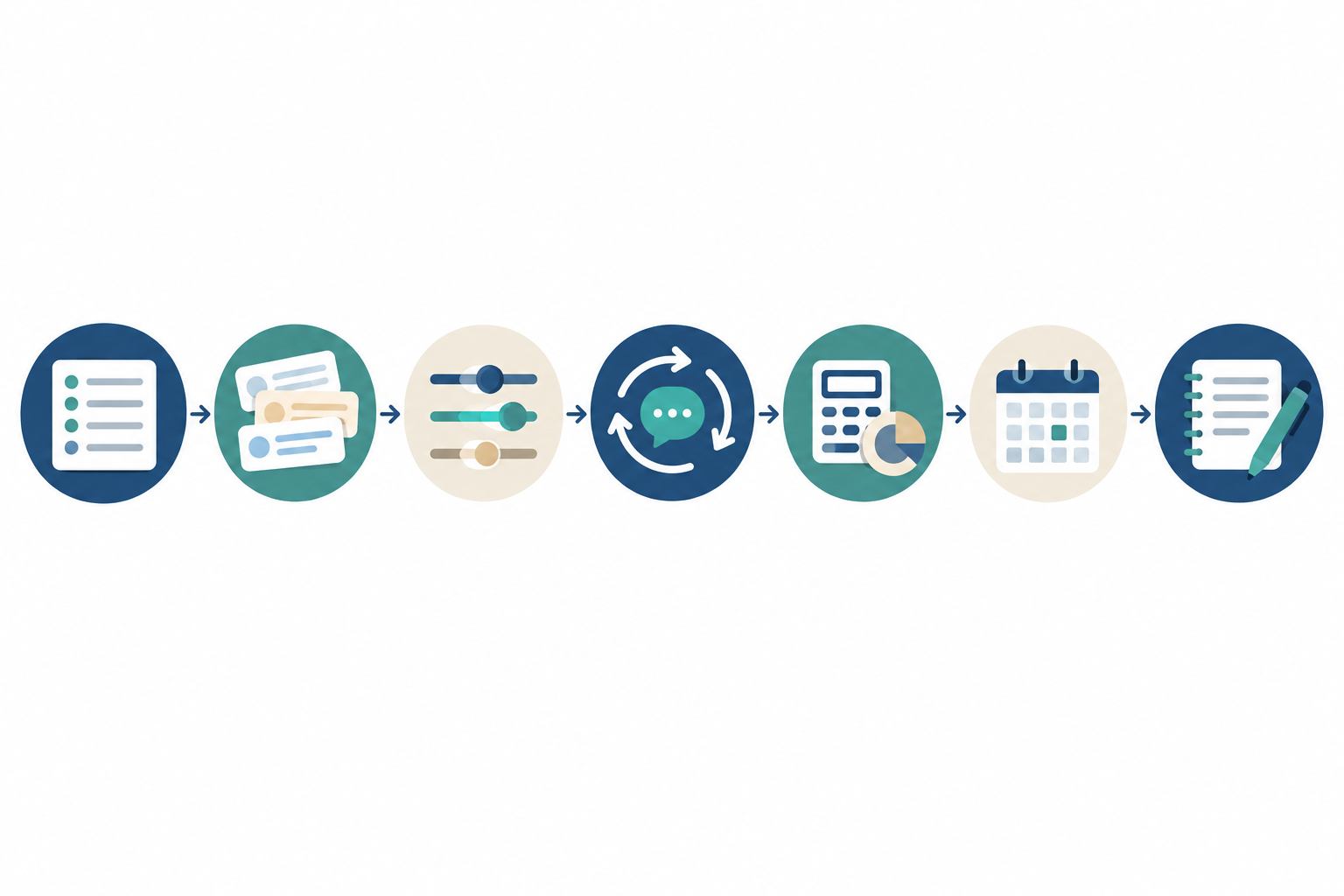
You can run a credible pilot with nothing more than a spreadsheet. Here is the method I recommend.
- Build a question set of 30-50 realistic customer questions. Draw them from your website, sales calls, search queries, and support tickets, and group them by intent: category, comparison, problem-led, and purchase.
- Add prompt variants for the most important questions. Keep these in a separate set so that wording sensitivity is measured without contaminating your stable baseline.
- Fix your conditions for each batch. Choose the engines, use UK English phrasing and UK-specific queries, use logged-out or clean sessions with a new conversation for every run, and note whether search or browsing was active. Run each batch within a short window so the model version and retrieval index are as constant as you can make them. The only thing you deliberately let vary within a batch is sampling randomness, and between batches it is the date.
- Run each question 10-20 times per engine per batch, as a pilot heuristic. Record the date and time, exact prompt, model or mode, whether the brand is mentioned or cited, its position, the sentiment, which competitors appear, and the cited sources.
- Calculate appearance rate, average position, and share of voice for each question group, not just in aggregate, and report each rate with its run count and date.
- Repeat on a schedule and chart batches against a baseline, flagging any known model or product change.
- Document your method and every change to it, so the series stays comparable.
I should be honest about the limits. Thirty questions, three engines, and ten runs each comes to 900 responses per batch, and every one needs to be read and coded. That is feasible for a one-off pilot. It gets time-consuming very quickly, though, and inconsistency creeps in as different people code answers differently. A short coding guide and a second reviewer on a sample of answers help considerably.
When to automate: LLM monitoring and daily AI visibility tracking
The tipping point arrives when you track more than a handful of questions, more than one engine, or need weekly reporting. At that stage the labour of manual coding outweighs the cost saving, and consistency suffers. Daily AI visibility tracking also produces enough data for rolling averages and variation bands to mean something.
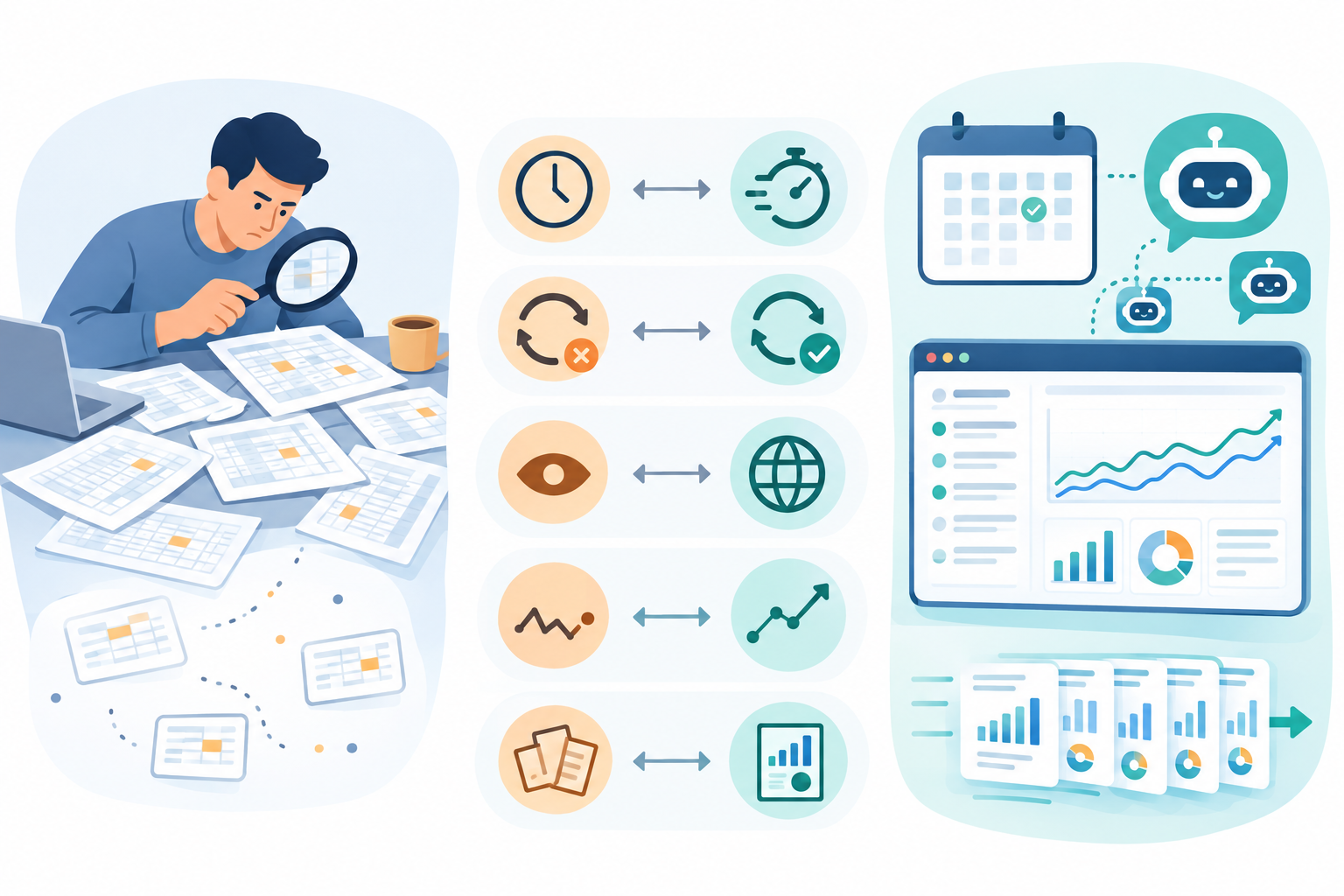
| Dimension | Manual spreadsheet sampling | Automated daily monitoring |
|---|---|---|
| Effort | High and recurring | Set up once, runs continuously |
| Consistency | Varies by person and day | Same questions, same process |
| Engine coverage | Usually one or two | Several engines in parallel |
| Trend quality | Sparse, hard to smooth | Daily data, rolling averages |
| Reporting readiness | Built by hand each time | Digests and exports on tap |
| Cost | Staff time | Subscription |
Disclosure: MentionOwl is our product, so read this paragraph as a vendor-specific example, not neutral advice. MentionOwl crawls your website, generates customer questions, and runs them daily against ChatGPT, Claude, Gemini, Copilot, and Perplexity, recording answers, citations, sentiment, and competitor mentions. Its 0-100 visibility score is a proprietary index built from query coverage, position-weighted citations, share of voice, and soft mentions, so it is not interchangeable with other vendors' scores. It also has weekly digests, a REST API, and AI legibility audits. Please check current features and pricing with the vendor before relying on any of this.
Whichever tool you evaluate, I would ask five questions. Can you see and edit the question set? Does it record the engine, mode, and date for every run? Does it show component metrics as well as a headline score? Can you export raw answers to audit the coding? And is the scoring method documented well enough that you could explain it to a sceptical director?
So, can you track brand mentions in ChatGPT automatically? Yes, and LLM monitoring tools exist for exactly this, at sample sizes manual work cannot sustain.
How to explain ChatGPT volatility in a leadership report
The data only helps if leadership trusts it. This is the structure I use.
- Lead with the message. AI answers are probabilistic, so we report ranges and trends, just as we do with weather forecasts or paid-media performance.
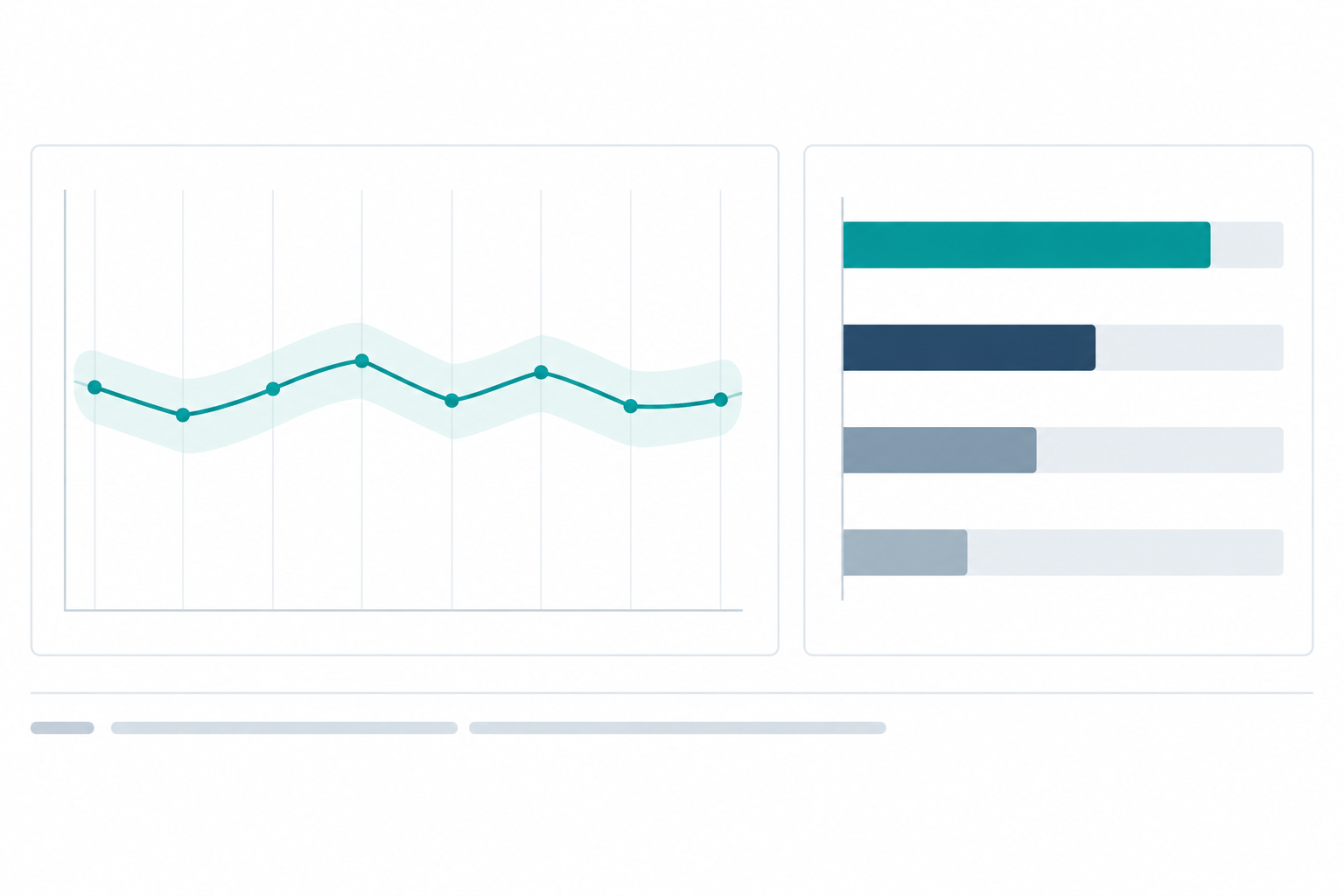
- Show a headline metric with a variation band. Present the visibility score as a trend line with a shaded normal-variation band, not a single number.
- Present share of voice against two or three named competitors, with the sample size stated.
- Separate signal from noise explicitly. List what moved beyond the baseline band and what did not.
- Add a short methodology note covering question count, run frequency, engines, modes, and dates.
- Close with actions and owners: content updates, AI legibility fixes, citation-building work, and the next review date.
- Keep a script ready for the inevitable challenge.
When a director says, 'But I asked ChatGPT and we weren't there,' you might respond:
'That's a fair observation, and it's one possible answer out of many. ChatGPT gives different answers each time, so we don't rely on a single result. Across 40 questions run daily, we appear in around X% of answers, against Y% for our nearest competitor, and that figure has been stable or rising for four weeks. Your result is consistent with us not appearing in some runs, which is exactly what we measure.'
That answer turns an anecdote into a conversation about rates, which is where the useful decisions get made.
Frequently asked questions about ChatGPT answer changes and AI visibility
Why does ChatGPT give me a different answer every time I ask?
Because the model samples its text probabilistically rather than retrieving a fixed answer. Wording, session context, model version, and live retrieval add further variation.
How many times do I need to run a question to trust the result?
There is no validated threshold, and one run is never enough. Ten to twenty runs per important question, per engine, per batch is a pilot heuristic. Check the resulting interval against the decision you need to make, and report run dates and conditions alongside the rate.
Does a single mention in ChatGPT mean my brand is visible?
No. One mention shows that appearing is possible, not that it is likely. Visibility is how often, how prominently, and in how many relevant questions you appear over time.
How do I report AI visibility when the results fluctuate?
Report trends, not snapshots: a visibility score with a rolling average and variation band, share of voice against named competitors, the sample size, and a methodology note.
Do different AI engines vary by the same amount?
Not necessarily. Variation depends on each engine's mode and how much it relies on live retrieval, and both change over time, so track each engine separately before combining them.
What counts as a real visibility change versus normal noise?
A change that is sustained, exceeds your baseline band, and appears across several questions or engines. My two-to-four-week persistence rule is a heuristic, not a standard.
Can I track brand mentions in ChatGPT automatically?
Yes. LLM monitoring tools, including our own MentionOwl, run customer questions on a schedule across several engines and record mentions, citations, sentiment, and competitors. Judge any tool by how transparent its method is.
References
- OpenAI Cookbook, Reproducible outputs with the seed parameter
- Zhu et al. (2023), PromptBench / PromptRobust, arXiv:2306.04528
- Sclar et al. (2023), Quantifying Language Models' Sensitivity to Spurious Features in Prompt Design, arXiv:2310.11324
- Lewis et al. (2020), Retrieval-Augmented Generation for Knowledge-Intensive NLP Tasks, arXiv:2005.11401
- OpenAI, ChatGPT release notes and Sycophancy in GPT-4o
- OpenAI, Introducing ChatGPT search
- Pew Research Center (2025), Google users are less likely to click on links when an AI summary appears in the results
- Gartner (2024), Gartner Predicts Search Engine Volume Will Drop 25% by 2026
- Google Search Central, AI features and your website