Building a Content Strategy Optimized for AI Citations: A Founder's Guide to Generative Engine Optimization
Learn how to build a content strategy for AI citations without a marketing team. Practical guidance on formats, prioritization, and measuring AI SEO r
Content Strategy for AI Citations: An AI SEO Guide for Solo Founders
Getting cited by AI models has less to do with publishing more content and everything to do with structuring the content you already have so it's machine-legible, directly answers specific customer questions, and clearly establishes your authority on a narrow set of topics. I've spent the last several months analysing citation patterns across ChatGPT, Claude, Gemini, and Perplexity for founders who assumed the answer was simply "write more," and the data consistently tells a different story.
I've found that a founder with 15 well-structured pages will consistently outperform a competitor with 200 unstructured ones, because AI engines are optimising for extraction efficiency, not word count. If you're a solo founder without a marketing team, this is genuinely good news. It means the path to AI visibility runs through precision, not production volume.
This guide walks through exactly how to build a content strategy for AI citations that respects the reality of your time budget: where structure matters more than volume, which formats generative engines actually prefer to lift and cite, how to prioritise topics without guessing, how to repurpose what you've already published, and how to measure whether any of it is working.
Why content structure matters more than content volume for AI SEO
To understand why structure wins, you need to understand the underlying extraction mechanics. Large language models don't retrieve and cite entire web pages. They retrieve and cite chunked passages. When ChatGPT, Perplexity, or Gemini pull a source into an answer, they're typically working with a specific paragraph, a definition, a table row, or a short block of text, not your 3,000-word article in its entirety.
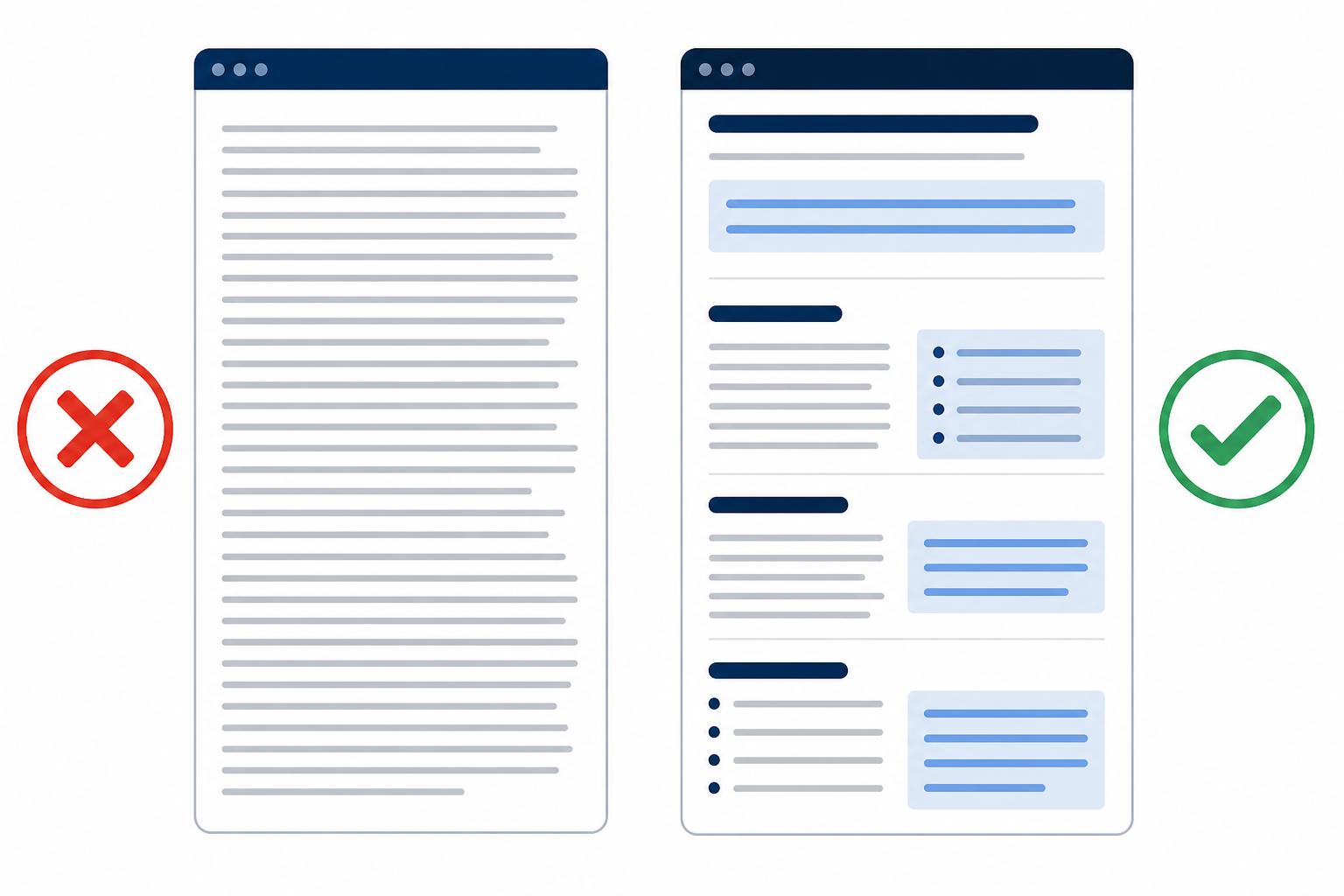
This means structure at the paragraph and heading level is doing far more work than most founders realise. A page can be topically relevant and still be difficult to cite if the actual answer is buried three paragraphs deep in scene-setting narrative.
Google's own guidance on AI features is instructive here, even though it's written primarily for AI Overviews rather than third-party chatbots. The company states plainly that clear headings, descriptive titles, concise definitions, structured lists or tables, and nearby source links help AI systems interpret and verify a page's claims. Google also notes that sites don't need special AI markup or a separate optimisation workflow to appear in AI-generated answers. The same foundational practices that support conventional search, crawlability, indexability, clear structure, genuine usefulness, remain the backbone of AI visibility too.
The academic research backs this up with harder numbers. The Generative Engine Optimisation study out of KDD 2024, which tested 10,000 queries across nine domains, found that adding structural and evidence-based improvements (citations, quotations, statistics, and clearer authoritative framing) produced visibility gains of up to roughly 40% in some domains. That's not a universal guarantee across every commercial AI platform, but it's a meaningful signal that presentation quality is a lever you can actually pull.
This is a real departure from how traditional SEO worked for the better part of two decades. Under classic search ranking, domain authority and backlink volume dominated outcomes, which meant a founder with limited time was structurally disadvantaged against enterprises with years of accumulated link equity. Generative engines don't erase authority signals entirely, but they weight extraction quality far more heavily than raw domain age or backlink count.
A precisely structured page from a six-month-old site can out-cite a sprawling, poorly organised resource from a decade-old domain, because the model is looking for the passage it can lift cleanly and attribute accurately, not the site with the most historical link equity.
There's a genuine founder advantage buried in this shift. Enterprises running on legacy CMS platforms, with dozens of stakeholders and approval layers, often can't restructure hundreds of existing pages quickly even when they recognise the problem. A solo founder can rewrite the opening two sentences of twenty key pages in an afternoon. Speed of iteration matters enormously here, because, as I'll cover later, AI models update their retrieval sources continuously, not on the fixed crawl cycles of the old search index era.
Which content formats do AI models prefer to cite?
There's no single documented ranking factor that guarantees a citation. I want to be direct about that, because plenty of content around generative engine optimisation overpromises certainty that doesn't exist yet. What the available evidence does show is that certain formats consistently map more cleanly to how AI engines chunk, retrieve, and quote source material.
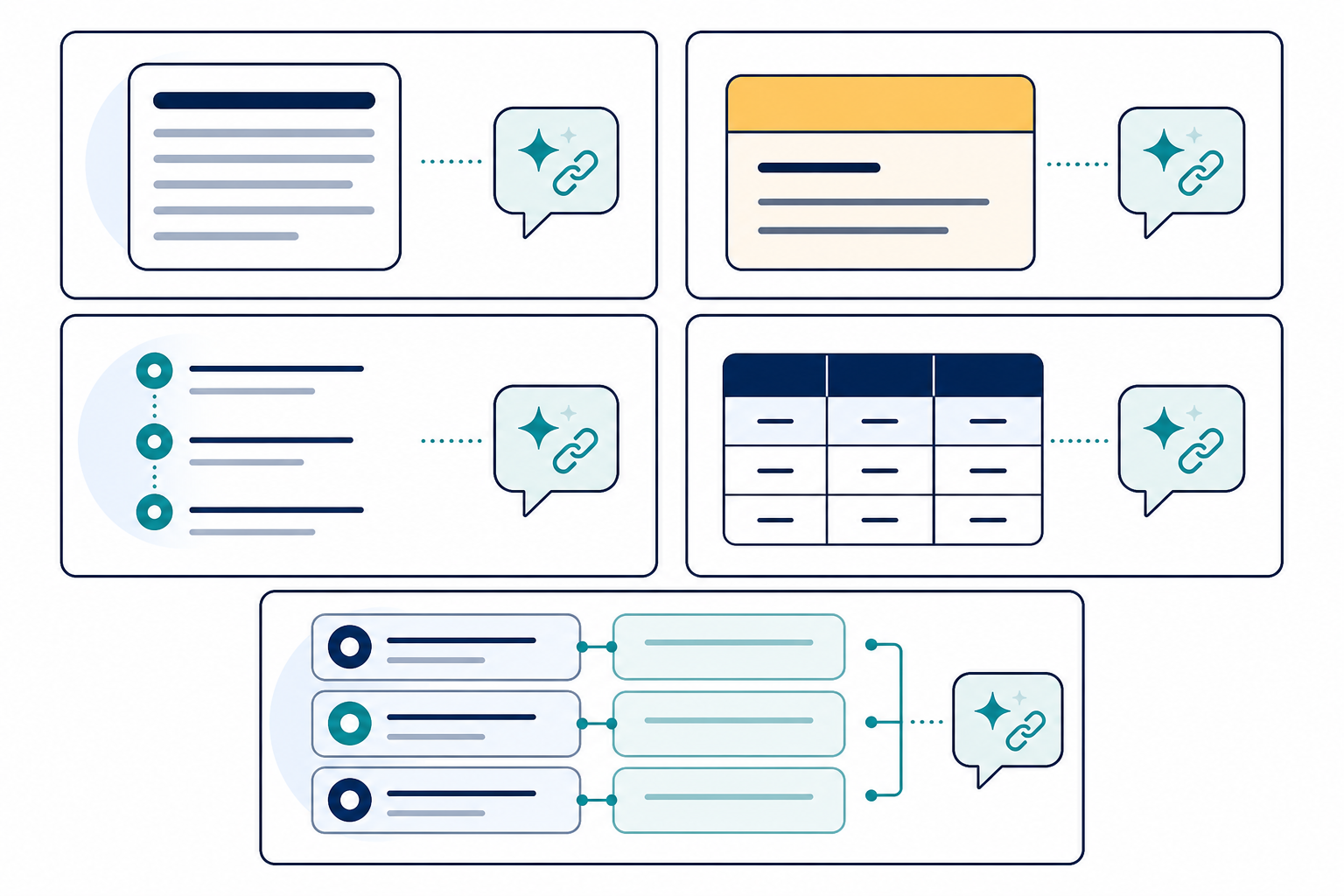
Based on Google's own AI features documentation, Bing Webmaster guidance, and the GEO research findings, these are the formats worth prioritising:
- Direct-answer paragraphs in the first 100 words of a section. State the answer before you explain it. This mirrors how featured snippets worked in traditional search, and it gives the model a concise answer candidate before you expand into methodology, context, or caveats.
- Clear definitional framing. A crisp "what is X" sentence near the top of a page can be lifted almost verbatim as a standalone citation, which is exactly what you want when a prospect asks an AI assistant to explain a concept in your category.
- Numbered steps and process breakdowns. These map cleanly to how ChatGPT and Perplexity structure procedural answers, since the model can extract the sequence without needing to reinterpret narrative prose into discrete steps itself.
- Comparison tables. For "X vs Y" or "best tools for" queries, exactly the kind of bottom-of-funnel searches founders are trying to win, a consistent table covering price, features, and limitations is far easier to cite accurately than the same information scattered across paragraphs.
- FAQ blocks with schema markup. Structured data doesn't guarantee inclusion in an AI answer, but it does increase machine legibility and hands the model a pre-packaged question-and-answer pair it can cite with minimal reinterpretation.
What ties these formats together is evidence density. The GEO researchers found that adding citations, quotations, and statistics to content improved visibility in generative-engine responses in their experimental setting, which reinforces that fluency and authoritative language aren't cosmetic choices. They're functional signals the models appear to weigh when selecting a source to quote.
How to prioritise topics with the highest AI citation potential
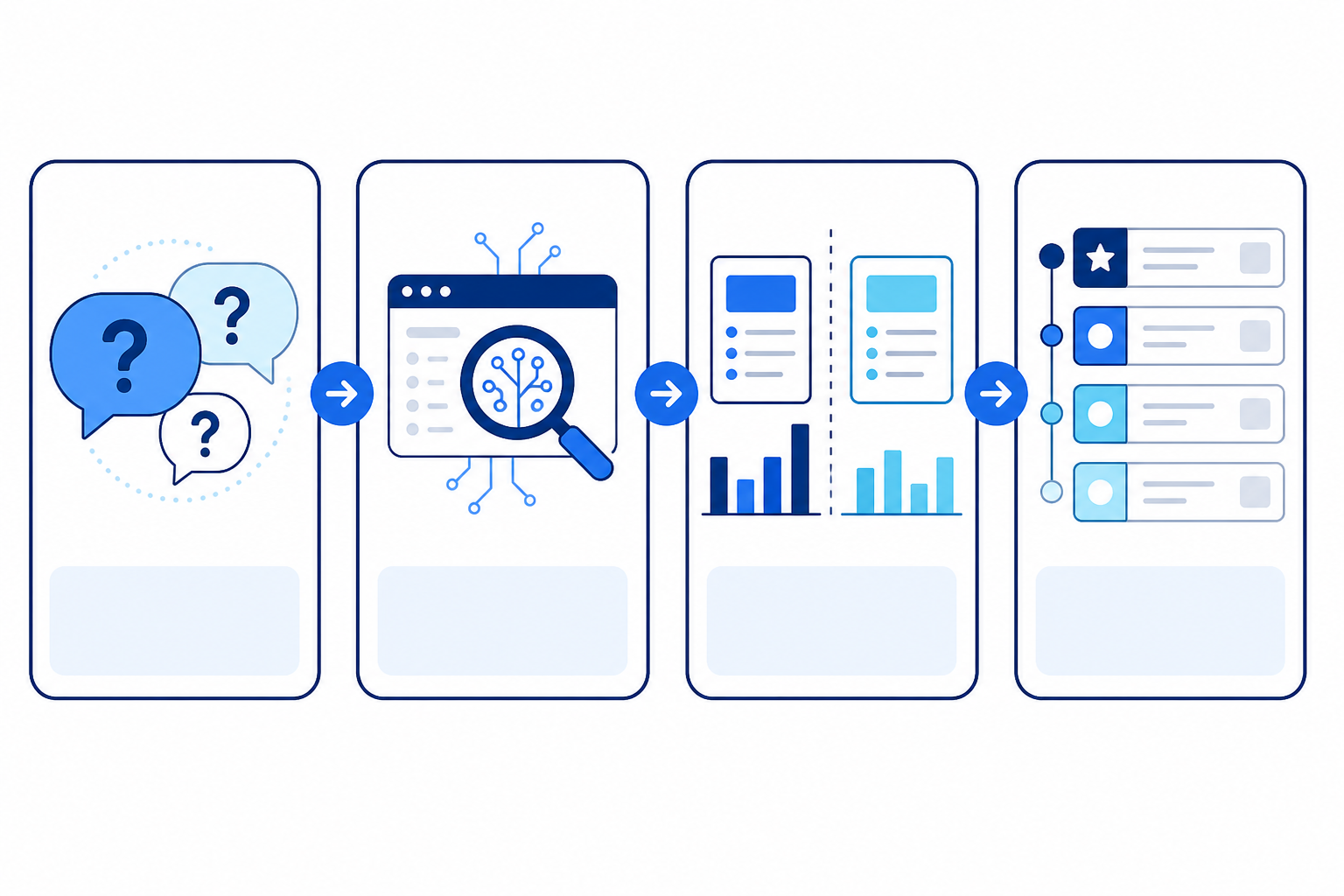
Once you understand which formats perform, the next question is which topics to invest that formatting effort into first. This is where most founders waste time, either working from generic keyword volume tools built for Google, or simply guessing based on gut feeling. Neither reflects how people actually query AI engines during a purchase decision.
- Start from real customer questions, not keyword volume. The phrasing someone types into ChatGPT before buying, often longer, more conversational, and more comparative, differs meaningfully from what they'd type into a Google search bar. Optimising for Google keyword volume alone will leave real gaps in your AI query coverage.
- Use a tool that auto-generates realistic questions your prospects are asking AI engines, rather than manually brainstorming them. This is precisely the kind of repetitive, time-consuming task that doesn't scale for a solo founder. It's also exactly what MentionOwl's question-generation step is built to automate by crawling your site and producing the customer questions AI models are likely being asked about your category.
- Cross-reference where competitors are already being cited and you aren't. These gaps are your highest-leverage content opportunities, because they tell you a query exists, an AI model has an answer, and that answer currently favours someone else.
- Weight commercial intent above informational intent. Bottom-of-funnel comparison and pricing questions tend to surface in higher-stakes recommendation contexts, the moment where an AI assistant is effectively acting as a shortlist generator for your prospect.
- Track query coverage over time rather than running a one-off audit. AI models update their retrieval sources continuously, which means a citation gap you close this month can reopen next month if a competitor publishes a sharper comparison page.
How to repurpose existing content for AI legibility
Here's the part that should genuinely relieve time-strapped founders: in most cases, you don't need to write new content from scratch. You need to restructure what you've already published for AI legibility. The underlying expertise is usually already there. It's the packaging that's failing to get extracted.
- Audit existing posts against basic technical legibility factors. Check for a clean heading hierarchy, semantic HTML, schema markup where relevant, and crawlability by AI-specific user agents. This is the exact kind of systematic checklist that MentionOwl's AI legibility audit runs through 16 technical checks for, precisely because manually auditing dozens of pages one by one isn't a realistic use of a founder's time.
- Break long-form pages into distinct, self-contained sections. Each section should be understandable in isolation, without requiring the reader, or the model, to have absorbed everything above it.
- Add explicit definitional sentences, even to pages that already rank well in Google. Traditional search ranking and AI citation are increasingly separate signals, and I've seen well-ranking pages get skipped for citation simply because they never state their central claim in plain, quotable language.
- Update stale statistics and dates. I've observed models deprioritising content that reads as outdated, even when the core advice underneath it is still perfectly valid. A dated case study or a superseded pricing figure signals staleness that costs you a citation.
- Consolidate near-duplicate posts into one authoritative page. Fragmented content dilutes the specific passage a model would otherwise cite with confidence. If you have three overlapping articles targeting slightly different phrasings of the same concept, merge them.
How to measure which content gets cited by AI
All of the restructuring work above is only useful if you can measure whether it's changing your citation outcomes, and this is where I see the most solo founders quietly give up. Manually querying ChatGPT, Claude, Gemini, and Perplexity every day, across every relevant customer question, simply isn't a viable use of a founder's time budget. Even a modest set of twenty tracked questions across four AI platforms means eighty manual queries a day if you wanted daily coverage, which nobody running a business alone is going to sustain.
This is the specific gap automated AI visibility monitoring closes. Rather than spot-checking your brand name generically, automated daily tracking against your actual customer questions reveals which specific pages and passages are being cited, which competitors are showing up instead, and how sentiment around your brand compares.
MentionOwl's proprietary visibility score, built from query coverage, position-weighted citations, share of voice, and soft mentions, turns this raw citation data into a single trackable number over time, so you're not left interpreting a pile of disconnected chatbot transcripts.
Weekly digests and competitor tracking then let you see whether a specific content update actually shifted citation share away from a competitor, rather than guessing. And the final, often-skipped step is closing the loop: feeding citation performance data back into your topic prioritisation list from the section above, rather than treating measurement as a one-time report you file away.
AI SEO isn't a campaign with an end date. It's a continuous cycle of publishing, measuring, and refining, and the founders who treat it that way are the ones who compound their share of voice month over month.
FAQ: Content strategy for AI and AI citations
Do I need a lot of content to get cited by AI? No. What I've consistently seen is that citation frequency correlates much more strongly with how clearly a page answers a specific question than with total content volume. A handful of well-structured, precisely scoped pages will often out-cite a large volume of generic blog content, which is genuinely good news for solo founders without the bandwidth to publish constantly.
What content formats work best for AI citations? Direct-answer paragraphs, clear definitions, numbered processes, comparison tables, and schema-marked FAQs consistently perform best, because they map to how AI models chunk and extract passages. Formats that bury the answer deep in narrative prose tend to get cited far less often, regardless of how good the underlying information is.
How do I know which articles are being cited? You need to query the major AI engines with your customers' realistic questions and track the results over time, since citations shift daily as models update their retrieval sources. Doing this manually across ChatGPT, Claude, Gemini, Copilot, and Perplexity is impractical for a founder, which is precisely the gap automated AI visibility monitoring is built to close.
Can I repurpose old blog posts for AI SEO? In most cases, yes, and it's usually more resource-efficient than starting from scratch. The work involves restructuring existing pages for machine legibility, cleaner headings, self-contained sections, updated data, and explicit definitional sentences, rather than rewriting the underlying expertise you've already published.