Does ChatGPT Recommend Your Business or a Rival? A UK Small Business Guide to AI Search Visibility
Learn how ChatGPT citations affect local UK businesses, how to test AI search visibility, and practical ways to help customers find you instead of riv
ChatGPT Citations: Does AI Search Recommend Your Business or a Rival? A UK Small Business Guide
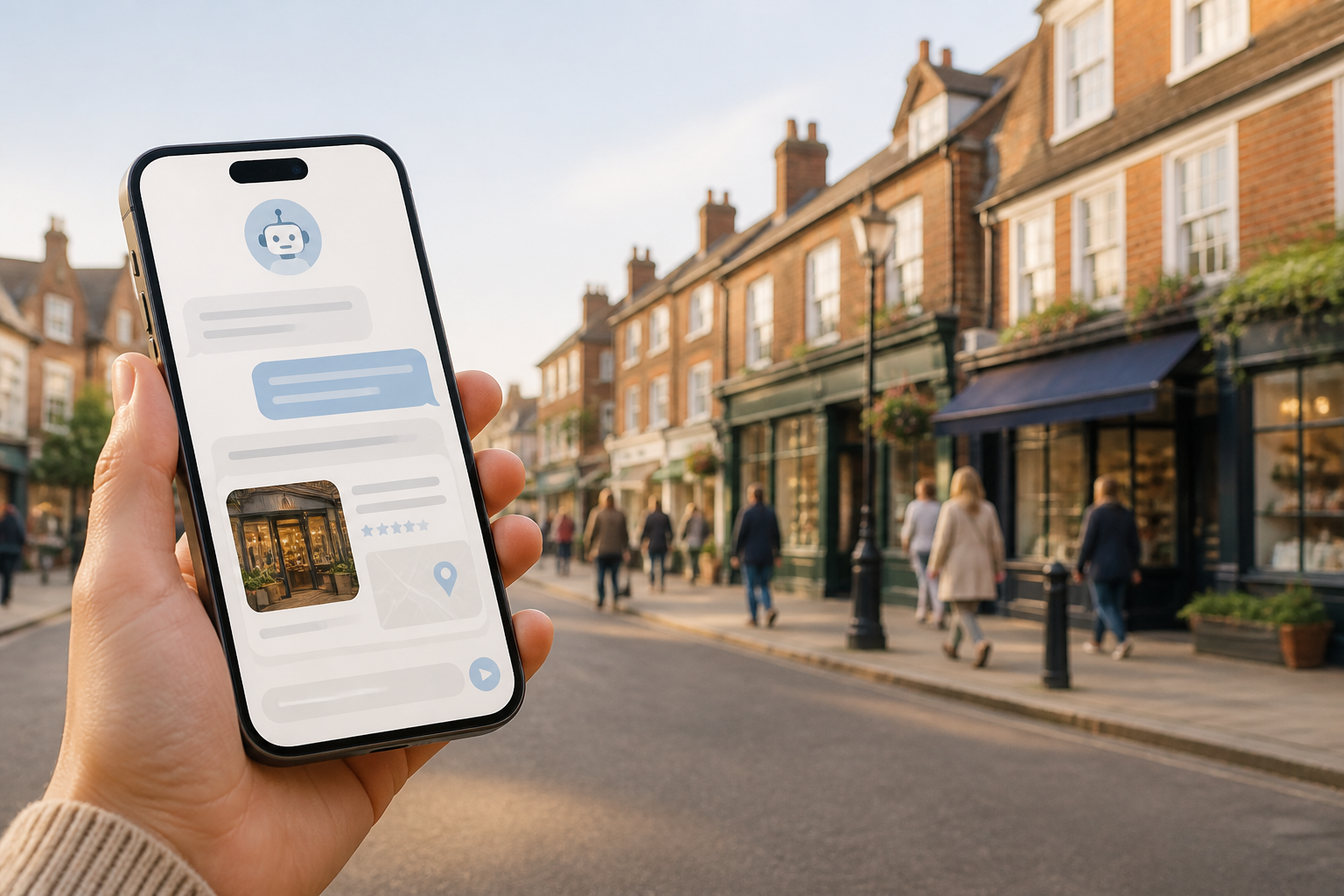
If a customer has mentioned that they "asked ChatGPT" before calling you — or, worse, before calling a rival instead — you're not imagining a fringe trend. ChatGPT citations, along with the recommendations generated by Claude, Gemini, Copilot, and Perplexity, don't appear randomly. These systems draw on a mix of model knowledge, web retrieval, review signals, and structured business data, and they tend to name whichever businesses present that information most clearly and consistently.
There's an important caveat I want to state upfront: no AI provider has published an exact ranking formula for how these citations are generated, and behaviour varies by product, by account, by browsing mode, by location, and by the specific wording of a query. What follows is based on publicly available documentation, my own testing at MentionOwl, and patterns that show up repeatedly across the accounts we monitor — not a confirmed, universal algorithm. With that caveat in place, the practical reality still holds: if your website and online presence aren't structured in a way these systems can read easily, a competitor with clearer signals is likely to get mentioned instead, even if you run the better business on paper. That's measurable, and it's fixable, and that's what I want to walk through below.
Why AI Search Recommendations Matter for UK Local Businesses
The shift from ten blue links to a single synthesised answer is a genuine concentration effect. When a customer typed "best plumber Leeds" into Google five years ago, dozens of businesses had a plausible shot at page one. When that same customer asks ChatGPT or Perplexity today, the answer typically names two or three businesses, sometimes just one.
Some of the evidence for this shift is forecast rather than observed. Gartner predicted in 2024 that traditional search engine volume could fall by 25% by 2026 as chatbots and AI assistants absorb queries that used to go to Google — that's a projection, not a measured outcome, and I'd treat it as directional rather than certain. What we do have is UK-specific survey data: Ofcom's Online Nation research found that 48% of UK adults had used a generative AI tool by 2024. That tells us adoption is real and growing among UK consumers, even though it doesn't tell us precisely how many of those interactions replace a search that would otherwise have gone to Google.
On the purchase-decision side, Capgemini's global consumer research found that 58% of consumers said they'd rather get product or service recommendations from generative AI than from a conventional search engine. That figure is global rather than UK-specific, so I'd treat it as a signal about the direction of consumer behaviour rather than a precise domestic statistic. Taken together, the UK adoption data and the global preference data point the same way: AI-mediated discovery is growing, and it matters just as much for businesses that never sell a single item online, because a query like "best accountant near me" or "emergency boiler repair Leeds" is a phone-call decision, not an e-commerce one.
Here's the specific risk I'd want every small business owner to internalise: AI systems often default to the most legible competitor rather than the objectively best one, because clarity of data tends to reduce the model's uncertainty when it's assembling an answer. A genuinely excellent local business with messy, inconsistent web information can lose out to a mediocre rival whose site, directory listings, and Google Business Profile all tell the same clean, consistent story. This isn't a moral judgement on the AI's part — it's a mechanical consequence of how these systems retrieve and reconcile information from multiple sources. I'd treat AI search visibility as a newer layer of local search, sitting alongside your Google Business Profile and your traditional search rankings rather than replacing either of them.
How ChatGPT Picks Which Businesses to Mention
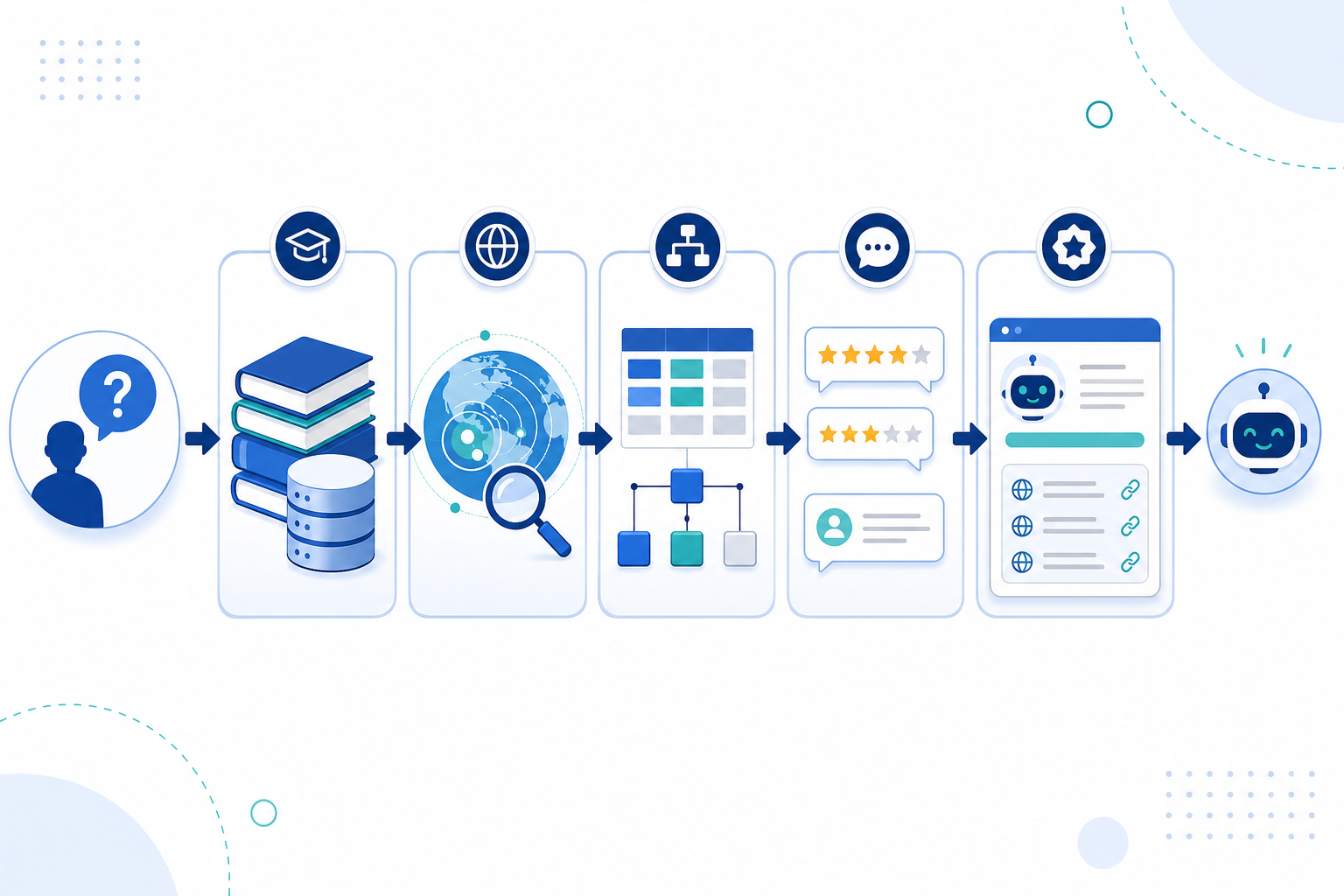
It's worth being precise here, because different AI products use meaningfully different combinations of tools, and treating them as one system leads to bad decisions. Here's what's publicly documented and what remains more uncertain:
- Model knowledge versus live retrieval. ChatGPT's underlying model has some knowledge baked in from its training data, but ChatGPT Search can also perform live web retrieval to pull current information, and OpenAI's own documentation confirms it can use third-party search providers and generate inline citations to the pages it consults. This is why the same question can produce different answers on different days — the system may be drawing on a freshly retrieved page in one instance and on older training knowledge in another, depending on the query and the mode. I'd avoid assuming every AI answer involves a fresh crawl of the web every time; some do, some rely more heavily on stored knowledge, and the exact balance isn't something OpenAI has fully disclosed.
- Structured data and clear site architecture. Google's own guidance on structured data confirms that markup such as LocalBusiness, Service, and Review schema helps automated systems interpret what a page means. It's worth being accurate about what this does and doesn't guarantee: structured data makes your information easier to parse, but neither Google nor OpenAI has confirmed that schema markup directly causes inclusion in an AI-generated answer. A site with clear service pages, explicit location information, and machine-readable business details simply gives a model more usable material than a site built entirely in decorative marketing copy — that's a reasonable inference, not a documented cause-and-effect guarantee.
- Google Business Profile completeness. This is worth prioritising, particularly if your customers are searching via Copilot or Gemini, which have closer data relationships with Bing and Google respectively. Review volume, review recency, category accuracy, and profile completeness all appear to feed into the evidence pool these tools draw on, based on testing rather than official documentation. BrightLocal's 2024 Local Consumer Review Survey found that 91% of consumers use online reviews when evaluating local businesses — that survey skews towards US respondents, so I wouldn't present it as an exact UK figure, but the underlying pattern of review-reliance holds across most English-speaking markets, UK included.
- Third-party mentions often carry more weight than your own copy. Directories such as Yell and Yelp UK, sector-specific listings, local press coverage, and industry roundups frequently appear in AI citations more often than a business's own website, because independent corroboration reduces the model's uncertainty about a claim. If three separate sources describe a rival as "the leading physiotherapy clinic in south London" and your own site is the only place saying anything about you at all, the rival is more likely to be cited with confidence.
- Position and detail within an answer. Being named first, or being named with specific supporting detail, appears to matter more than simply appearing somewhere in a longer list. A passing, generic mention buried in an answer's final sentence carries far less commercial value than being named first with a clear description of what you do and where you're based.
How to Check Your ChatGPT Citations and AI Search Visibility
You don't need specialist tools to get a first read on where you stand, though a single manual check is a snapshot, not proof of a trend. Here's a process I'd recommend running this week:
- Open ChatGPT, Claude, and Perplexity and ask the exact questions your customers would ask. Phrase these naturally — "best [service] in [your town]" or "who should I call for [problem] near [postcode area]" — rather than stiff, keyword-heavy phrasing no real customer would type.
- Log the details of every test, not just the outcome. Note the date, the platform, your location settings, whether you're signed in or using a logged-out browsing mode, the exact wording of the prompt, whether a source was cited, and where your business appeared in the answer, if at all. Run this across at least five to ten realistic queries rather than one, since a single query tells you almost nothing about a pattern.
- Click through on any cited source. This is often the most revealing step, because it tells you exactly which page, directory, or review platform is doing the work of convincing the model to mention a business at all.
- Repeat the same test after a few days, using the same wording and settings. Because some AI answers involve live retrieval and competitors are constantly updating their own information, a result from Monday isn't guaranteed to hold on Friday. Keeping your test conditions consistent is what lets you tell a genuine shift apart from ordinary variation between answers.
- Consider automated monitoring if manual checks aren't enough. Running this process by hand across multiple platforms, multiple queries, and multiple days gets tedious quickly, which is why a handful of tools — including one I work on, MentionOwl — have been built specifically to automate repeated AI query testing and track changes over time. I'd treat this as an optional step for businesses that want continuous tracking rather than a requirement for getting started; the manual process above will tell you most of what you need to know at first.
What to Do If a Competitor Is Winning AI Mentions
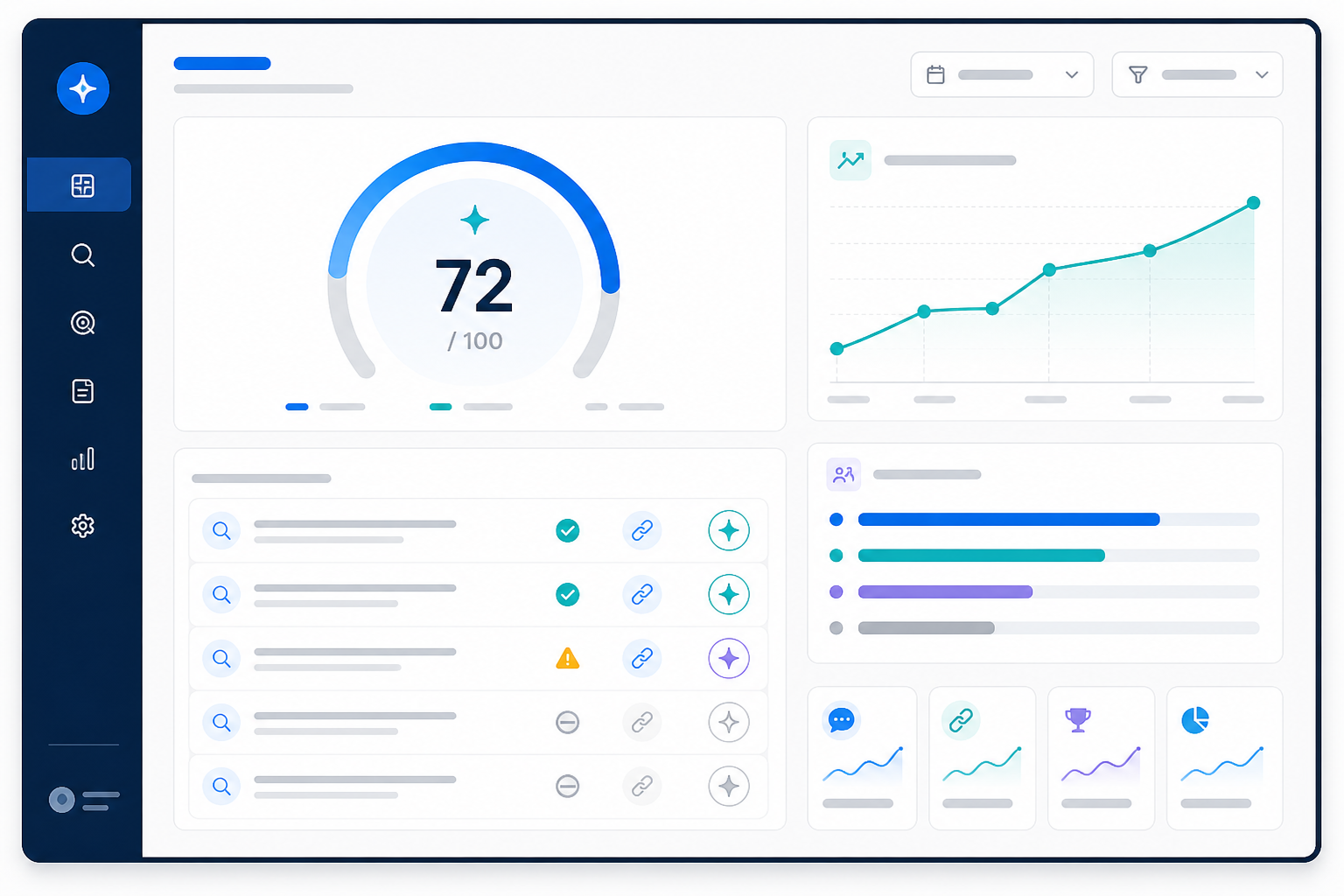
Discovering that a rival consistently gets named ahead of you is frustrating, but it's rarely a signal that they run a better business — more often it reflects a specific, identifiable gap in their data footprint versus yours. I'd work through these in order, because fixing the wrong thing first wastes effort:
- Start by correcting factual inconsistencies and missing local information. Check that your business name, address, phone number, opening hours, and service area are identical across your website, Google Business Profile, and every directory listing you can find. Small mismatches — an old address, an outdated phone number — are disproportionately damaging, because they introduce exactly the kind of uncertainty that pushes a model towards a cleaner-looking competitor.
- Then identify exactly which queries the competitor wins, and why. In our experience, it's rarely a wholesale advantage. It's often a single well-written FAQ page, or one directory listing they have and you don't. Trace the citation back to its source, and you'll usually find a narrow, fixable gap rather than an insurmountable one.
- Close the citation gap deliberately, through legitimate channels. Get listed in the same directories, review platforms, and local publications the AI is already citing for your rivals. I'd stop short of paying for low-quality directory links or attempting to manufacture reviews — both tend to backfire, either through platform penalties or through the kind of inconsistency that damages AI legibility in the first place.
- Publish content that mirrors real customer questions in plain language. AI systems consistently favour direct, well-structured answers over marketing copy. A Princeton-led study on generative engine optimisation (2024) found visibility improvements of up to 40% in controlled benchmark testing after applying techniques such as adding citations, statistics, and clearer explanations to web content. That's evidence from a controlled experiment rather than a guarantee for any individual UK business, but it supports the general principle that clarity and evidential support genuinely help.
- Track tone, not just presence. Being mentioned isn't enough if the description that comes with it is lukewarm. A business that's cited but described vaguely is in a weaker position than one described with specific, positive detail, so it's worth reading how you're described, not just whether you appear at all.
- Set up ongoing tracking rather than one-off checks. AI answers change as models update and as competitors improve their own signals, so a comparison you ran three months ago tells you very little about where things stand today.
Turning AI Search Visibility Into New Customers
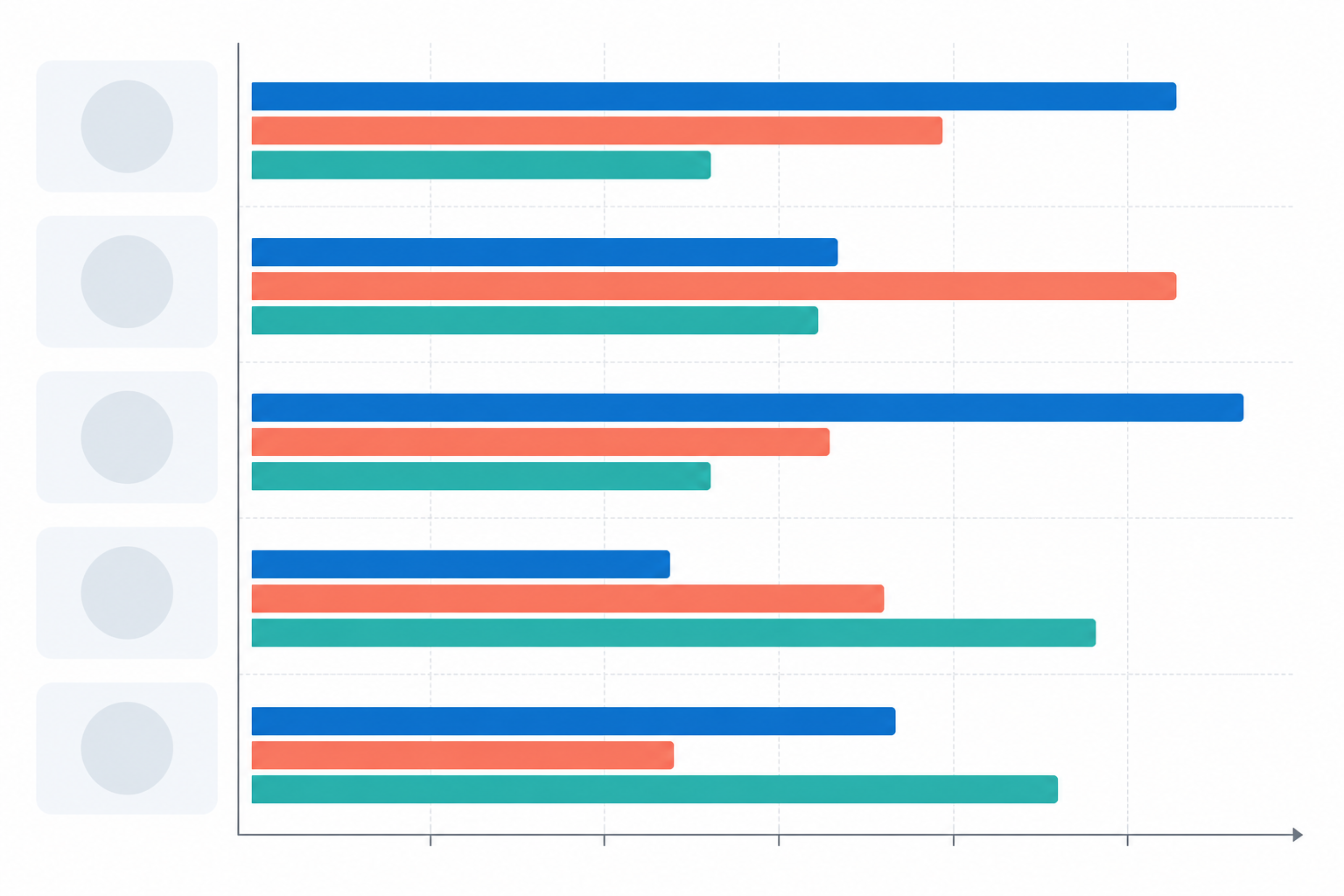
Visibility on its own is a vanity metric if it doesn't translate into enquiries. I'd think about this as a simple chain: visibility → clicks or calls → enquiries → bookings → attributable revenue. Most small businesses can see the first link in that chain reasonably easily and have almost no visibility into the rest.
Part of the difficulty is technical. AI-referred visitors don't always carry the tracking parameters that a conventional search click does, so they can show up in standard analytics as "direct" traffic, as an unlabelled referral, or not be distinguishable at all, depending on your analytics setup and the AI platform involved. This is a genuine measurement gap rather than a solved problem, and I'd be wary of any tool that claims to attribute every AI-driven visit with certainty. What's more achievable, practically, is closing the gap with a few concrete steps: use a dedicated tracking phone number on the pages you expect AI referrals to reach, ask new enquiries directly how they found you, and check your analytics platform's referral reports for AI-related domains, which several major platforms have started to categorise separately.
For scale of context, Adobe Analytics reported that traffic to US retail sites from generative AI sources grew by roughly 1,300% during the 2024 holiday season compared with the prior year, and separately found that AI-referred visitors converted at meaningfully higher rates than visitors from other channels. That's US retail data rather than UK small-business data, so I wouldn't extrapolate an exact conversion figure for your business from it, but it's reasonable evidence that AI referrals are entering a measurable, valuable funnel rather than disappearing.
If you build a regular check into your routine, I'd prioritise the queries closest to purchase intent first — "emergency plumber near me," "best divorce solicitor in [town]" — before working outward to broader awareness queries that matter less to immediate revenue. And for businesses without an e-commerce checkout, the underlying point still holds: an AI recommendation that goes to a competitor instead of you is a lost phone call or a lost booking, not just a lost impression, and local service businesses may be more exposed to this shift than online retailers simply because so many buying decisions now begin with a quick AI query.
FAQ: ChatGPT Citations and AI Search for Local Businesses
How can I tell if ChatGPT recommends my competitor instead of me?
Ask ChatGPT the same buying-decision questions your customers would ask, phrased naturally, such as "who's the best [your service] in [your town]." Run this across several related queries, log the date and the exact wording, and note who gets mentioned, in what order, and whether a source is cited. Because answers can shift from one day to the next, a single check only gives you a snapshot — repeating the same queries over several days, either manually or with an automated monitoring tool, gives a much more reliable picture of whether a rival is consistently winning the mention or whether you happened to catch an unusual answer.
Does my Google Business Profile affect AI answers?
It appears to, based on testing, though the degree varies by platform. Review volume, review recency, category accuracy, and profile completeness all seem to feed into the signals AI tools draw on for local recommendations, particularly Copilot and Gemini, which have closer ties to Bing and Google's underlying data respectively. There's no public confirmation that every AI product weights Google Business Profile data equally, but an incomplete or stale profile makes it harder for any of them to cite you with confidence, even where your actual service quality is excellent.
Does adding structured data guarantee ChatGPT will cite my business?
No. Structured data such as LocalBusiness or Service schema makes your information easier for automated systems to parse, and Google's own documentation confirms it helps search systems interpret a page's meaning. But no AI provider has confirmed that schema markup directly causes inclusion in a generated answer. It's a foundation that removes ambiguity, not a guarantee of a citation, and changes can take anywhere from days to several weeks to show up in answers, depending on how quickly a given platform re-indexes your pages.
What can small businesses do to improve AI search visibility?
Start with accurate, consistent business information across your website, Google Business Profile, directories, and review platforms. Create clear service and location pages, answer common customer questions in plain language, use relevant structured data, and build legitimate third-party mentions. Then test realistic queries across several AI platforms and track whether your business is cited, how it is described, and which sources support the recommendation.
Is this worth tracking if I don't sell online?
Yes. AI recommendations influence phone calls, bookings, and in-person visits just as much as online purchases. If someone asks ChatGPT for the best plumber, dentist, or café in their area and a competitor gets named instead of you, that's a lost customer regardless of whether your business operates online. Local service businesses are, if anything, more exposed to this shift because so many buying decisions now start with a quick AI query rather than a traditional search.