How ChatGPT Decides Which Brands to Recommend (and Why)
Learn how ChatGPT citations differ from model memory and live search, why brands get recommended, and what businesses can realistically influence.

How ChatGPT Decides Which Brands to Recommend (and How ChatGPT Citations Work)
ChatGPT recommends brands through two information paths. The first is learned associations absorbed during training: a statistical tendency for certain brands to appear alongside certain problems. The second is live web retrieval, which pulls in current sources when a query triggers search and produces the visible ChatGPT citations most readers notice. OpenAI does not publish a ranking formula, so the levers in this guide (clear description, independent corroboration, machine-readable pages) are working hypotheses, not confirmed ranking criteria. I label each claim as documented, supported by research or inference, and I'd argue that measuring your own results matters far more than guessing at them. 🦉
Disclosure: I work on MentionOwl, an AI visibility tracker, and I mention it in places as one example of a measurement tool. The method described here works with a spreadsheet and patience.
The short answer: two information paths, one generator
OpenAI's documentation says ChatGPT can respond from information reflected in its trained model, or it can search the web and use retrieved pages in its response. I avoid calling these 'two systems', because the model writes the final answer either way. It just has different raw material to draw on.
The distinction matters because the levers and timelines differ:
- Model memory reflects long-term reputation. It changes only when the model is updated, so it moves slowly and unpredictably.
- Live retrieval reflects what is on the web at the time of the query. It can change when a page is published, updated or newly cited by someone else.
You cannot control the model, but you can shape the evidence it draws on.
Training data vs live retrieval: where a recommendation comes from
OpenAI describes its models as learning patterns from a mixture of data and then generating responses from those patterns, rather than looking up a stored answer for each prompt. For brands, that means associations are probabilistic. There is no table with your company in row three. There is a tendency for your name to appear when certain problems are described, and that tendency is strong, weak or absent depending on how much consistent text about you the model has absorbed.
Live retrieval works differently. ChatGPT search launched on 31 October 2024 and reached logged-in Free users on 16 December 2024. When a question would benefit from current information, ChatGPT may search automatically, and users can trigger search themselves. OpenAI notes that it may rewrite the question into targeted search queries. The answer can then include inline citations and a Sources panel. Those links are the ChatGPT citations readers can inspect, but they don't reveal every factor behind a recommendation.
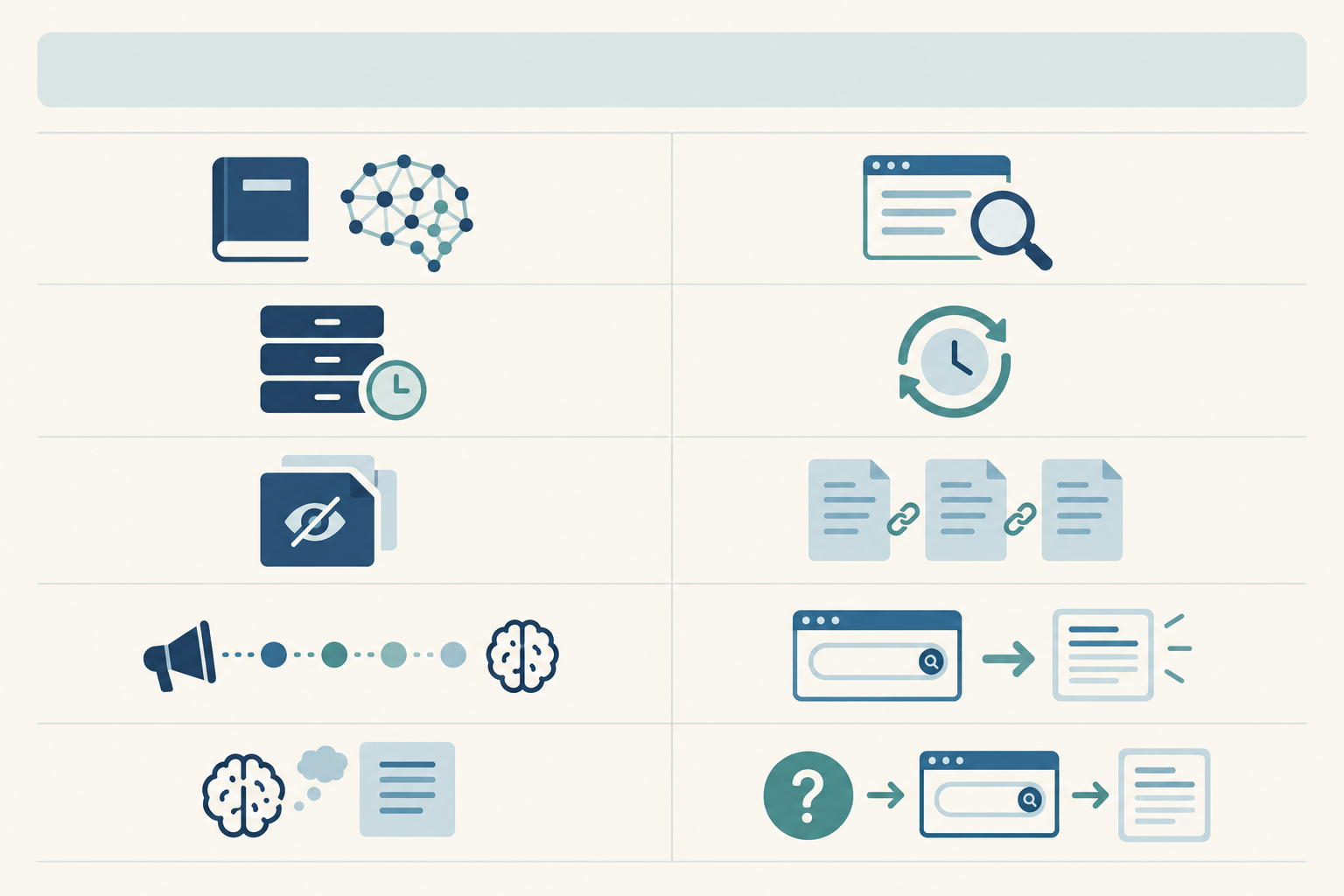
| Dimension | Model memory | Live retrieval |
|---|---|---|
| Source of knowledge | Patterns learned from large text corpora up to a training cutoff | Web pages read at the time of the query |
| Update speed | Slow; depends on future training | Can change after a page is crawled and retrieved; timing varies |
| Visible citations | Usually none | Inline links and a Sources panel |
| Speed of brand influence | Slow and unpredictable | Faster, though never guaranteed |
| Typical triggers (tendencies, not rules) | Broad questions such as 'well-known brands in this category' | Current pricing, availability, recent launches, 'best X for Y' comparisons |
Two cautions apply. First, whether to search is a decision the model makes, and I know of no published trigger list, so treat the table's triggers as observed tendencies. Second, OpenAI is explicit that citations identify sources surfaced for a search-assisted answer. They do not prove that a cited page alone determined the recommendation, and they don't mean ChatGPT endorses the brand.
How to tell whether ChatGPT used live search
Inline source links usually indicate that search was used, and so do references to recent events or current prices. A broad answer naming familiar brands with no links more likely reflects learned associations. Behaviour differs between logged-in and logged-out use and changes over time, so treat all of this as heuristics.
OpenAI's crawler documentation adds a wrinkle. OAI-SearchBot is used to surface websites in ChatGPT search, while GPTBot is associated with content that may be used to improve generative models. You can configure them separately in robots.txt. Allowing OAI-SearchBot can make a site eligible to appear in search, but OpenAI is clear that it does not guarantee a citation.
What gets a brand cited by ChatGPT?
No public formula exists, so I group the signals by strength of evidence. Don't read this as a validated checklist.
Technical eligibility (documented)
- Crawlability. Site owners control access for OAI-SearchBot and GPTBot via robots.txt. If the search crawler cannot reach your pages, they cannot be surfaced in search. This is a prerequisite, not a ranking boost.
- Structured data. Google states that valid structured data does not guarantee a particular search appearance. I apply the same caution here: markup helps with clarity and eligibility, and that's all.
Content and corroboration (inference)
- Clear entity definition. State plainly what the product is, who it is for and how it is priced, and keep that consistent across your site and profiles. This follows from how any system matches a question to a source, but no public source confirms it as a ChatGPT rule.
- Topical match. Pages that answer the exact question a buyer would ask, in their words, give retrieval something quotable. Because ChatGPT may rewrite queries, clear phrasing seems more important, not less.
- Corroboration. The same claims about your brand appear independently on trusted sites (covered below).
- Freshness and specificity. Current pricing, feature and comparison pages are easier to verify than broad promotional copy. A claim linked to a dated test report gives a system more checkable material than 'best-in-class'.
General research (not ChatGPT-specific evidence)
- Specific, well-supported content. The 2024 paper 'GEO: Generative Engine Optimization' (Aggarwal et al., ACM SIGKDD) reported visibility improvements of up to 40% for some methods, such as adding citations, quotations and statistics, in its experimental generative-engine settings. That is a benchmark result, not a measured uplift in ChatGPT citations, and it does not show that ChatGPT treats these features as ranking signals.
AI legibility as the technical layer
I use the term AI legibility for a simple question: can a machine fetch your page, parse its headings, identify the entity it describes and extract a clean answer? You can check this manually (robots.txt rules, heading structure, whether key facts render without scripts) or use an audit tool. MentionOwl's audit, for example, runs 16 technical checks. None of this will make ChatGPT recommend you. It removes avoidable reasons for being overlooked, which is the part of the problem within your control.
The role of third-party mentions, reviews and community sources
Independent sources carry weight for a straightforward reason: they are harder to manipulate than self-published claims. When several unrelated sites describe your product in similar terms, a system trying to be accurate has more reason to trust that description. This is reasoned inference, not a confirmed ChatGPT mechanism, but it fits how retrieval-based systems behave and it matches which domains recur when we track cited answers.
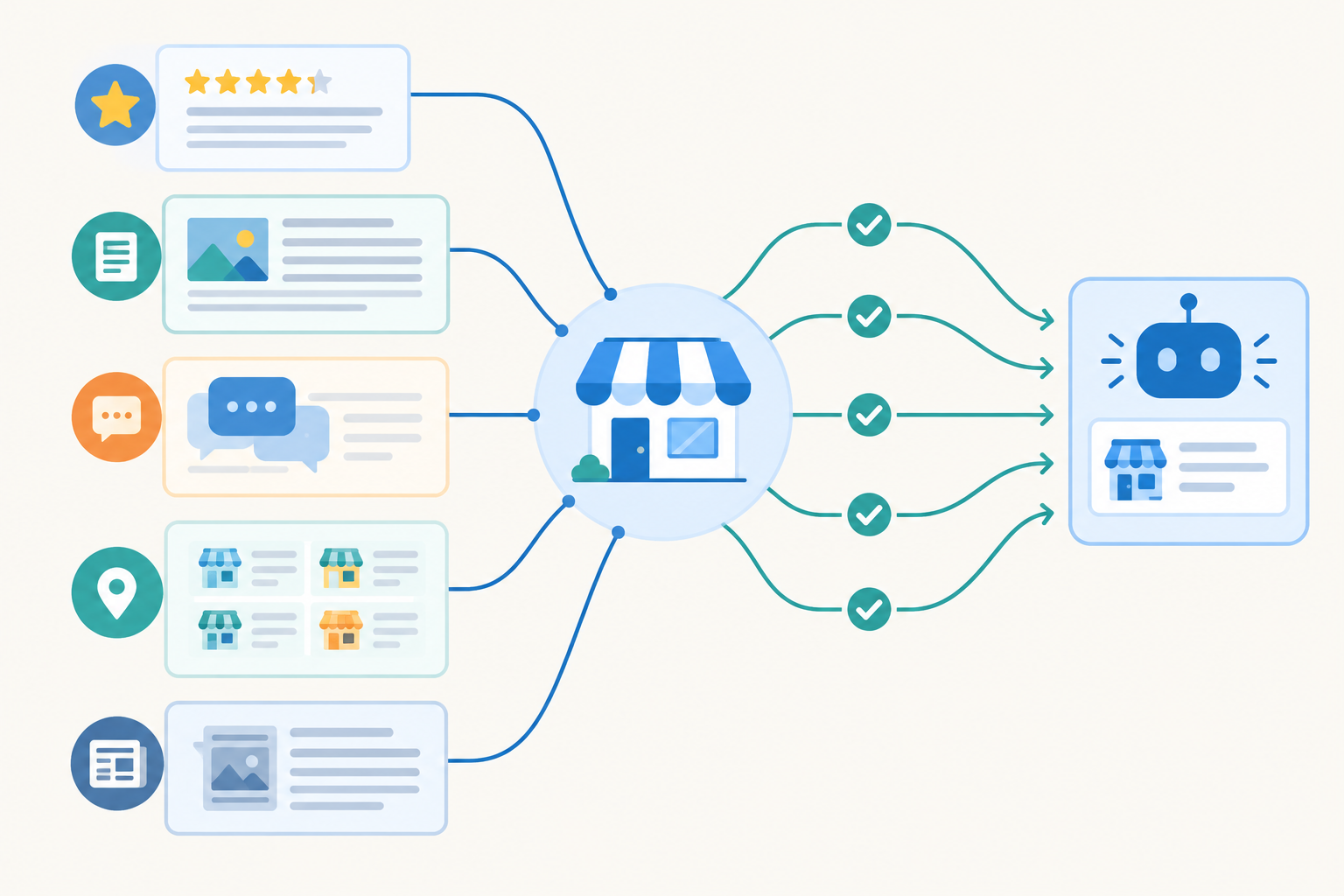
The source types that surface most often are review platforms, 'best of' listicles, industry publications, forums, Wikipedia and comparison sites. One documented example of a community source: in May 2024, OpenAI announced a partnership with Reddit to bring Reddit content to ChatGPT through Reddit's data API. Reddit reported 101.7 million daily active uniques in Q4 2024 (Reddit investor relations), which gives a sense of how large a pool of public brand commentary exists. Audience size does not tell us how often ChatGPT cites Reddit, so I would not build a strategy on that figure.
SaaS versus DTC brand visibility
- SaaS brands should look at review-platform profiles, integration directories, analyst mentions and comparison pages that name them alongside alternatives.
- DTC brands should look at retail listings, editorial reviews, verified customer reviews and creator coverage, since these answer 'which one should I buy' queries.
UK-specific considerations for ChatGPT citations
For UK-phrased queries, I would expect Trustpilot, UK press and UK retailers to feature more heavily than US equivalents, though that is a hypothesis to test, not a published finding. Two illustrative queries:
- 'Best accounting software for a UK sole trader': inspect whether the cited pages include Trustpilot profiles, Which? or MoneySavingExpert-style guides, HMRC's list of Making Tax Digital-compatible software, and r/UKPersonalFinance threads.
- 'Best waterproof walking boots under £150': inspect UK retailer pages (Cotswold Outdoor, Go Outdoors), editorial reviews and verified customer reviews.
On consumer behaviour, the research I can point to is American. BrightLocal's 2024 Local Consumer Review Survey found that 75% of surveyed US consumers always or regularly read online reviews when researching local businesses. I include it only as a US comparison for why reviews matter to discovery generally. It is not UK data and it does not measure ChatGPT behaviour.
Soft mentions and quality control
Being named without a link, which I call a soft mention, still shapes the buyer's shortlist. Share of voice, the proportion of brand mentions each competitor holds across a defined set of questions, is the metric that captures it. Counting only linked citations undercounts your presence in model-memory answers, which rarely include links.
I advise against mass-produced listicles and incentivised reviews. They may buy short-term mentions, but they erode trust and can be discounted. Google's review guidance, for instance, allows businesses to ask for reviews but prohibits offering incentives for them.
Why does ChatGPT recommend your competitor instead of you?
The complaint is usually vague ('they always show up and we don't'). There are many possible reasons, and the way to make the question useful is a ranked diagnosis.
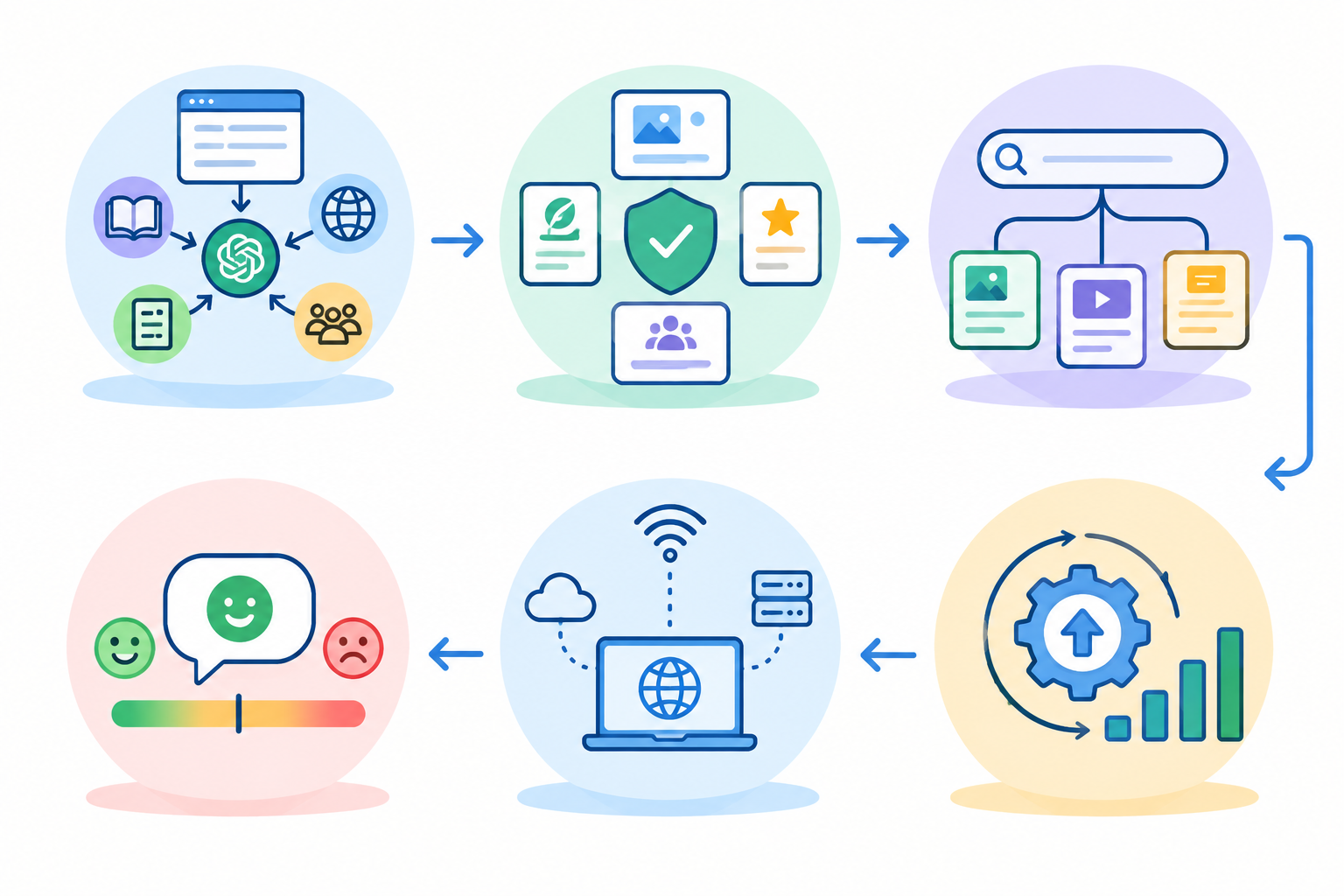
- Check where the competitor is represented. Look at the cited domains, not their homepage.
- Compare clarity. How plainly does each brand state its category, audience and differentiators?
- Look for query coverage gaps. Find the questions where you never appear, as opposed to appearing lower down.
- Review sentiment. 'Cheaper but limited' does a different job from 'best for small teams'.
- Audit technical access and legibility. Check crawler permissions and whether key facts are readable without scripts.
- Prioritise by frequency. Rank fixes by which cited sources appear most often across your tracked questions.
Here is a worked, illustrative example. Suppose a UK invoicing-software brand tracks 'best invoicing software for freelancers'. Across 20 runs, a competitor appears in 14 and the brand in 3. The cited sources repeatedly include two UK comparison articles and a Trustpilot profile. The competitor is in both articles; the brand is in neither, and its Trustpilot page has few recent reviews. The task list writes itself: seek honest inclusion in those two articles, request genuine reviews from customers, and publish a clear comparison page. That is a task list, not a grievance, and it is why share of voice and cited-source lists earn their keep.
Why do ChatGPT answers vary from run to run?
OpenAI's API documentation describes model output as nondeterministic by default: because of sampling, the same prompt can yield different wording and different brand lists. Other sources of variance pile on top of that:
- Whether search was triggered at all
- Which pages were retrieved after query rewriting
- Conversation context and memory settings
- Model version updates
- Prompt wording: 'Which running shoes should I buy?' and 'Which durable running shoes under £150 suit wide feet?' produce different shortlists
Do answers change daily? Often in small ways, with larger shifts after model updates or when retrieved sources change, such as when a retailer updates a product page. I won't claim a fixed cadence, because nothing in OpenAI's documentation supports one.
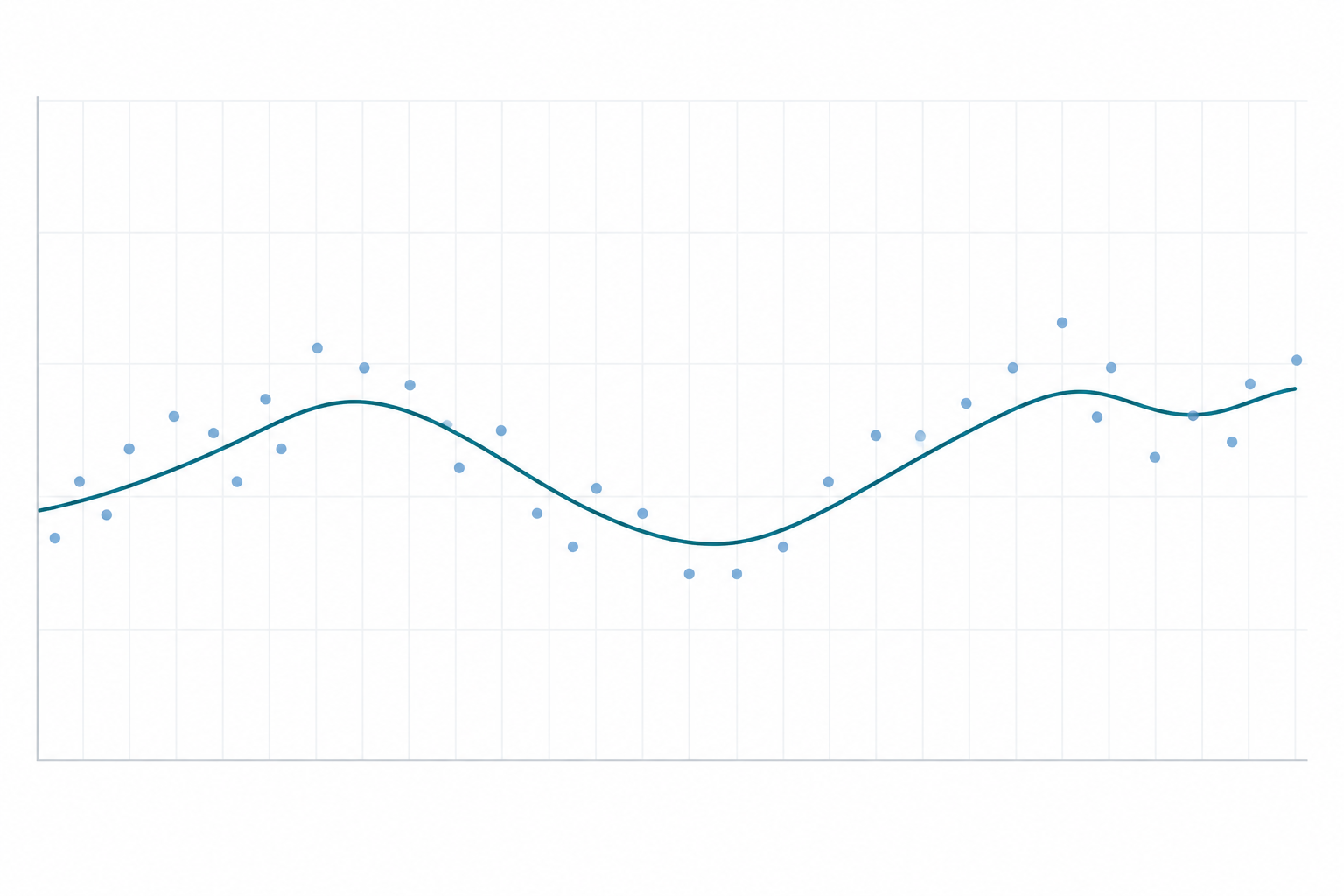
This is why one-off screenshots mislead. A single run is a snapshot, possibly a lucky or unlucky draw. Treat visibility as a rate: across many runs of the same question, how often do you appear, and where? A brand appearing in 6 of 10 runs is in a different position from one appearing in 1 of 10, even though both could produce a screenshot saying 'yes'.
Repeated sampling reduces noise but does not eliminate it. Some tools roll the rate into a single number. MentionOwl's 0-100 visibility score, for example, combines query coverage, position-weighted citations, share of voice and soft mentions. It is a vendor-defined metric, not an OpenAI measure, an industry standard or an independently validated outcome, and the weighting is MentionOwl's own, so ask any vendor for its methodology. For clean comparisons, hold the model, wording, location and search setting constant, and record the date and citations each time.
What can you influence, and what can't you control?
| Category | What it includes |
|---|---|
| Can influence | Site clarity and structure; content answering buyer questions; third-party coverage and reviews; crawler access; consistency of brand facts |
| Partly influence | Which sources retrieval chooses, by earning presence on domains repeatedly cited in your category |
| Cannot control | Training data and cutoff; sampling randomness; OpenAI's product and policy changes; individual personalisation; the user's prompt wording |
Can you pay to be recommended by ChatGPT?
There is no known way to buy an organic recommendation. OpenAI has discussed and begun testing advertising in ChatGPT, but ads are a separate product from organic answers and the details are still changing, so check OpenAI's current announcements rather than relying on this article.
Be wary of guarantees. No agency or tool can promise a specific recommendation, and claims about a single decisive ranking factor are speculation. I treat generative engine optimization and AI SEO as extensions of good SEO and reputation work, not replacements. Strong search rankings can help, since retrieval often draws on web content, but they are not the same as being cited.
How to measure ChatGPT citations without guessing
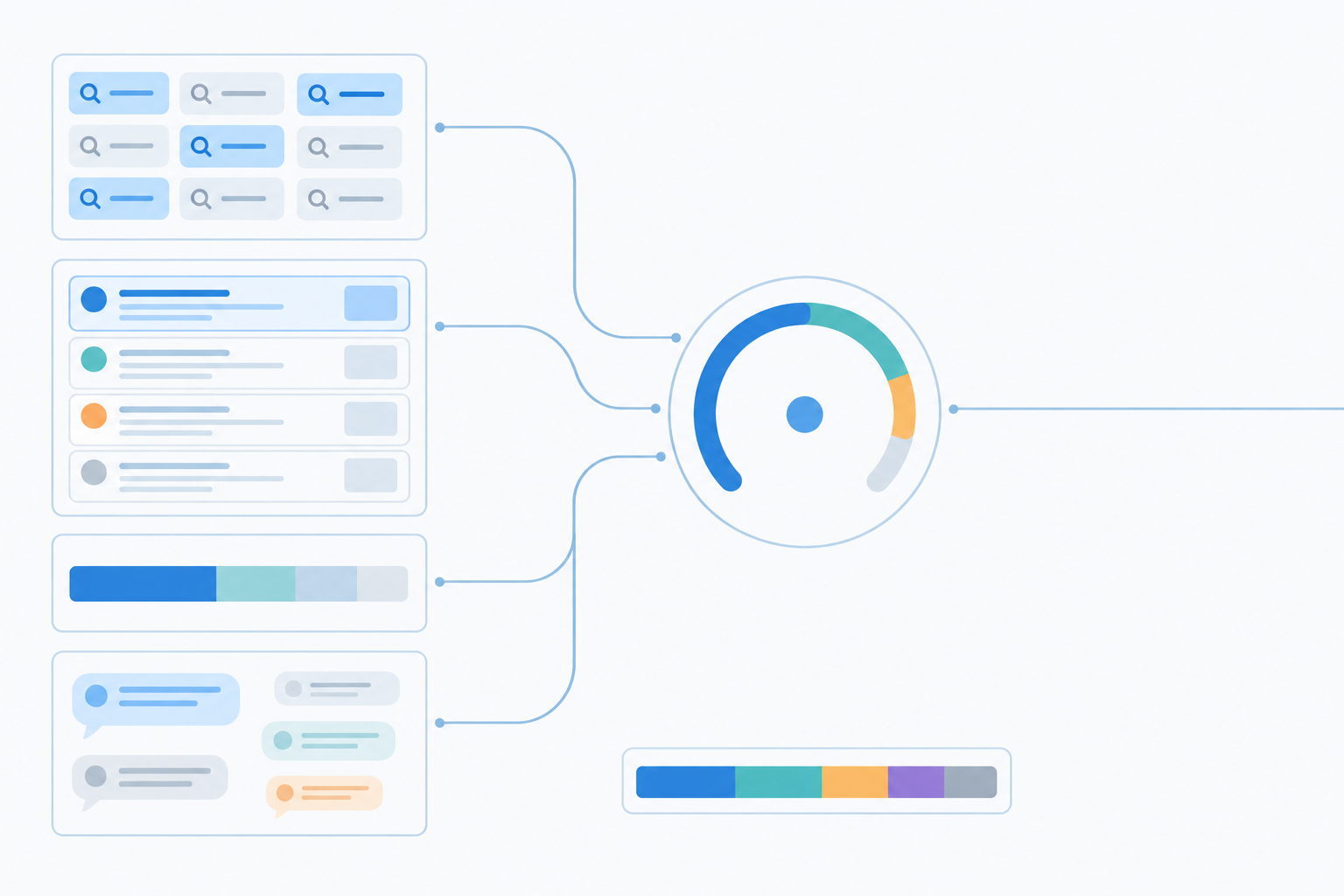
Good LLM monitoring is mostly disciplined repetition:
- Build a question set that reflects how real UK buyers ask: comparison, 'best for' and problem-led queries, in local phrasing ('trainers' not 'sneakers', prices in £).
- Run the questions repeatedly across ChatGPT and other engines such as Claude, Gemini, Copilot and Perplexity, since patterns differ by platform.
- Record everything: the answer, cited URLs, sentiment and which competitors appear.
- Track share of voice over time, so you can separate real movement from noise.
- Connect visibility to outcomes using cookieless AI traffic analytics where possible.
- Automate if the volume warrants it. A spreadsheet is enough for a handful of questions. Tools such as MentionOwl, which runs questions daily across major AI platforms and sends weekly digests, become useful at scale. Its $1, 7-day trial is billed in US dollars, so check the conversion and terms first.
A realistic 30-day starting plan
- Week 1, baseline: measure your current AI visibility on five to ten revenue-critical questions.
- Week 2, fix legibility: resolve crawler access, write clear product descriptions and add accurate structured data.
- Week 3, answer the money questions: publish or update pages with specific pricing and comparison details.
- Week 4, earn corroboration: target the third-party sources your competitors are cited from, through genuine reviews, directory listings and honest outreach.
- Afterwards: re-measure after a few weeks and treat the results as directional.
Frequently asked questions about ChatGPT citations
Why does ChatGPT recommend my competitor and not me?
The cause could be clearer description, wider independent corroboration or better coverage of the questions asked, but OpenAI does not disclose its selection process, so none of these is certain. The diagnostic method above shows which sources and questions favour them.
Can I pay to be recommended by ChatGPT?
There is no known way to buy an organic recommendation. Advertising in ChatGPT is a separate and evolving product, so check OpenAI's announcements.
Do ChatGPT answers change daily?
They can vary between runs because generation is probabilistic and retrieved sources change. Repeated sampling is more reliable than a single check.
Are ChatGPT citations the same as Google rankings?
No. Strong rankings can help, but ChatGPT also relies on model memory and applies its own selection, so a brand can rank well in Google and still be absent from AI answers.
How long does it take to improve AI visibility?
Retrieval-driven citations can sometimes respond within weeks of new or updated content, whereas model-memory shifts depend on future training. No timeline is guaranteed.
References
- OpenAI, Introducing ChatGPT search
- OpenAI, Overview of OpenAI crawlers
- OpenAI, OpenAI and Reddit partnership
- Aggarwal et al., GEO: Generative Engine Optimization (2024)
- BrightLocal, Local Consumer Review Survey 2024 (US respondents)
- Reddit, Investor relations: Q4 2024 results
- Google Search Central, Structured data introduction; Google Business Profile, review policies
Dates, product details and links should be re-verified before each update, as OpenAI's products change frequently.