AI Visibility Monitoring on a Solo Founder's Budget: How to Track ChatGPT Citations Without Breaking the Bank
Track AI visibility on a budget: test a low-cost trial, measure your AI visibility score, monitor competitors and know when to upgrade.
AI Visibility Monitoring on a Budget: What a Low-Cost Trial Can (and Can't) Prove
Meta description: Start AI visibility monitoring for less with a low-cost trial. Learn what seven days can reveal about your AI visibility score, competitors and when to upgrade.
You don't need a five-figure retainer — I'm talking £10,000-plus a year, the kind of contract enterprise marketing teams sign — to start AI visibility monitoring. What you can reasonably expect from a low-cost trial (I'll use MentionOwl's £1, seven-day trial as a working example, because it's the one I've tested end-to-end) is a directional baseline: a first read on whether your brand shows up when AI assistants answer the questions your customers are actually asking. It is not, on its own, a statistically robust measurement of your AI visibility score — and I want to be upfront about that distinction before I unpack the rest of the argument, because overselling what seven days of data can prove is exactly the kind of sloppy claim that makes this space hard to trust.
What a short trial can do is tell you, with reasonable confidence, whether you're visible at all on the engines your customers use, and whether your closest competitors are meaningfully ahead of you. What it can't do is give you a precise, decimal-point score you should treat as gospel, or tell you whether a content change moved the needle — that requires a longer observation window, which I'll come back to. Let's get into the actual mechanics, because "start cheap" advice usually skips the part where it explains why manual checking fails and what a genuinely useful AI visibility monitoring workflow looks like on a founder's budget.
Why AI Visibility Monitoring Doesn't Have to Be Expensive — But Manual Checking Still Fails You
I understand the instinct to open ChatGPT, type in a few questions about your own business, and call it done. It costs nothing but a few minutes, so it feels like the fiscally responsible move when you're bootstrapped. The problem is that this intuition doesn't survive contact with how these systems actually behave.
AI visibility monitoring, in the sense I mean it here, is the practice of systematically asking AI assistants the questions your prospects would ask, then tracking whether, how, and where your brand appears in the answers. To do that reliably, you need a defined, repeatable query set and enough repeated observations to tell a real signal from ordinary noise. Here's a workable minimum viable scope for a solo founder: 15 to 20 purchase-decision questions — the kind a prospect would type when comparing options, not vague brand-awareness prompts — checked consistently across the two or three engines your customers are most likely using. For most UK businesses, that's ChatGPT, Google's AI Overviews or Gemini, and increasingly Perplexity; Copilot matters more if your buyers are in Microsoft-heavy enterprise environments, and Claude tends to matter less unless you're selling into technical or developer audiences. Five engines is a comprehensive ceiling, not a mandatory floor — start with the two or three that match your actual buyers and expand later if the data justifies it.
Even at the minimum viable scope, the arithmetic adds up fast: 15 to 20 questions across three engines is 45 to 60 prompts per day if you want same-day, comparable data. Scale to five engines and 30 questions, and you're at 100 to 150 prompts daily. I don't know a solo founder with two unclaimed hours a day to run that manually, and even if one existed, that's time better spent on product or sales — my own rough estimate, not a formal study, but one I'd stand behind after watching founders try to do this by hand.
There's a second problem that's easy to underestimate: sample size. Checking ChatGPT once and concluding "we're visible" or "we're invisible" is statistically shaky, because LLM outputs are non-deterministic — the same prompt run twice can produce different answers — and different engines add further variance on top of that. ChatGPT's answers can shift based on browsing mode and account personalisation; Google's AI Overviews are tied to search intent signals and location; Perplexity leans heavily on live retrieval and cites sources directly; Copilot's behaviour depends partly on Microsoft 365 integration context. These aren't interchangeable instruments producing directly comparable numbers — they're related but distinct systems, and a single check on any one of them tells you about that engine on that day, not about your visibility in general.
This is why a single weekly check is closer to a coin flip than a measurement, and why daily, automated querying — even at a modest scope — beats infrequent manual spot checks. It's not that daily data is magically more "true"; it's that repetition is what lets you separate a real trend from the ordinary variance every one of these systems produces.
What to Prioritize in AI Visibility Monitoring With a Limited Budget
Once you accept that some automated monitoring is worth a small spend, the next mistake is trying to track everything at once. On a limited budget, sequencing matters. Here's the order I'd defend, with the metrics defined rather than left as jargon:
- Query coverage first. This simply means: of your 15-20 core questions, how many surface your brand in at least one engine? An AI visibility score built on 20 relevant, consistently-run questions tells you far more than an ad hoc check built on five you happened to think of.
- Citation tracking over sentiment analysis, initially. "Citation" here means your brand is named or referenced in the generated answer — with or without a link, depending on the engine. Your mention rate is the percentage of checked responses where you appear at all; your citation rate is the percentage where you're referenced with enough specificity (name, product, or link) that a prospect could act on it. Get these above zero before worrying about whether the tone is warm or neutral.
- One consolidated visibility score, held loosely. A single benchmark — for example, a weighted blend of mention rate, citation rate, and share of voice against named competitors — gives you one trend line instead of scattered numbers. But treat any 0-100 score as illustrative rather than standardised: there's no industry-wide formula, so ask any tool you use exactly how it weights these components, and don't assume two tools' scores are comparable to each other.
- Narrow competitor tracking. Pick your two or three closest rivals rather than benchmarking against an entire category. Share of voice, in this context, is simply your mentions divided by the combined mentions of you and those named competitors across the same query set — depth against real rivals beats shallow coverage of a whole market.
- Defer the AI legibility audit. Technical checks on structured data and crawlability matter for whether an engine can cite you accurately, but they're a fix-it-stage activity. Confirm you actually have a visibility gap before spending time closing it.
A worked example: say you track 18 questions across three engines (54 checks) every day for a week — 378 total data points. If your brand appears in 61 of those 378 responses, your raw mention rate is roughly 16%. If your closest two competitors together appear in 140 of the same 378 checks, their combined share of voice is about 37% against your 16% — a real, quantifiable gap, not a feeling. That's the kind of number a short trial can legitimately hand you.
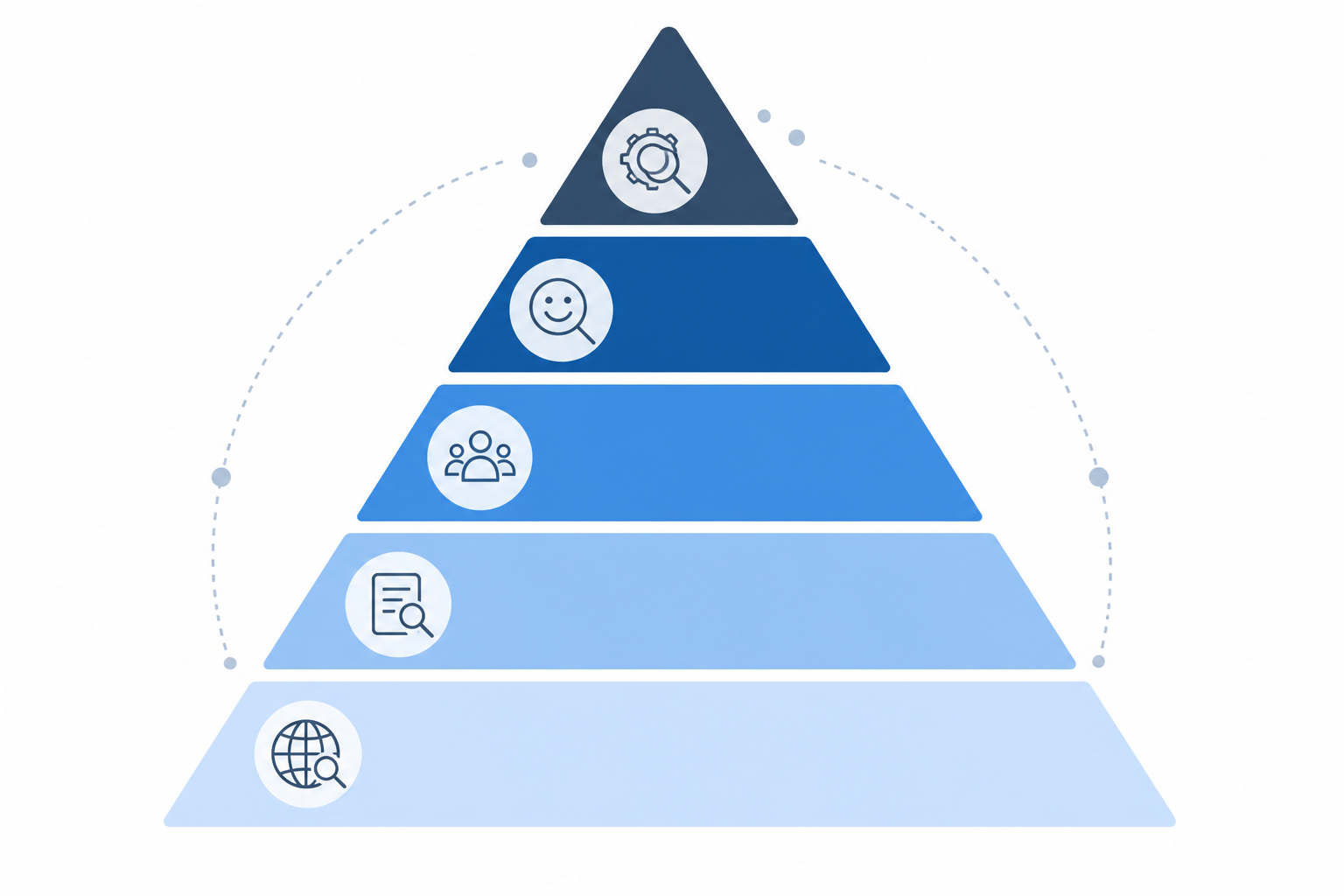
Starting AI Visibility Monitoring With a Low-Cost Trial: What Seven Days Can and Can't Tell You
A short trial isn't a gimmick if you treat it as a structured experiment with honest limits, rather than a free-for-all browsing session. Here's how I'd sequence it, using a typical £1, seven-day trial structure as the example:
- Days 1-2: Let the crawl run. The platform crawls your site and auto-generates candidate customer questions, so you're not guessing at prompts or introducing your own bias into the query set. Review the generated list and trim it to the 15-20 that most genuinely reflect purchase-decision moments.
- Days 3-4: Review your baseline numbers. Note which engines mention you at all, and calculate a rough mention rate as shown above. Absence on one platform but presence on another is itself a useful data point, not a bug.
- Days 5-6: Check competitor mentions on the identical queries. This is where founders often get a genuine surprise — your assumed market position and your actual share of voice in AI-generated answers are frequently two different things.
- Day 7: Make a provisional call, not a final one. Decide whether the gap looks large enough to justify a paid plan, but treat this as a baseline to revisit — not a settled verdict. A single seven-day window, even with daily checks, is still a limited sample; I'd suggest a proper re-check at the 30-day mark before drawing firm conclusions about trend direction or the effect of any content changes you make in between.
What does good data look like at this stage? Seven days of daily, automated querying gives you a more reliable first read than a month of sporadic manual searches, simply because consistency and volume reduce noise. But "more reliable than nothing" and "statistically definitive" are different claims — don't let a trial provider (including the ones I've mentioned here) blur that line for you.
Are There Free Tools to Check AI Visibility?
I get asked this constantly, so here's a straight answer rather than a marketing one.
Manually prompting ChatGPT, Claude, or Perplexity yourself is genuinely free, and it's not useless — it can answer a narrow question well: "do I show up at all on my three most important queries, right now, on this one engine?" Log the answers in a spreadsheet, repeat weekly, and you have a crude but real directional baseline that costs nothing but time. What manual checking can't do is tell you whether a dip or a rise you spot is a real trend or just session-to-session variance, because you don't have enough repeated observations to tell the difference.
Traditional brand monitoring tools — Google Alerts being the obvious example — don't solve this either, and it's worth understanding why. Those tools were built to catch new indexable web pages or media mentions containing your keywords. Generative engines synthesise answers from retrieved and trained information rather than producing a fixed, linkable page, so there's no URL for a keyword-alert system to catch. It's not that these tools are outdated versions of the same idea — they're built for a fundamentally different kind of content.
Free tiers of dedicated AI visibility monitoring platforms exist, but they typically cap query volume or drop update frequency to weekly, which reintroduces the sample-size problem. If you want to know whether a change to your website content moved your position, weekly data usually isn't frequent enough to separate that effect from ordinary variance.
My honest take: free or manual approaches are perfectly fine for a single reality check or an early spreadsheet-based baseline. They're not a substitute for the kind of repeated, structured data series that ongoing decisions require.
How to Get the Most From Free or Cheap AI Visibility Tools
If you're working with a trial or a constrained budget, a few habits meaningfully improve what you get out of it:
- Focus queries on high-intent, purchase-decision questions rather than broad brand-awareness prompts. "Best [category] for [use case]" tells you more about revenue-relevant visibility than "what is [your brand name]."
- Track the same 15-20 questions consistently instead of rotating them. Consistency is what lets you spot genuine movement rather than noise from an ever-changing query set.
- Pair monitoring data with a basic AI legibility check on your own site. Structured data, clear entity definitions, and crawlable content all affect whether an engine can cite you accurately even when it wants to.
- Separate your collection cadence from your review cadence. Collect daily if you can automate it — that's what gives you a usable data series. But review it weekly, not hourly; the underlying models don't refresh often enough for hourly checking to reveal anything a weekly review wouldn't, and it will burn your attention for no benefit.
- Document your baseline visibility numbers somewhere you'll actually revisit in 30 days. A number without a follow-up review is just trivia.
When to Invest in a Full AI Visibility Monitoring Plan
Eventually, the trial-level view stops being enough. Here are the concrete signals I'd look for, rather than a vague "when you're ready":
| Signal | What it looks like | Why it matters |
|---|---|---|
| Competitor gap | Rivals capture meaningfully higher share of voice on queries you should logically win | Indicates an active visibility problem, not just an unmeasured one |
| Active GEO push | You're publishing content specifically to improve AI citations | Needs daily tracking over 30+ days to separate real impact from noise |
| Attributable pipeline | You can trace even a small percentage of leads to AI-driven discovery | Makes the ROI case concrete rather than speculative |
| Perception management | You need sentiment and citation quality data, not just presence/absence | Presence/absence alone can't tell you if a mention helps or hurts |
| System integration | You want a REST API or MCP server feeding visibility data into other tools | Trial-tier access rarely includes programmatic integration |
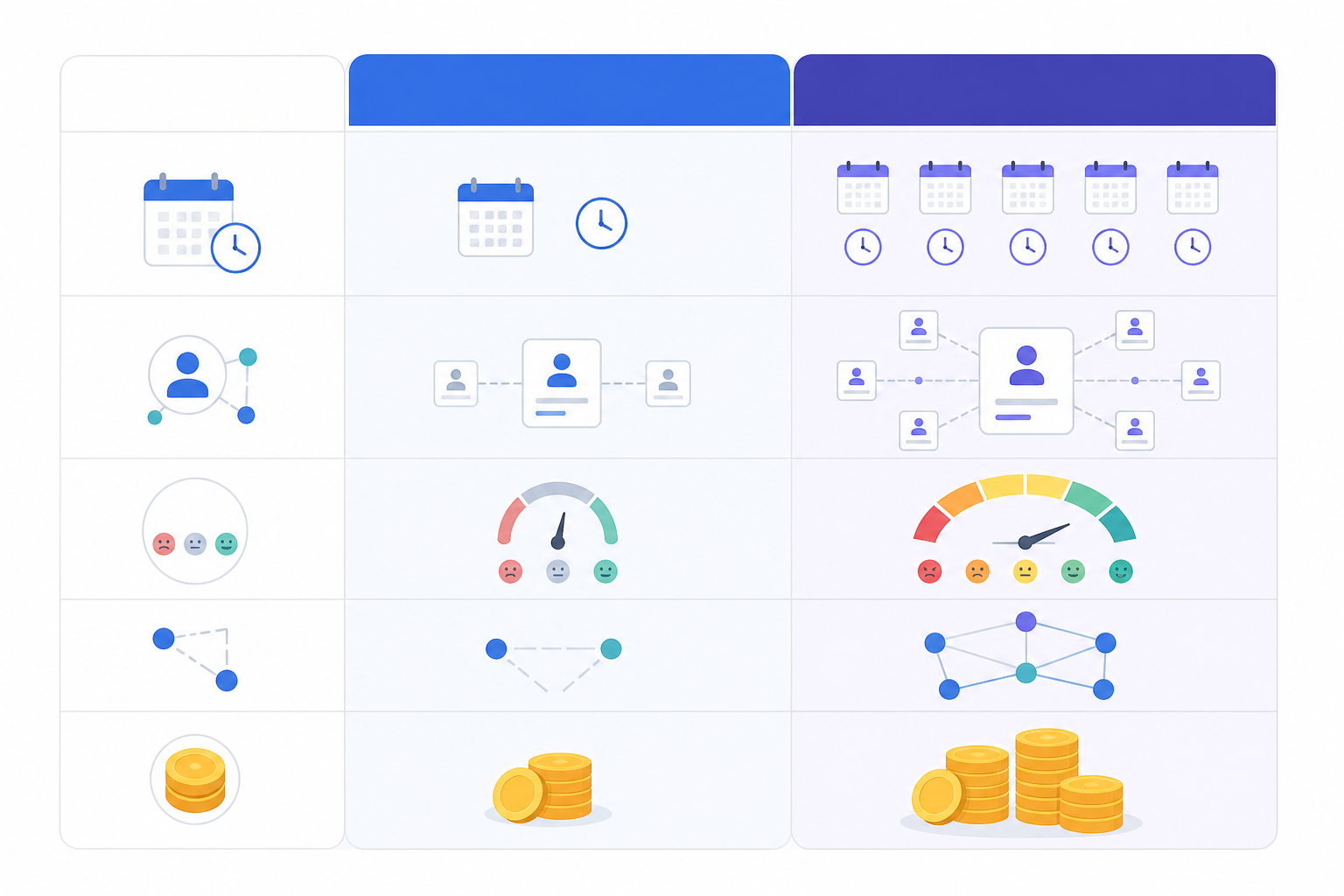
Trial-level monitoring vs. a full plan, side by side:
| Trial / budget monitoring | Full monitoring plan | |
|---|---|---|
| Query frequency | Daily during trial, often weekly after | Daily, ongoing |
| Engine coverage | 2-3 core engines | Up to 5 engines |
| Competitor depth | 2-3 named rivals | Full category benchmarking |
| Sentiment/citation quality | Basic presence/absence | Position-weighted, quality-scored |
| API / integration | Rarely included | Typically included |
| Indicative monthly cost | £0-£5 (trial pricing) | Often £50-£300+, depending on provider and scope |
A simple break-even way to think about it: if manually reviewing chatbot answers costs you three hours a week and your time is worth even £30 an hour, that's roughly £360 a month in founder time for a fraction of the coverage a paid plan provides automatically. That doesn't mean every founder should upgrade immediately — it means the comparison is worth running with your own numbers rather than assuming either option is obviously cheaper.
Before you commit to any paid tool, a short checklist worth running through: Does it clearly state its query methodology and engine coverage? Does it disclose how its AI visibility score is weighted? Does the trial price include VAT, and is billing transparent about what happens after the trial ends? Can you export raw data rather than only a dashboard score? And does it cover the engines your actual customers use, rather than the longest list of logos? I'm using MentionOwl as a working example throughout this piece because it's the trial workflow I've tested directly — that's a disclosure, not an endorsement, and I'd encourage you to run the same checklist against any alternative before paying for anything.
FAQ: AI Visibility Monitoring and AI Visibility Scores
Is there an affordable way to start tracking AI mentions as a solo founder in the UK?
Yes. A low-cost trial — commonly priced around £1 for seven days, though you should confirm current pricing and whether VAT applies before entering payment details — is a practical entry point. It runs automated daily queries so you're not manually prompting each platform yourself, but treat the output as a directional baseline rather than a final verdict, and re-check your numbers around the 30-day mark before drawing conclusions about trend or impact.
What's the minimum I need to monitor AI visibility effectively?
A workable minimum is 15-20 purchase-decision questions, checked consistently, across the two or three AI engines your customers actually use — for most UK founders, that's some combination of ChatGPT, Google's AI Overviews/Gemini, and Perplexity. Daily collection with weekly review gets you a usable data series without demanding constant attention. Fewer questions or engines than that, and single-session noise starts to dominate whatever number you're looking at.
Are there free tools to check AI visibility?
Manually querying ChatGPT or Perplexity yourself is free and fine for a one-off check — log the answers in a spreadsheet if you want a crude baseline. It's unreliable for spotting trends, though, because individual sessions vary and you won't have enough repeated observations to tell a real change from ordinary variance. There's no fully free substitute for automated, consistent daily querying once you need to track movement over time.
When should I upgrade from a trial to a paid AI visibility monitoring plan?
Upgrade when your trial data shows a meaningful, repeated gap in share of voice against named competitors; when you're actively running content changes you need to measure over 30+ days rather than seven; or when you need sentiment analysis, an API, or MCP server integration that trial tiers typically don't include.
Can I trust a single tool's AI visibility score, or should I compare several?
Treat any single score as one provider's methodology, not an industry standard. Ask what the score weights, how it defines a "mention" versus a "citation," and whether you can see the raw query-level data behind it. If a tool won't show you that, that's useful information on its own.
Does this monitoring raise privacy concerns for a small business?
Running queries about your own brand or public competitors doesn't typically involve personal data, but if you're using account-linked or personalised modes on any engine, be aware that responses can reflect that account's history rather than a neutral, logged-out result — which is itself a reason to standardise how you run each check.