How to Structure Product Pages for AI Citations: A Technical Guide for E-Commerce Brands
Improve AI citations for e-commerce product pages with practical guidance on schema, crawlable product facts, variants, pricing, and testing.
How to Improve AI Citations for E-commerce Product Pages
AI models cite product pages that use explicit structured data (Schema.org Product markup), plain-language descriptions separated from marketing fluff, and clearly labelled pricing, availability, and variant information. I've spent a good chunk of the last year analysing how large language models extract e-commerce content, and the pattern holds up consistently across categories: pages that read like clean data tables outperform pages that read like advertisements, regardless of how well the copy is written for a human shopper.
This isn't a stylistic preference on my part. It's what the mechanics of extraction actually reward.
What follows is a technical walkthrough of how to restructure your product pages so ChatGPT, Perplexity, Gemini, and Copilot can confidently lift facts from them. I'll cover structured data, product copy, variant handling, and how to measure whether any of this is actually working, rather than guessing.
Why Product Pages Often Get Skipped by AI
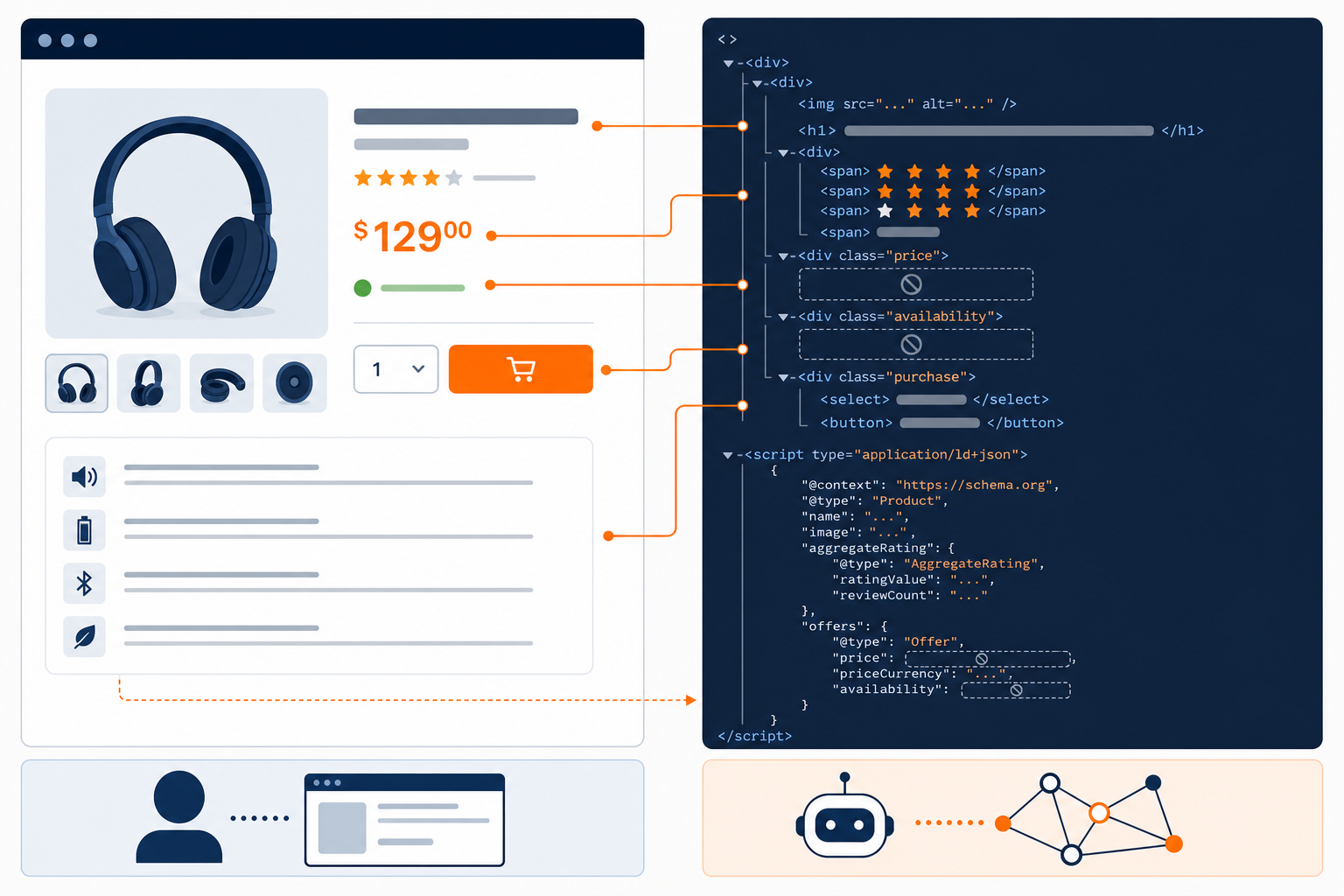
Here's the core issue, and I want to be precise about it because I think it gets misunderstood constantly: generative engines don't "browse" a page the way a human does. A human scrolls, glances at a hero image, reads a headline, and forms an impression. An LLM-backed answer engine extracts structured signals, discrete, verifiable facts it can quote or paraphrase with confidence. When a page is built purely for visual persuasion, it often lacks the machine-readable anchors that extraction depends on.
Google's own developer documentation makes this distinction explicit: pages are more likely to be cited when they expose clear, crawlable facts such as product name, brand, price, availability, identifiers, specifications, shipping terms, and reviews. Those facts need to appear in visible HTML, not just somewhere in the DOM after a script runs.
I've seen this trip up otherwise well-optimised e-commerce sites more times than I can count: a price and variant selector that's fully rendered by JavaScript can be invisible to a crawler that never executes that script. The AI system then simply doesn't know the product's price exists, let alone whether it's competitive.
This brings me to a distinction I think every e-commerce team needs to internalise: being indexed is not the same as being citation-ready. Google can find your page, crawl it, and rank it in traditional search while an AI answer engine still can't extract a confident fact from it. Indexing asks, "Does this page exist and is it relevant?" Citation-readiness asks, "Can I quote a specific, verifiable fact from this page without guessing?" Those are very different bars.
I'd call this second bar AI legibility, a concept distinct from traditional SEO. Traditional SEO optimises for crawlability, backlinks, and keyword relevance. AI legibility is about whether an LLM can parse your page's structure, tell your product apart from a dozen similar ones, and lift a fact with enough confidence to state it as true.
This is also the practical aim of generative engine optimization: making useful, consistent information easy for answer engines to retrieve and attribute. It is not a replacement for technical SEO. A product page still needs to be discoverable, indexable, canonicalised correctly, and accessible without a login or blocked resource. Those basics determine whether an AI system can reach the page before it has any opportunity to interpret its content.
It's why MentionOwl's platform runs a 16-point AI legibility audit as a separate diagnostic layer from citation tracking. A page can rank well and still be functionally invisible to the systems that increasingly sit between your customer and their purchase decision.
The stakes here aren't theoretical. Adobe reported that traffic to U.S. retail websites from generative-AI sources rose by roughly 1,300% during the 2024 holiday season compared with the year before, and by February 2025 that growth was still running at around 1,200% year over year. Adobe also found that AI-referred shoppers engaged 12% more than other traffic segments, which tells me these visitors are doing real research, not just glancing and bouncing.
If your product page can't answer their questions with extractable facts, you're not just losing a citation. You're losing a shopper who's already primed to buy.
Structured Data AI Models Rely On
What structured data helps AI understand product pages?
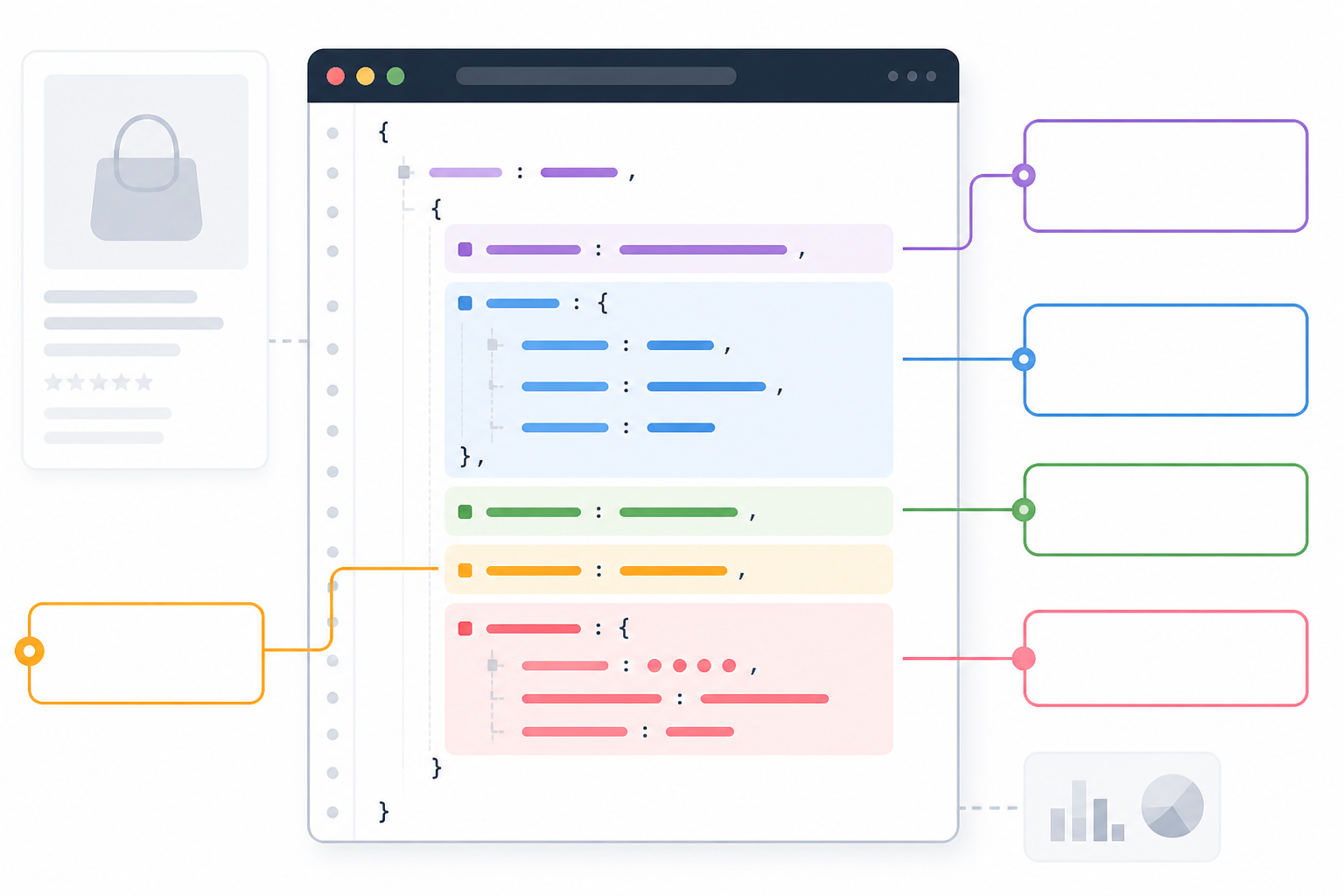
Structured data is the disambiguation layer that tells an AI system exactly what it's looking at, rather than leaving it to infer meaning from marketing prose. Here's what I consider the non-negotiable baseline, followed by the elements that separate a good implementation from a mediocre one:
- Core Product fields: name, description, sku, brand, and image. These establish basic identity. Without them, an AI system may struggle to confirm it's looking at the product a user is actually asking about.
- Nested Offer schema: price, priceCurrency, availability (using standardised values such as InStock, OutOfStock, or PreOrder), and priceValidUntil for time-bound pricing. Google's structured data guidelines are explicit that this data must match what's visible on the page. Mismatched or stale values can disqualify a page from enhanced treatment entirely.
- AggregateRating and Review schema: I've noticed LLMs cite products with visible star ratings and review counts disproportionately often, because these give a direct, quotable answer to "Is this any good?", a question that comes up constantly in buyer-intent prompts.
- additionalType and category fields: these disambiguate products in crowded niches, distinguishing, for example, a running shoe from a trail shoe when both share overlapping attributes.
- Strong identifiers: GTIN, MPN, and SKU, in that order of preference where available. Google names these as primary identifiers for product disambiguation, and using the strongest one available can reduce the risk of your product being confused with a near-identical competitor listing.
Why JSON-LD is usually the best format
On format, I recommend JSON-LD over Microdata for nearly every modern implementation. It parses cleanly regardless of how the surrounding page renders, it's easier to maintain because it lives in a single script block rather than being scattered across HTML attributes, and it breaks less often when templates change elsewhere on the page.
Schema.org supports three syntaxes: JSON-LD, Microdata, and RDFa. JSON-LD is the format Google recommends for new work, and it's also the strongest choice for AI extraction reliability.
One caveat I want to stress, because it gets overlooked constantly: structured data does not guarantee a citation. Google states plainly that there's no special schema that guarantees inclusion in AI Overviews or AI Mode, and the same logic extends to third-party engines such as ChatGPT and Perplexity. Schema is a consistency and disambiguation layer, not a magic switch.
Validate it anyway. Run your markup through Google's Rich Results Test and a general schema validator before assuming it's live and correct. I've seen deployments that looked fine in a code review break silently after a template update, and nobody noticed for months because the page still rendered correctly for humans.
Writing Product Descriptions AI Can Extract Easily
Schema handles machine-readable facts, but the visible copy on your page still matters a great deal. AI systems parse rendered text alongside structured data and often quote it directly. The discipline here is different from writing for humans, and it's worth internalising:
- Lead with specification sentences before persuasive copy. Put material, dimensions, compatibility, and use case in the first two sentences of your description. If a shopper asks, "Is this jacket waterproof and what size fits a 42-inch chest?", you want that answer extractable from paragraph one, not buried under three paragraphs of brand story.
- Avoid marketing metaphors that carry no extractable information. "Engineered for the modern adventurer" tells an AI model nothing it can quote as fact. Compare that with "600-fill goose down, two-layer waterproof shell, machine washable." The second version is useful to both extraction systems and shoppers.
- Use consistent terminology throughout the page. If your title says "jacket" but your description says "outerwear," you've fragmented the entity in the model's understanding of what the page is about. Pick one primary term and use it consistently in the title, description, schema, and alt text.
- Use short factual bullet lists near the top of the page. Materials, sizing, and care instructions are far more likely to get lifted verbatim into an AI answer than the same information buried in flowing prose. Bullets are already structured, so you're doing part of the extraction work for the model.
- Build a dedicated "Quick Facts" block, separate from your brand voice copy. This is a small addition with outsized effect: a compact, plain-text summary of the core facts a buyer needs, positioned near the top of the page and distinct from the persuasive narrative below it. Treat it as infrastructure, not marketing.
Handling Product Variants, Pricing, and Availability
How do product variants affect AI citations?
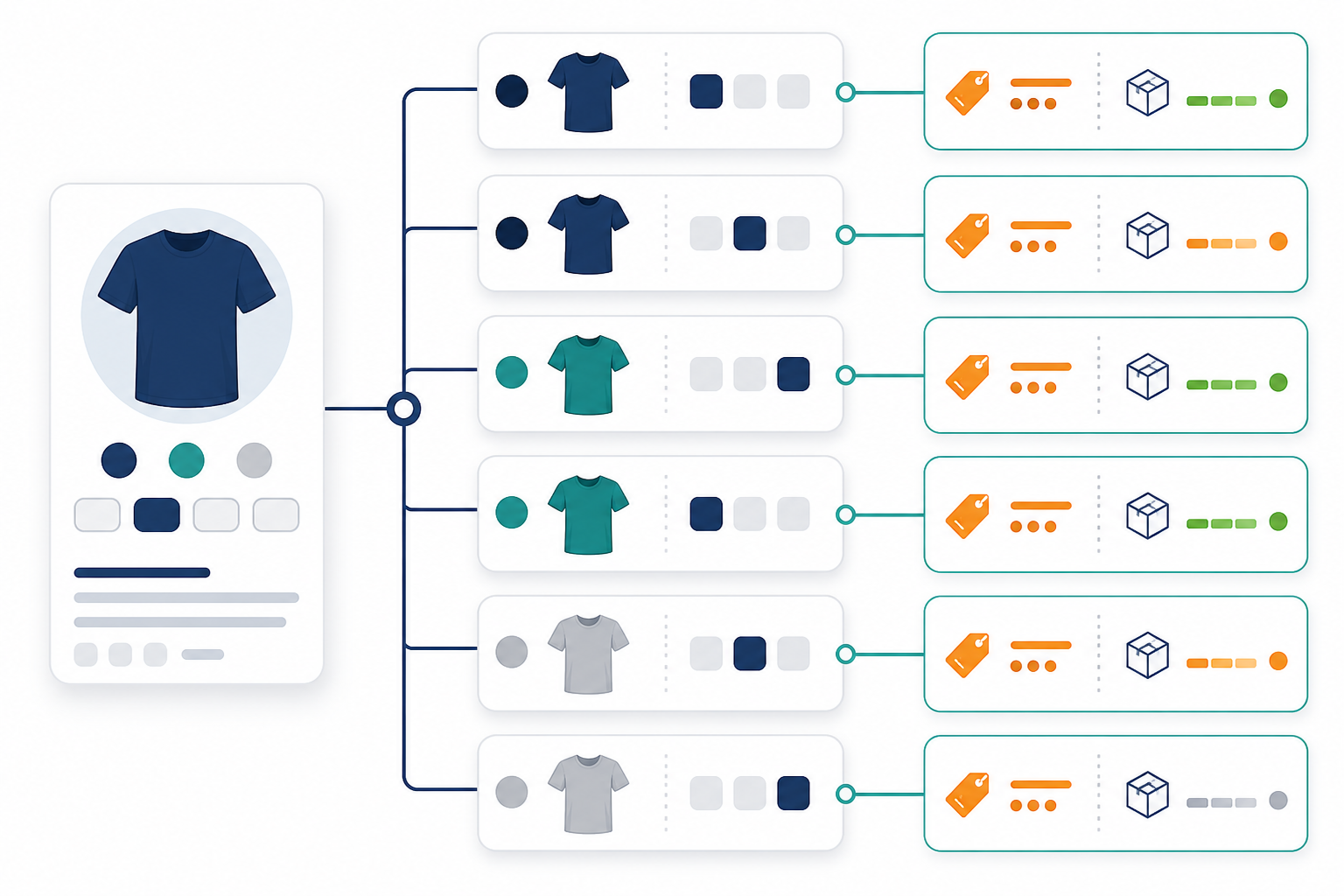
Variants are, in my experience, where most of the silent citation failures happen, silent because the page looks perfectly fine to a human shopper while an AI system quietly can't work out what's available or at what price. Google's own variant documentation recommends a specific structural pattern, and here's how to implement it step by step:
- Give each meaningful variant its own URL or a clearly parameterised identifier. Don't hide all your colour and size options behind a single JavaScript dropdown with no server-rendered fallback. A URL such as /shoe?colour=black&size=10 should load with black, size 10 already selected and visible in the HTML.
- Use ProductGroup with hasVariant to model the relationship explicitly. The shared shoe model becomes the ProductGroup; each purchasable colour-and-size combination becomes its own Product entity with its own SKU, price, and availability. variesBy values such as schema.org/color and schema.org/size tell the model exactly what distinguishes each variant.
- Mark each variant's price and stock status explicitly. Don't rely on a single parent price when variants differ meaningfully in cost or availability. A "from £799" label on a laptop with three memory configurations is exactly the kind of ambiguity that causes an AI system to hedge or leave the product out rather than risk stating an incorrect price.
- Keep InStock and OutOfStock current and machine-readable. This is one of the fastest ways to get quietly dropped from AI shopping shortlists: once a model notices a mismatch between claimed availability and actual purchasability, it may stop citing that source with confidence.
- Make pricing visible in crawlable HTML, not just rendered client-side after user interaction. I've seen this cause silent exclusion more than once. A price that only appears after selecting a size or clicking "check price" may never be seen by a crawler that doesn't execute that interaction.
- Handle currency and regional pricing carefully for UK-targeted pages. State GBP formatting explicitly and be unambiguous about whether pricing is VAT-inclusive or VAT-exclusive. Cross-border ambiguity is a common source of AI systems citing the wrong market's price entirely.
Testing Whether Your Product Pages Get Cited
How can I test if my product pages are being read by AI?
Everything above is diagnosis and repair. The step teams skip most often is verification: actually confirming whether the changes moved the needle. Here's the process I'd follow:
- Manually query ChatGPT, Perplexity, Gemini, and Copilot with realistic buyer questions. "Best waterproof hiking boots under £150 UK" is a good template. Record whether your brand appears and, just as importantly, where it appears in the answer, since position carries weight similar to ranking position in traditional search.
- Track this over time, not as a one-off. Visibility fluctuates week to week as models update and competitors optimise their own pages. A single snapshot tells you almost nothing reliable; a trend line tells you whether your structural fixes are actually working.
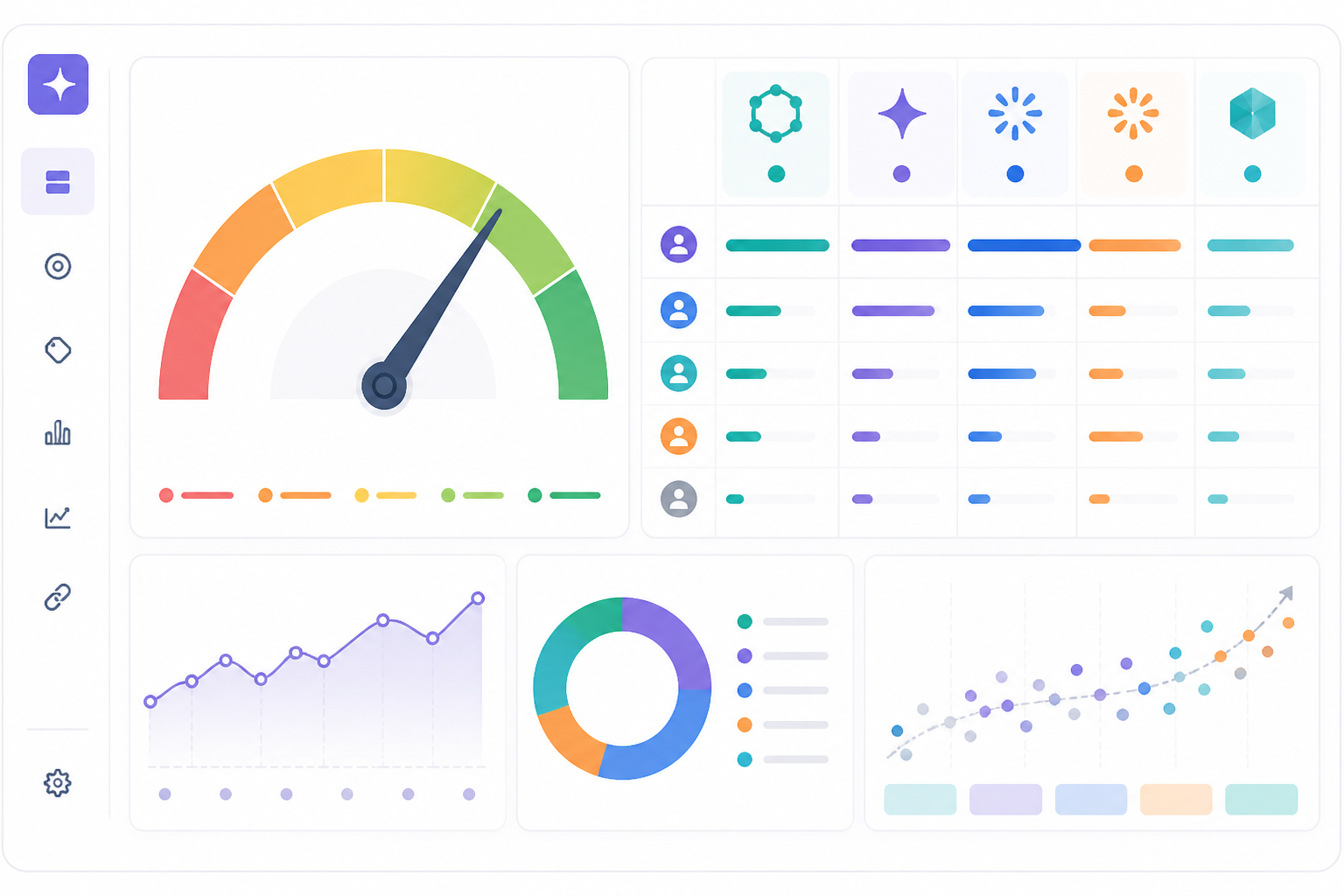
- Use an AI visibility monitoring platform. This is precisely the gap I built MentionOwl to close. It auto-generates the customer questions people actually ask about your category, runs them daily against ChatGPT, Claude, Gemini, Copilot, and Perplexity, and produces a 0–100 visibility score based on query coverage, position-weighted citations, and share of voice against named competitors.
- Use AI legibility audit results alongside citation tracking. A low legibility score on a specific product page often explains a citation gap before you even test it manually. It tells you where to look before you spend time querying five different AI engines by hand.
- Build a weekly digest habit. Structural fixes, schema corrections, pricing visibility, and variant restructuring, should be measured against actual citation movement rather than assumed to have worked. This feedback loop is what turns generative engine optimisation from guesswork into a discipline with evidence behind it.
- Check the page as both a crawler and a shopper would see it. Fetch the canonical URL without an authenticated session, inspect the server-rendered HTML, and confirm that the product name, selected variant, price, currency, and availability are present before JavaScript runs. Also check robots.txt, noindex directives, canonical tags, and response status codes. These checks help separate a discoverability problem from a content or citation problem.
FAQ: AI Citations and Product Page SEO
What structured data helps AI understand product pages?
Schema.org Product markup is the foundation: specifically the name, description, brand, sku, and image fields, combined with a nested Offer block covering price, currency, and availability. AggregateRating and Review schema add trust signals that AI models frequently reference when answering comparison-style questions. JSON-LD is the recommended format because it parses cleanly regardless of how the page renders.
Does pricing information need to be visible to AI?
Yes, and this trips up more brands than almost any other single issue. If your price only appears after a JavaScript interaction, such as selecting a size, clicking "check price," or loading a widget, many AI crawlers may never see it. Pricing should exist in the server-rendered HTML and ideally be reinforced with Offer schema so the price and currency are unambiguous.
How do product variants affect AI citations?
Variants create ambiguity if they aren't explicitly structured. When ten colours and five sizes get collapsed into a single dropdown with one generic price and no individual schema entries, an AI model often can't confidently state availability or price for the specific variant a user is asking about. Giving each meaningful variant clear, crawlable identifiers reduces that risk substantially.
How can I test if my product pages are being read by AI?
Start manually by asking ChatGPT, Perplexity, Gemini, and Copilot realistic purchase questions your customers would ask. Check whether and how you're cited. For ongoing accuracy, automated daily monitoring, such as MentionOwl's monitoring across major AI engines, catches fluctuations that manual spot-checks miss and pairs citation tracking with a technical legibility audit to explain why a page is or isn't being picked up.