How to Avoid Being Left Off AI-Generated Shopping Shortlists: A Merchandiser's Guide to AI Shopping Visibility
Learn how AI shopping shortlists work and get a tactical checklist for product pages, reviews, testing, and ongoing visibility across UK e-commerce.
AI shopping shortlists: a tactical AI SEO guide for UK merchandisers
I've spent the past several months running MentionOwl's monitoring infrastructure against hundreds of AI shopping query responses, and a pattern keeps recurring: AI models tend to build shortlists from product pages with clear, extractable specifications, structured comparison data, and citable review evidence, rather than from persuasive marketing copy. I want to be precise about what I can and can't claim here. This is an observed pattern across the audits and monitoring I've run, not a controlled experiment with a published methodology, and AI shopping tools behave too differently across ChatGPT, Perplexity, Gemini, and Copilot for anyone to state a single causal rule with certainty. What I can say with confidence is this: if your product pages bury specs in images, skip structured data, or never answer comparative questions directly, you are working against the mechanics of how these systems retrieve and cite information, and that's a real commercial risk worth addressing.
This matters more than most UK e-commerce teams currently appreciate, though the strongest available data is American. Adobe Analytics recorded a 1,300% increase in traffic referred from generative-AI sources to US retail sites between February and July 2024, and that growth accelerated further during the 2024 US holiday season compared with 2023. Adobe also reported that shoppers arriving via AI assistants converted at a 4.8% higher rate than shoppers from other channels. I'd treat these figures as directional rather than proof of UK behaviour: UK shopping patterns differ in currency display, VAT-inclusive pricing expectations, delivery geography, and which retailers and marketplaces dominate category searches. But directional evidence is still evidence, and I haven't seen anything in the UK market suggesting retailers are immune to the same underlying shift simply because the loudest measurement currently comes from the US.
What follows is the tactical guide I wish more merchandising teams had before their products quietly disappeared from AI shopping answers. It covers AI SEO fundamentals, product page optimisation, review evidence, testing, and ongoing monitoring for UK e-commerce teams.
How AI builds a shopping shortlist
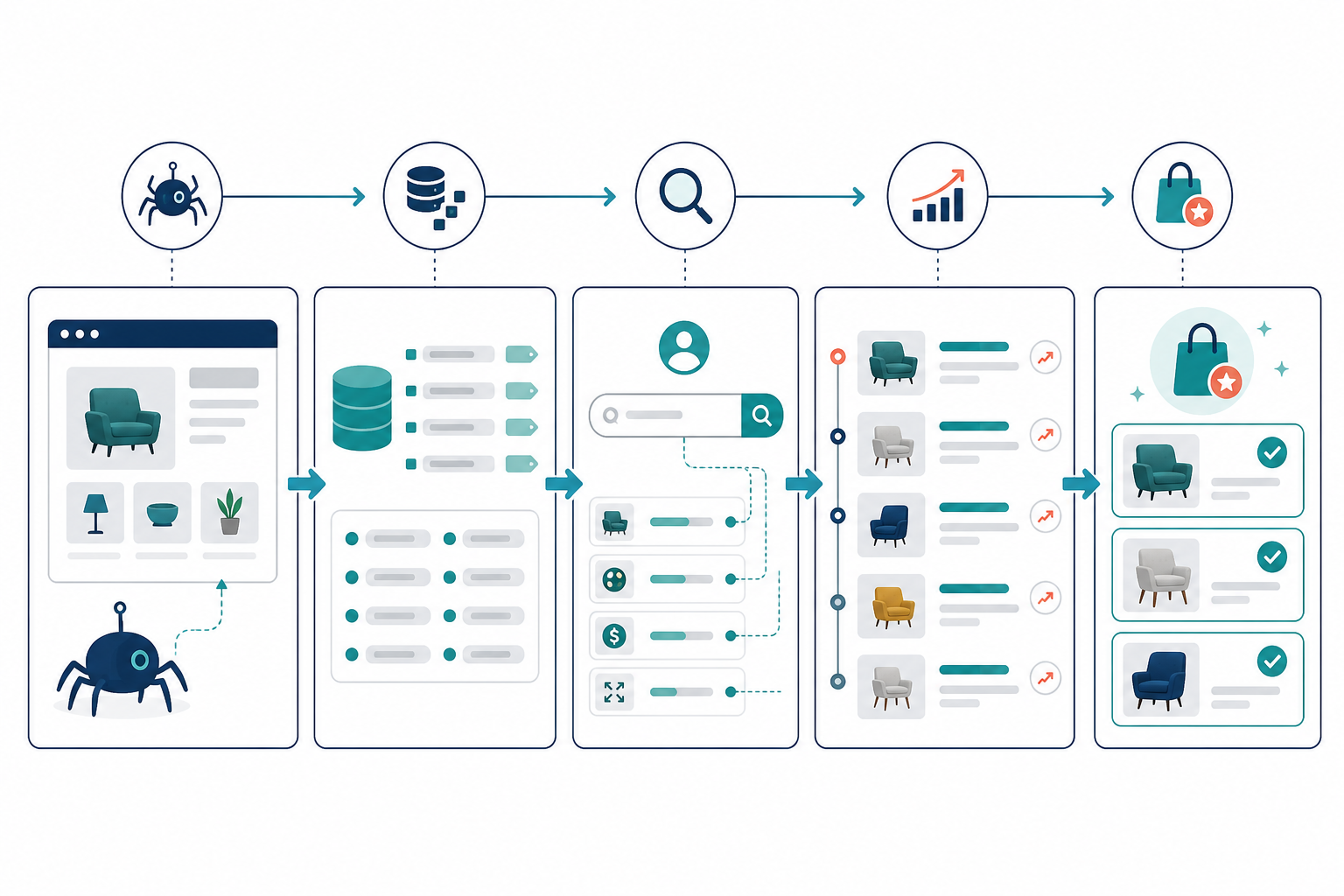
Before you can fix an AI visibility problem, it helps to understand the mechanism that's excluding you. It isn't a single ranking algorithm in the way traditional SEO trained us to think, and it's worth being upfront that implementations vary meaningfully by platform, region, product category, and even by whether a shopping feature is browsing live inventory or summarising crawled content. With that caveat in place, the general shape of the process looks like this.
First, the shopper's natural-language request gets interpreted into structured attributes: product type, budget, size, use case, brand preference, delivery requirements. Second, the system retrieves candidate products, typically drawing on some combination of product-catalog data, retailer feeds, publicly crawlable pages, structured data, and third-party reviews, though the exact mix differs by platform and isn't always disclosed. Third, it ranks or summarises those candidates against the interpreted constraints. Google's public documentation on Vertex AI Search for commerce and OpenAI's shopping-research guidance both describe broadly similar architecture, but the precise weighting each platform applies to any given signal remains proprietary, and I want to be honest that neither I nor anyone outside these companies can state those weightings with certainty.
The practical insight for merchandisers is this: a product that qualifies for "best waterproof hiking boots under £150" may fail to qualify for "lightweight waterproof hiking boots for wide feet under £150" simply because the page never documents weight or fit width anywhere a crawler can read it as text. The product itself might suit that second query perfectly, but if the attribute isn't extractable, the AI system has no basis to include it. That's why I think of AI shopping shortlists as an entity, data-quality, and trust problem, more than a conventional ranking problem, though schema and structured data are tools that support inclusion rather than guarantees of it.
Query coverage compounds this further. If your site never answers the actual pre-purchase questions shoppers ask, in their genuine phrasing rather than your target keywords, you risk being invisible before any ranking step even happens. That's a different failure mode from being outranked, and it's one most brands don't diagnose correctly, because their analytics dashboards were never built to show it.
For scale, Google's Shopping Graph reportedly contained more than 45 billion product listings in 2024, refreshed over 2 billion times per hour, according to Google's own published figures. Against that volume, factual density and freshness look less like nice-to-haves and more like a baseline cost of entry, even allowing for the fact that we don't know exactly how Google weights freshness against other signals.
Product page elements AI models rely on most
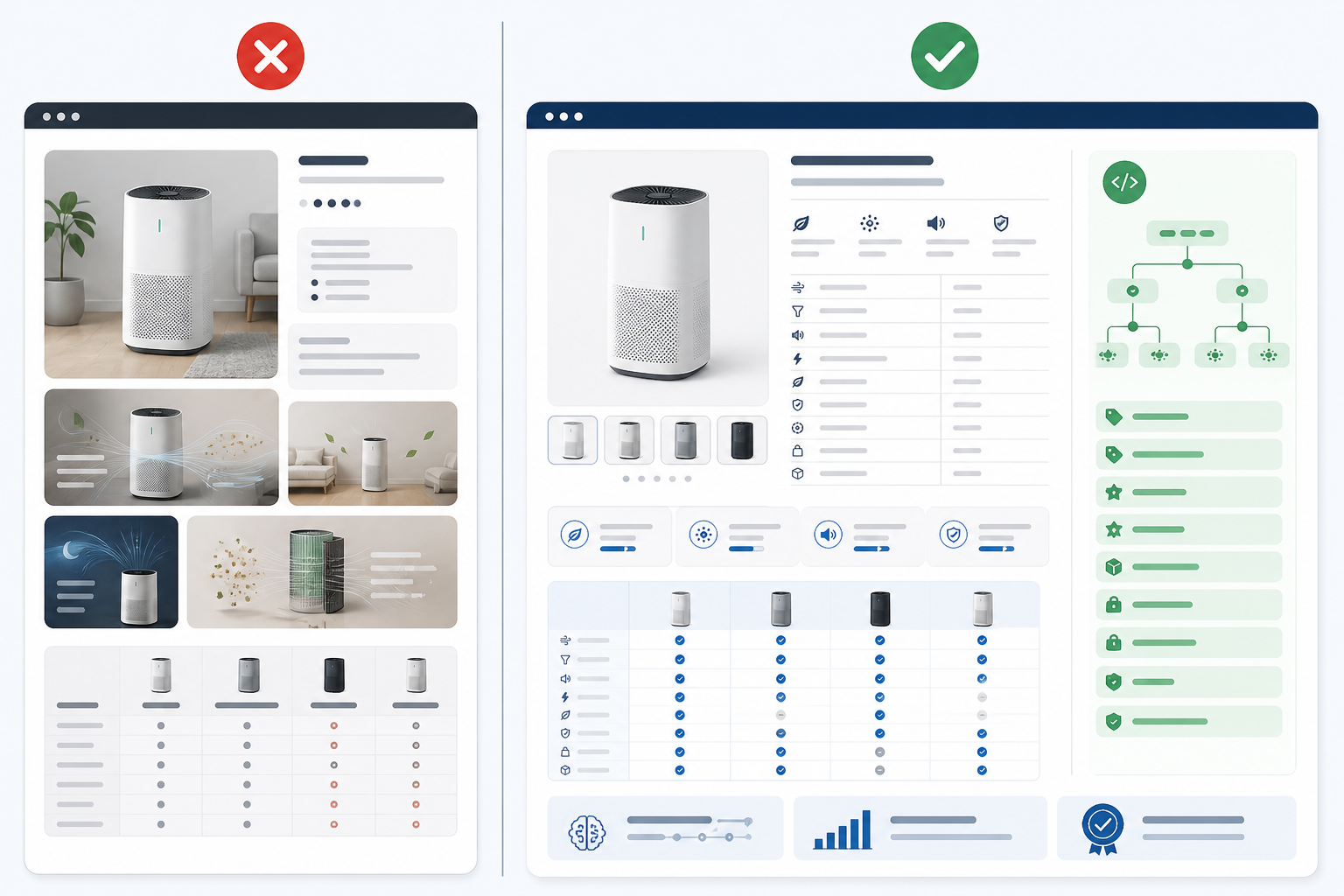
Once you accept that retrieval happens before ranking, the practical question becomes: what specifically makes a page retrievable? The list below draws on technical documentation from Google Search Central, Google Merchant Center, and schema.org, combined with patterns I've observed running AI legibility audits across client sites. I want to flag upfront that none of these elements guarantees citation on its own; they improve the odds that a machine can extract and verify the information it needs.
| Signal | What to check | Example | Typical owner | Priority |
|---|---|---|---|---|
| Explicit specs in plain text | Dimensions, materials, compatibility, and capacity exist as crawlable HTML, not only inside product images or PDFs | "Weight: 420g. Fit: wide (E width available)." stated in body text | Content/PIM team | High |
| Structured data markup | Valid schema.org Product, Offer, and AggregateRating markup, tested in Google's Rich Results Test | "@type": "Product" with offers and aggregateRating populated and matching visible page content | Dev/technical SEO | High |
| Unambiguous naming and variants | Accurate GTINs, brand, and MPN so variants aren't conflated | Each size/colour variant has its own GTIN and canonical URL | Catalogue/data team | High |
| Price and availability in crawlable text | Rendered server-side or in initial HTML, not only via a JavaScript widget that some crawlers may not execute reliably | Price and stock status visible in page source, not just after client-side rendering | Dev team | Medium-High |
| Direct comparative statements | Specific, checkable claims rather than vague adjectives | "180g lighter than the standard model" instead of "innovative design" | Content/copywriting | Medium |
I built MentionOwl's AI legibility audit around checks like these: whether structured data validates, whether critical specs render without requiring JavaScript execution, whether product titles carry enough distinguishing detail, and whether comparative claims are stated in extractable form. I'll be transparent that this is our own product and the audit criteria aren't independently certified by a third party, but they're grounded in the public documentation cited above, and you can run equivalent checks manually using free tools like Google's Rich Results Test and by viewing page source to confirm specs aren't image- or JS-only. In the client catalogues I've reviewed this way, a surprisingly small share of product pages pass more than half these checks, which suggests most retailers have optimised heavily for human persuasion and comparatively little for machine extraction.
Reviews, specs, and comparison content that get cited
Reviews and comparison content deserve separate treatment because their citation dynamics differ from raw product specifications, and I've seen brands misjudge this repeatedly. These content types can strengthen AI SEO by giving shopping assistants more specific, verifiable evidence to use when building a shortlist.
Do customer reviews influence AI shopping shortlists?
Aggregate ratings and review counts
In my observation, aggregate review scores with visible counts tend to carry more citation weight than star ratings shown in isolation, likely because a statement like "rated 4.6 out of 5 based on 2,340 reviews" is verifiable, while a bare star icon isn't. That verifiability generally depends on AggregateRating schema being present alongside genuinely visible review content on the page, not just in the markup.
First-party review specificity
Specificity matters a great deal here. Generic praise ("great product, highly recommend") gives an AI system nothing quotable or checkable. Quantified, first-hand feedback, such as "lasted three years of daily commuting use" or "fits a UK size 8 foot comfortably in the wide variant," appears to get pulled into AI answers more often in the audits I've run, likely because it reads as evidence rather than sentiment. Google's own product-review guidelines explicitly reward original research, quantitative measurement, and balanced discussion of pros and cons, and it's reasonable to think these same qualities make content more citable by generative engines, even though Google hasn't confirmed that link directly.
Third-party comparisons and share of voice
Third-party comparison articles and "best of" roundups appear to exert outsized influence on AI shortlist inclusion, sometimes more than a brand's own product page. This is where share of voice against competitors becomes a genuine strategic concern rather than a vanity metric. If several independent comparison sites cite your closest competitor's specifications and none mention yours, an AI system has a stronger evidentiary basis to recommend the competitor, even where your product is objectively comparable. Tracking which competitors dominate this third-party citation space, and how your share of voice moves against them over time, is the kind of ongoing competitive intelligence a monitoring tool (MentionOwl includes a feature for this, though spreadsheet tracking of manual searches works too, just more slowly) is built to surface.
Dedicated comparison pages
Building comparison pages that directly mirror the questions shoppers put to AI assistants ("Product A vs Product B," "best for small kitchens vs best for large families") is one of the higher-leverage moves available to a merchandising team, because it answers the exact query structure these models are optimised to satisfy.
Sentiment as a filter, not just a score
Finally, sentiment seems to act as a quiet filter. In the patterns I've reviewed, a product can be technically present in an AI system's retrieved data while still being left out of the final recommendation, where a run of negative sentiment in reviews or third-party commentary appears to push it below the threshold for confident suggestion. I want to flag this as an observed pattern from our sentiment analysis work rather than a proven mechanism, since I can't see the internal thresholds any given model applies. The practical takeaway holds either way: visibility and endorsement aren't the same thing, and a brand can have decent query coverage while still losing the recommendation itself. Genuine review authenticity and policy compliance matter here too, since manipulated or incentivised reviews that get flagged can undermine trust signals rather than build them.
How to test whether products appear in AI shopping answers
You can't fix what you haven't measured, and manual spot-checking, while imperfect, is where every team should start.
- Draft realistic pre-purchase questions. Write down the actual phrasing customers use before buying, not your target keywords. Think "what's the best waterproof jacket for cycling in winter under £120" rather than "waterproof cycling jacket."
- Run these manually across platforms. Test the same question against ChatGPT, Perplexity, Gemini, and Copilot, since each draws on different retrieval sources and can produce meaningfully different shortlists.
- Record the full context, not just the answer. For each test, log the date, platform, model version if visible, your location or the location you set, whether you were logged in, the exact prompt, the full response, any cited sources, and current stock/price at the time. AI outputs can vary with wording, location, and inventory, so this context is what makes a later comparison meaningful.
- Record position and citation type. Note whether your brand appears at all, where it ranks in the response, and whether it's backed by an explicit source link or only a soft mention with no attribution.
- Cross-reference competitors who do appear. Examine their page structure against the checklist above (structured data, explicit specs, comparison framing) to identify what they're doing that you're not.
- Repeat each query two to three times and across fifteen to twenty queries minimum. A single test tells you very little, since identical prompts can return different answers on separate runs; the pattern only becomes visible once you've sampled enough realistic variations in phrasing, constraint, and intent.
Manual testing at this scale is genuinely time-consuming, and results shift between runs even for identical queries. That's the gap tools like MentionOwl are built to close, by crawling your site, generating relevant customer questions, and running them against major AI engines on a recurring schedule, then logging answers, citations, sentiment, and competitor mentions automatically. If you'd rather not adopt a paid tool immediately, a shared spreadsheet with the fields above, updated weekly by a named owner, will get you most of the way to the same insight, just with more manual effort.
Why ongoing AI SEO monitoring matters
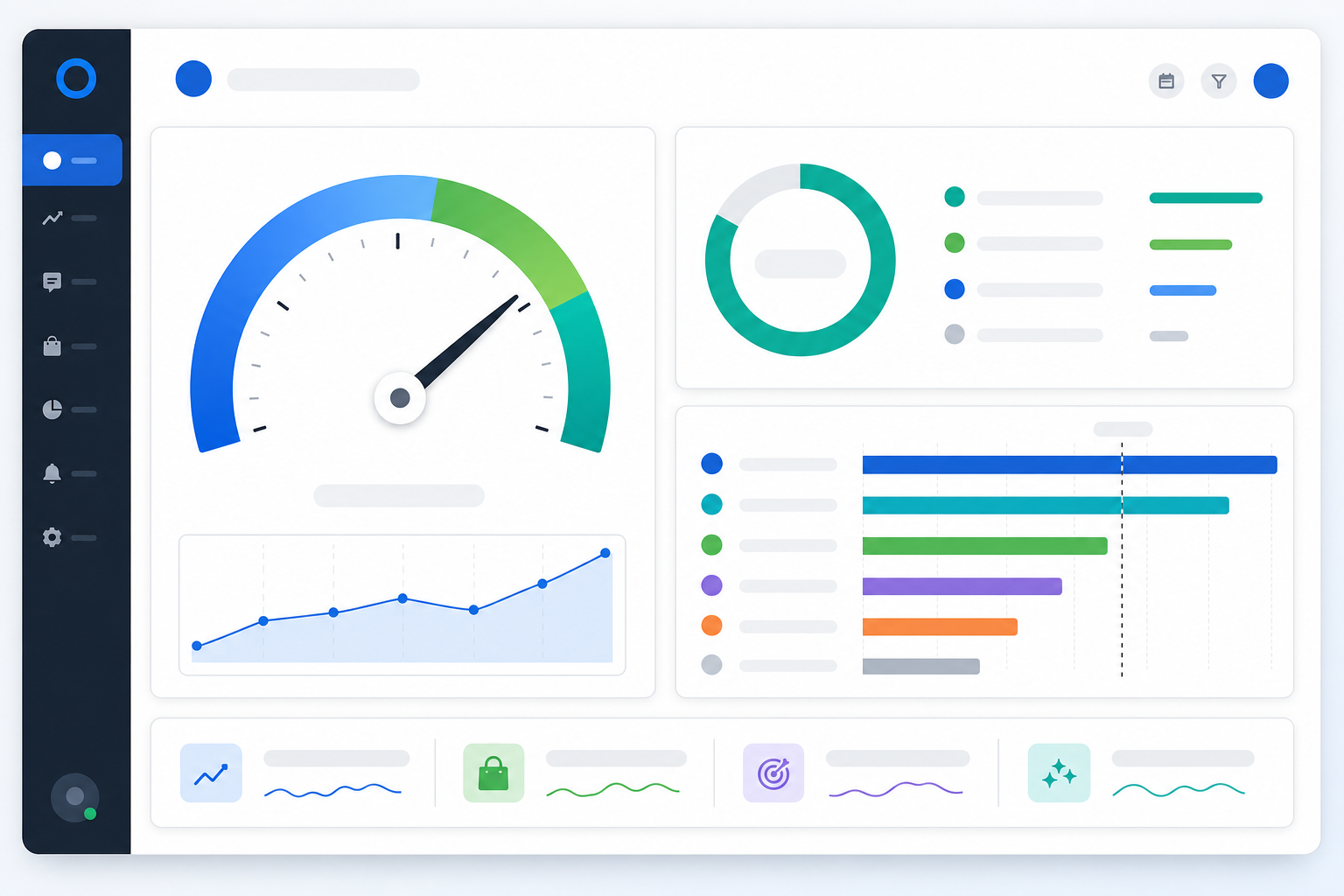
I want to be direct about something many teams underestimate: fixing your product pages once will not secure lasting AI shopping visibility. This is a moving target for several concrete reasons.
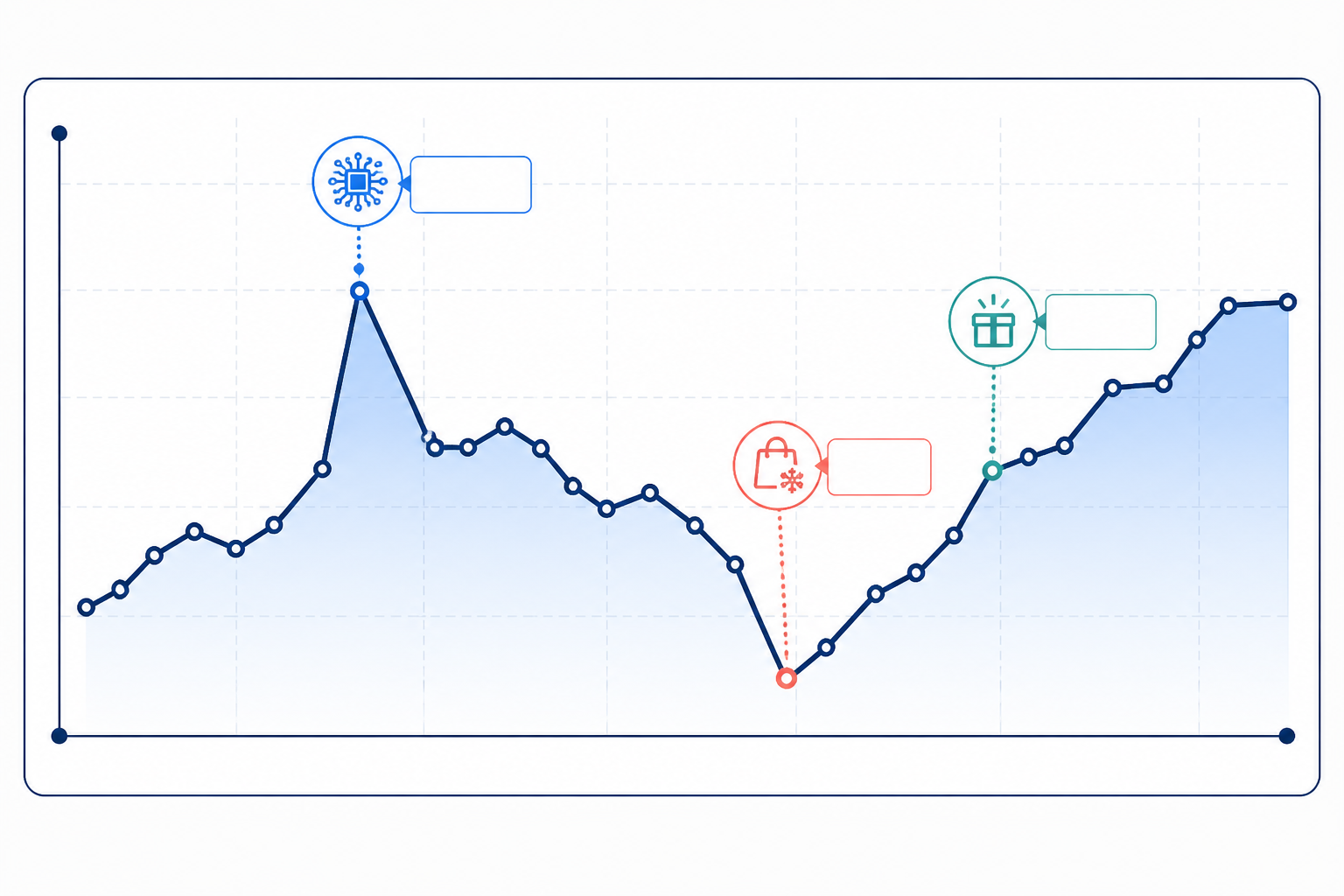
Model updates from OpenAI, Google, and Anthropic can shift shortlist composition without any change on your end at all. AI-generated answers aren't fixed rankings; they can vary with wording, location, inventory, price, delivery destination, and which sources happen to be available to the model at query time. A visibility gain this month offers no guarantee for next month.
Seasonal query shifts compound this. Christmas gift guides, back-to-school ranges, and summer product lines all change which attributes shoppers ask about, meaning winter-optimised comparison content may become largely irrelevant to spring queries without active updating. For UK retailers specifically, this includes UK-centric moments like Boxing Day sales and the run-up to Black Friday within UK delivery cut-off windows, which don't map neatly onto US retail calendars.
New product launches show their own visibility dip. A freshly launched product typically has lower AI visibility simply because insufficient crawlable content and third-party citations have accumulated around it yet, even where the underlying product is excellent and the page is well structured from day one.
Rather than treating this as an argument for constant anxiety, I'd treat it as an argument for a defined operating process: set an alert threshold for meaningful visibility drops, assign a named owner to review it, keep a simple change log of what was updated on which pages and when, and schedule a monthly review of query coverage and share of voice against your main competitors. Weekly or fortnightly monitoring, whether automated or manual, tends to catch drift that a quarterly audit would miss entirely; if you're only checking in every three months, you could lose visibility to a competitor for two months before you notice, let alone diagnose and correct it.
A first-week AI shopping visibility action plan
If you're starting from nothing, here's roughly how I'd sequence the first week rather than trying to fix everything at once:
- Day 1–2: Pick your 10 highest-revenue product pages and check them against the signal table above. Note which checks fail.
- Day 2–3: Fix the highest-priority gaps first: missing or invalid structured data, and specs that exist only in images or PDFs.
- Day 3–4: Draft 15–20 realistic pre-purchase questions for those same products and run them manually across ChatGPT, Perplexity, Gemini, and Copilot, logging the fields described in the testing section.
- Day 4–5: Identify which competitors appear instead of you, and check their pages against the same signal table to see what they have that you don't.
- Day 5: Assign an owner and a review cadence (weekly or monthly) for re-running this test, rather than treating it as a one-off project.
Frequently asked questions about AI shopping shortlists
What makes a product page more likely to be cited by AI shopping assistants?
Based on the patterns I've observed, factual density presented as crawlable text, explicit specs, structured data markup, and direct comparative statements tend to correlate with stronger citation. Pages relying on images, PDFs, or JavaScript-only rendering for key details are under-cited more often in the audits I've run, though structured data and clean text are aids to extraction rather than guarantees of citation on any specific platform.
Do customer reviews actually influence AI shopping shortlists?
In the patterns I've seen, yes, with nuance. Aggregate scores with visible review counts and specific, quantified feedback appear to carry more weight than generic five-star praise. Sentiment also seems to act as a filter: products with a run of negative sentiment can be technically present in an AI's retrieval data yet still be excluded from the final recommendation. I'd treat this as an observed pattern rather than a confirmed mechanism, since the exact thresholds any model applies aren't public.
How do I check if my products show up in AI shopping answers?
Start by manually running 15–20 realistic pre-purchase questions through ChatGPT, Perplexity, Gemini, and Copilot, logging your location, the exact prompt, the response, whether your brand appears, at what position, and with what type of citation. Repeat each query more than once, since outputs vary between runs. For ongoing tracking, a monitoring platform can automate this daily, though a shared spreadsheet updated weekly by a named owner works too.
Does AI shopping visibility change seasonally or with new product launches?
It does, on both fronts, based on what I've tracked. Seasonal shifts in shopper queries change which attributes AI models prioritise, and new product launches typically show reduced visibility until enough crawlable content and third-party citations build up around them. I'd treat AI SEO as an ongoing monitoring practice with a defined review cadence, rather than a one-time optimisation project.
Final takeaway: build for AI shopping visibility continuously
Getting onto AI-generated shopping shortlists isn't about gaming a hidden algorithm. It's about giving generative engines the same clear, structured, evidence-backed information a diligent human shopper would want before recommending your product to a friend. Start with your highest-revenue pages, fix the structured data and spec gaps first, test against real AI platforms with real UK context, and build a recurring review into your process rather than a one-off audit. The brands that treat this as continuous infrastructure are the ones likely to still be visible when the models update again next month. 🦉