What Is llms.txt? A SaaS Guide to Whether You Need One
What is llms.txt, and does your SaaS need one? Explore what AI engines may use, how to create the file, and how to measure any impact.
What Is llms.txt? A Practical SaaS Guide to Whether You Need One
llms.txt is a proposed plain-text Markdown file, placed at the root of your website, that gives large language models a curated summary of your most useful pages. I am not aware of any major AI provider that has publicly confirmed it uses the file to rank or recommend brands. So I treat it as a low-cost experiment rather than a guaranteed lever, and I judge it by watching citations and visibility over time.
The file keeps turning up in AI SEO and generative engine optimization conversations next to the factors that do influence whether ChatGPT, Claude, Gemini, Copilot or Perplexity mention your product. Below, I separate what can be verified from what gets repeated out of habit, show you how to build an llms.txt file in under an hour, and explain how to test the result without overstating what the test can tell you. This is a general SaaS guide and it applies equally to UK teams, since the crawlers and AI platforms involved operate globally. There is one UK-specific point, and it sits in the measurement section.
What Is llms.txt and Where Did It Come From?
In plain terms, llms.txt is a Markdown file published at a path such as yourdomain.com/llms.txt. Jeremy Howard, co-founder of Answer.AI, proposed it in September 2024. The aim is to help language models find and read the most important content on a site at inference time, meaning the moment a model is answering a question rather than when it was trained (sources: llmstxt.org and Answer.AI).
The problem it targets is real. Context windows are limited, and a typical HTML page is cluttered with navigation, scripts, cookie banners and advertising, so clean extraction is harder than it looks. A short, curated Markdown index sidesteps that clutter and points a model, or a person building an AI workflow, to the pages you consider canonical.
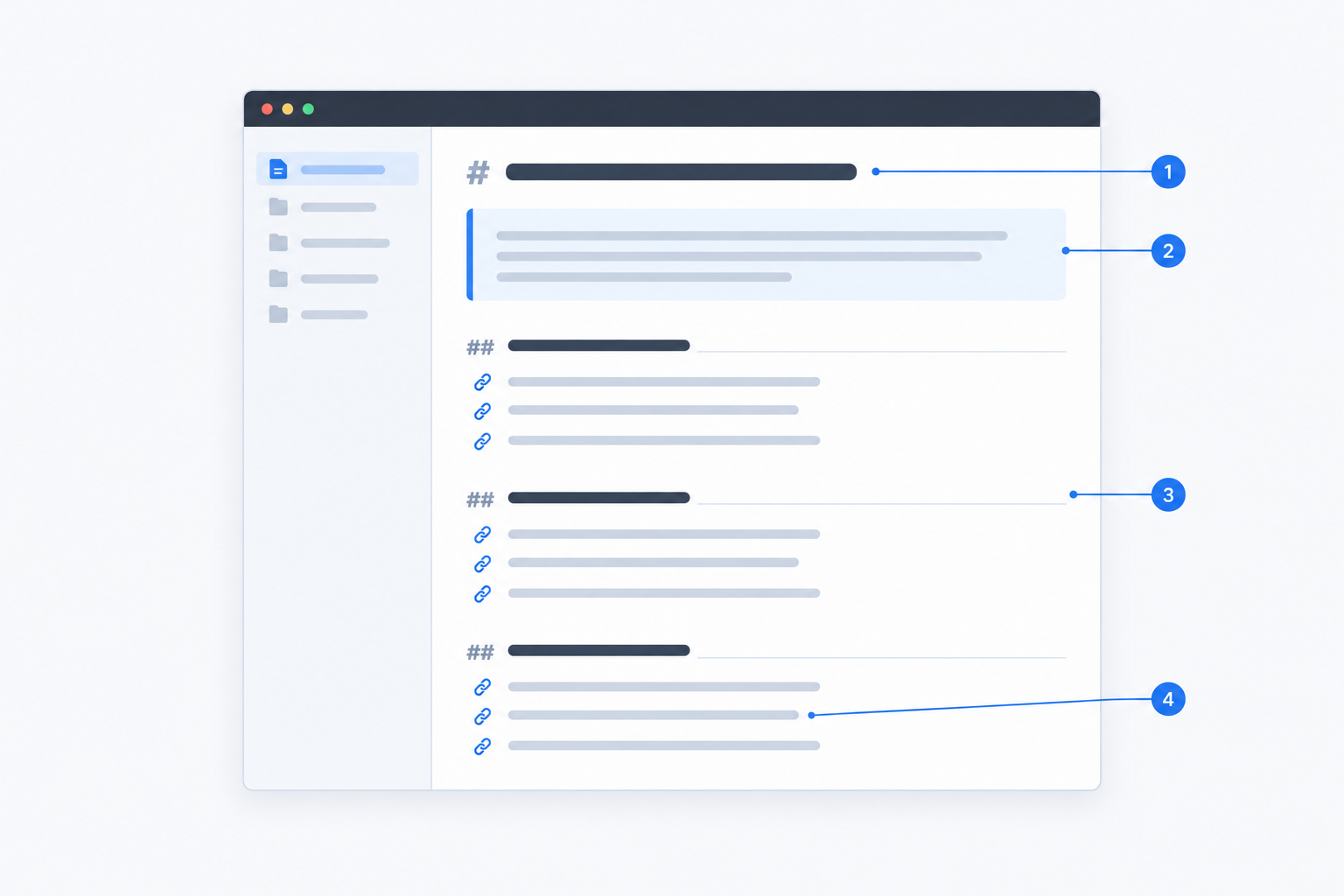
The proposed structure is deliberately simple:
- An H1 containing the site or project name
- A short blockquote summarising what the site or product is
- H2 sections containing lists of links, each with a brief description
- An optional llms-full.txt variant that holds a more complete body of documentation in one file
One clarification matters more than the rest: this is a community proposal, not a ratified web standard. No body such as the IETF or the W3C has adopted it, whereas robots.txt was standardised as RFC 9309. The proposal's own site is explicit that it does not guarantee any particular model or crawler will read the file.
Is llms.txt the Same as robots.txt or sitemap.xml?
No. The three files have different purposes and audiences, and they carry different levels of authority. The most common mistake I encounter is the assumption that adding llms.txt changes what AI crawlers may access. It does not.
| llms.txt | robots.txt | sitemap.xml | |
|---|---|---|---|
| Purpose | Curated, human-readable guide to your best content for models | Tells compliant crawlers which paths they may or may not access | Lists URLs you want search engines to discover |
| Format | Markdown | Plain text directives | XML |
| Primary audience | Language models and people building AI workflows | Crawlers and bots | Search engine crawlers |
| Status | Community proposal (2024) | Standardised, IETF RFC 9309 | Established protocol, documented by Google Search Central |
| Enforcement | None; it blocks and permits nothing | Honoured by compliant crawlers, but not access control | None; discovery aid only, no guarantee of crawling or indexing |
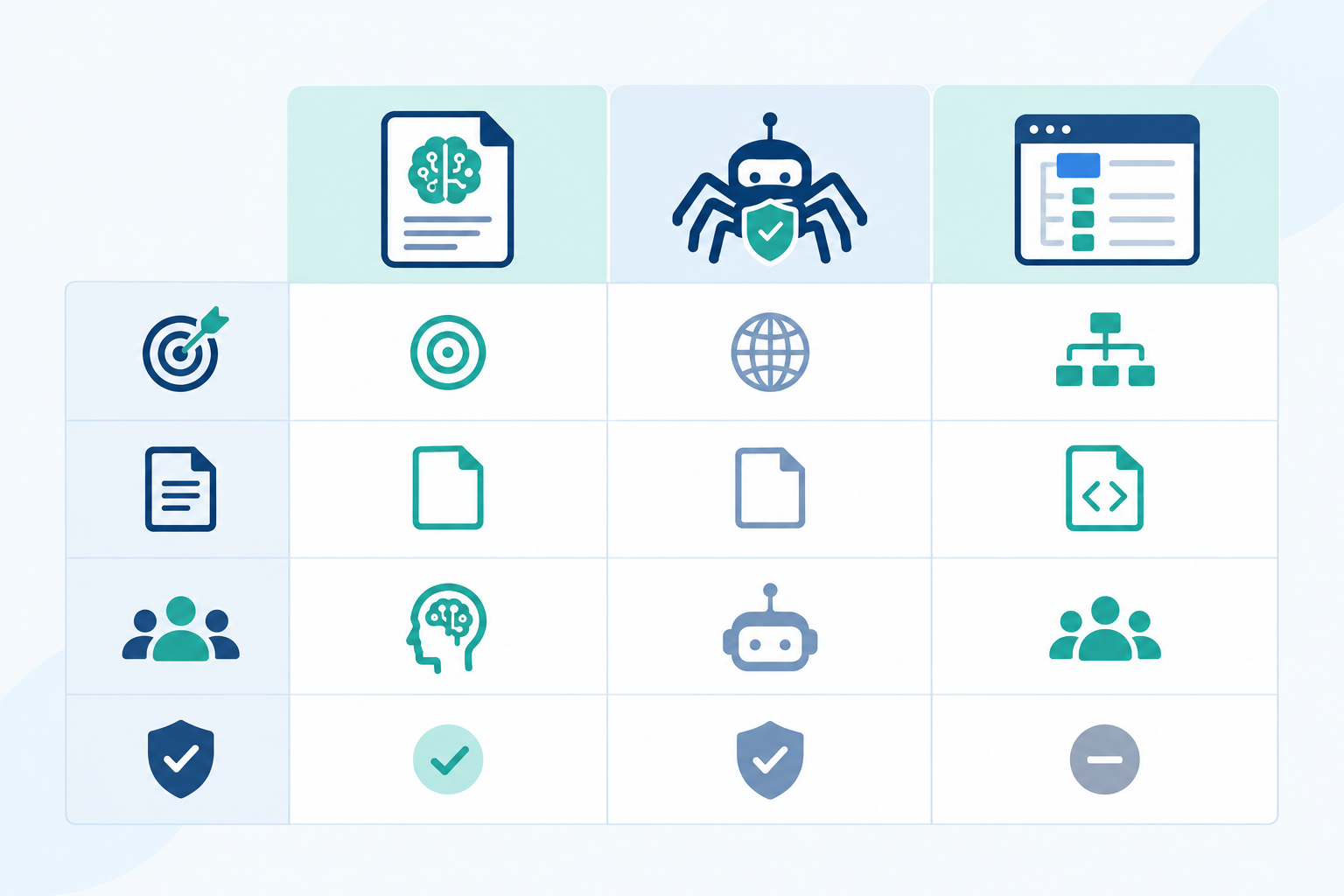
If you want to allow or disallow GPTBot, ClaudeBot, PerplexityBot or Google-Extended, you do that in robots.txt. Even there, RFC 9309 is clear that the file is not an access-control mechanism, so anything sensitive needs authentication. I think of llms.txt as an optional documentation aid that sits alongside the established files and never replaces them.
Does ChatGPT Read llms.txt? What We Know About AI Engines Using It
This is the question most readers arrive with: does ChatGPT read llms.txt? OpenAI has not publicly said that it uses the file to decide what to cite or recommend. I reviewed the published crawler documentation from the main providers, and what it describes is a different set of mechanisms:
- OpenAI documents GPTBot, OAI-SearchBot and ChatGPT-User, with controls via robots.txt (platform.openai.com/docs/bots).
- Anthropic documents ClaudeBot, Claude-SearchBot and Claude-User (Claude web crawler documentation).
- Perplexity documents PerplexityBot and Perplexity-User in its bot guidance. At the time of writing, I found no statement there that llms.txt is used for ranking or citation.
- Google states in its guidance on AI features and your website that appearing in AI Overviews and AI Mode rests on the same fundamentals as Search. Pages must be accessible, indexable and useful, and llms.txt is not listed as a requirement.
None of these pages say that publishing llms.txt causes those crawlers to visit or use your site. Absence of a statement is not proof of absence of behaviour, and that cuts both ways. Provider documentation changes, so check the primary sources again before you act.
On independent evidence, I am not aware of a large-scale, controlled study showing that AI crawlers routinely request /llms.txt or that the file lifts citations. Individual site owners have published log-file observations, but the samples are typically small, limited to one site, and confounded by other changes. A request in your logs shows only that a client fetched the file. It does not prove the file influenced an answer.
Here is how I rate the claims in circulation:
| Claim | Confidence | Notes |
|---|---|---|
| llms.txt was proposed in September 2024 by Jeremy Howard of Answer.AI | Confirmed | Documented on llmstxt.org and Answer.AI |
| It is not a ratified web standard | Confirmed | No standards body has adopted it |
| It cannot block or allow crawlers | Confirmed | Access rules live in robots.txt and authentication |
| Some vendors publish their own files, and documentation platforms such as Mintlify support generating them | Confirmed | Evidence of adoption, not of benefit |
| It helps coding assistants and agents navigate developer documentation | Plausible | Sensible mechanism; developers can point tools at the file directly |
| Some AI crawlers request the file | Plausible | Check your own logs; fetching is not the same as using |
| It lifts ChatGPT citations or AI search rankings | Unproven | No provider confirmation, no robust public study |
| It influences consumer product-recommendation answers | Unproven | Little to no evidence |

Where might it help? Mostly in developer documentation consumed by coding assistants and agents, where a person or tool can be told to read a specific index. For consumer product-recommendation queries, such as someone asking an assistant for the best project-management tool for a ten-person agency, I see little evidence that the file plays any part.
Does llms.txt for SaaS Make Sense? A Practical Decision Framework
The useful question is not whether the file is magic. It is whether the cost is justified by the plausible upside in your situation.
It is worth doing when:
- Your product is API-heavy or documentation-heavy, and a developer might hand your docs to an AI coding assistant
- You sell a developer tool, or you have many integrations that buyers need to evaluate quickly
- You already use a documentation platform that can generate the file automatically
It is low priority when:
- You run a small marketing site with a handful of pages, where there is little to curate
- You are a DTC store with thin content, where product pages and reviews matter far more
- You have unresolved basic legibility issues, such as blocked crawlers or content that renders only in the browser
The cost is roughly an hour of work and negligible risk, as long as the file is accurate and contains nothing private. The upside remains unproven. Do it if the cost is trivial, but do not expect it to substitute for content, authority and third-party mentions. If that hour would otherwise go on fixing a crawler block, spend it there first.
How to Create a Basic llms.txt File for Your SaaS Website
If you decide to go ahead, here is the process I would follow.
- Choose 10 to 30 pages. Pick the ones that best explain what you do, who it is for, pricing, integrations and documentation. Resist the temptation to list everything, because curation is the point.
- Write a one or two sentence summary. Use plain, factual language and skip the superlatives. 'The best platform on the market' tells a model nothing it can verify.
- Group links under clear H2 headings. Product, Pricing, Docs, Comparisons and Support are typical groupings, with a short descriptor on each link.
- Save and publish. Save as UTF-8 Markdown at the root domain, then confirm it returns a 200 status and a plain text content type.
- Optionally create llms-full.txt. This suits long-form documentation. Keep file sizes manageable, because the format exists to respect limited context windows.
- Set a maintenance reminder. Update the file whenever pricing, features or URLs change, since AI engines can repeat stale information.
Here is a clean example for a fictional SaaS product, which you can copy and adapt:
## Pipeline Pilot> Pipeline Pilot is a workflow automation tool for finance teams. It connects accounting software, banks and spreadsheets.
Product
- Overview: What it does and who it is for
- Integrations: Supported accounting and banking tools
Pricing
- Plans: Plan tiers, limits and billing terms
Docs
- API reference: Endpoints, authentication, rate limits
- Setup guide: Connecting your first data source
Comparisons
- Pipeline Pilot vs manual reconciliation: Where automation helps
Support
Help centre: Troubleshooting and contact options
The structure maps directly onto the proposal. The # line is the H1 with your product name, and the > line is the blockquote holding a factual summary. Each ## line is an H2 section heading, and every bullet is a link followed by a short description of what the page contains.
Two cautions. First, link only to public, maintained pages, and never place secrets, customer data or assumptions about access control in the file. Second, review any automatically generated output. Documentation platforms such as Mintlify can generate these files, which makes the experiment cheap, but you remain responsible for the accuracy of what the file lists.
Fixes That Matter More Than llms.txt for AI Visibility
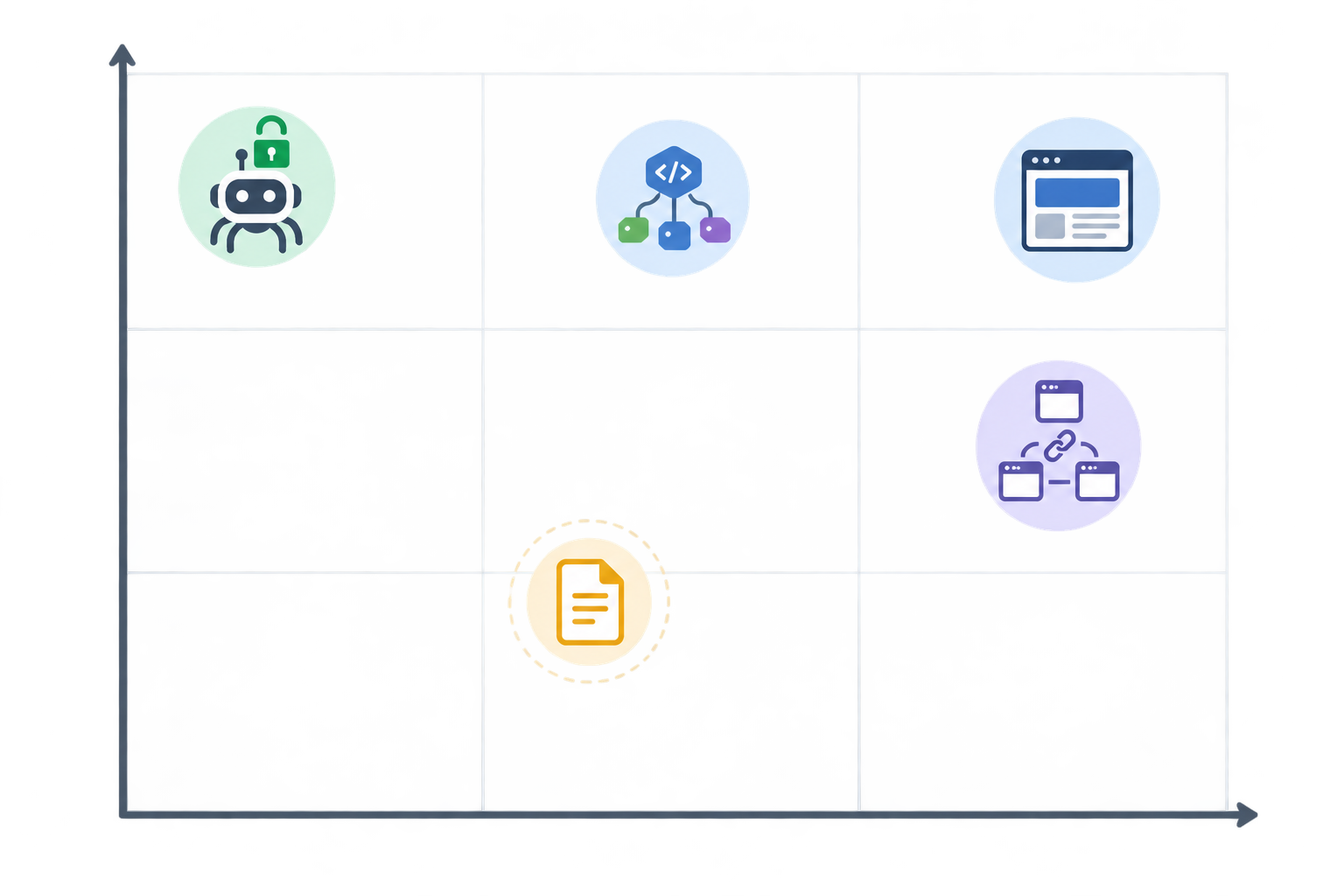
In my experience, the reasons a SaaS brand is missing from AI recommendations are usually mundane and invisible. Google's guidance says its AI features need no special technical approach beyond the fundamentals, and I would apply similar logic more broadly. These fixes come first, in rough order of importance. They address accessibility and quality, and none of them is a proven route to AI citations.
- Confirm AI crawlers are not blocked. Check robots.txt, and also your CDN and firewall bot rules. Blocking at the CDN layer is a frequent and invisible cause of missing citations, because your robots.txt can look welcoming while the firewall returns errors.
- Make key content available in the initial HTML. Google documents that it reliably follows
<a>elements with anhrefattribute, and that JavaScript-only navigation may not offer the same discovery path. Behaviour varies between AI crawlers and providers rarely document it in detail, so I would not assume they all render JavaScript. Server-rendering your key pages is a cheap way to remove the doubt. - Publish pages that answer buyer questions. Think comparisons, use cases, pricing explanations and integration guides. A directory of links cannot compensate for thin, stale or inaccessible pages.
- Add structured data and consistent naming where it fits. Organization, Product and SoftwareApplication markup can help search engines understand your pages, provided it accurately describes visible content. FAQPage markup has limited relevance for Google rich results today, so add it only if it serves a clear purpose. Google notes that valid markup makes a page eligible for certain appearances but guarantees nothing. Consistent brand naming helps models resolve who you are.
- Build third-party corroboration. Review sites, reputable publications and community discussions all count. AI answers frequently draw on external sources, and this is the lever least within your direct control and most often neglected.
- Run a legibility audit. Check crawlability, rendering, canonical tags, structured data validity, status codes and page speed. Free tools such as Google Search Console and your own server logs will do the job, as will a paid audit service. Whichever you use, finish it before touching llms.txt.
When prioritising, weigh effort against likely impact. Unblocking crawlers and fixing rendering are low-to-moderate effort with plausible high impact. Third-party mentions are high effort with plausible high impact. llms.txt sits in the low-effort, uncertain-impact corner.
How to Measure Whether llms.txt Made a Difference
Publishing the file is the easy part. Knowing whether it did anything is harder, because AI answers vary from run to run and a single check is close to meaningless. Treat the method below as observational. It can show correlation, but it cannot establish that the file caused any change.
- Record a baseline before you publish. Capture citations, mentions, share of voice against competitors and sentiment across the assistants your buyers use, such as ChatGPT, Claude, Gemini, Copilot and Perplexity.
- Fix a stable set of buyer-intent questions. For every run, log the platform, the model or version where visible, the exact prompt wording and the date. Repeat each prompt several times, since one answer is a sample of one.
- Choose a sensible cadence. Daily runs smooth out some noise, but they cost more effort and add noise of their own. For a small question set, several runs per week may be enough.
- Change one thing at a time and log the date. If you publish llms.txt, rewrite three landing pages and launch a review campaign in the same week, you will not know which one mattered.
- Watch for at least four to six weeks. Compare against a few competitors as a rough context check, but remember they are not a true control. If every brand in your category moves on the same day, a model or platform update is the likelier explanation. Competitors still cannot account for query-specific changes or changes specific to your site.
- Check server logs for requests to
/llms.txtby AI user agents, which tells you whether it is being fetched at all. Pair this with referral data from AI assistants. For UK teams, remember that analytics relying on cookies fall under PECR consent rules, so check the ICO's guidance or use consent-aware or cookieless measurement. - Interpret results cautiously. If movement sits within normal run-to-run variation, you cannot credit the file. A null result is legitimate and useful, because it frees your time for higher-impact work.
You can run this with a spreadsheet and a fixed prompt list, or with a dedicated AI visibility tracker. What matters is the discipline: a baseline, repetition, a change log and honest limits.
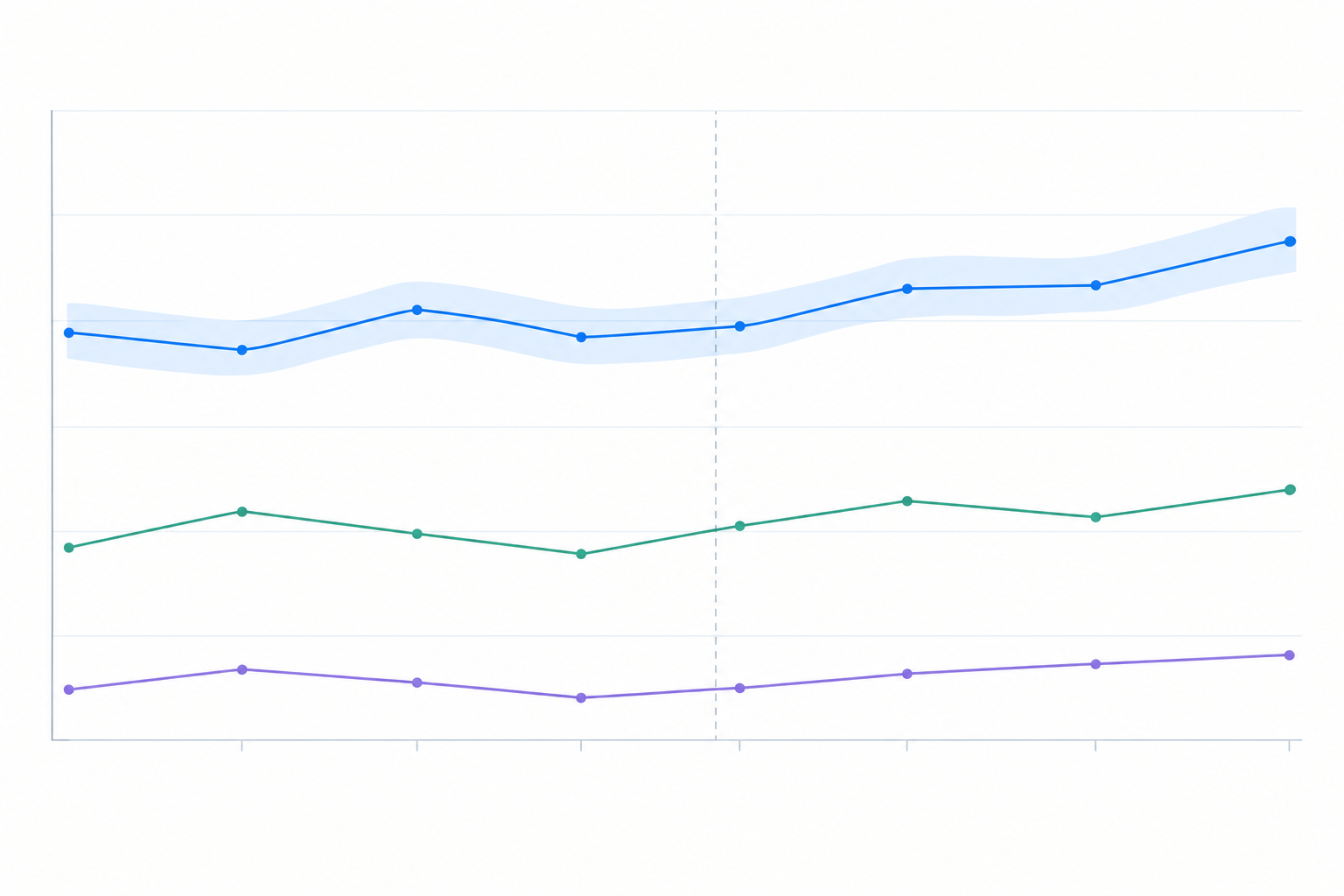
A final word on attribution. A request for the file in your logs is evidence of fetching, not influence. A rise in your visibility after publication is evidence of correlation, not cause. Report whatever you find, even if that is nothing. I would rather read an honest null result than a tidy story.
FAQ: Common Questions About llms.txt
Does ChatGPT read llms.txt?
OpenAI has not publicly confirmed that ChatGPT uses llms.txt to decide what to cite or recommend. Some AI crawlers may request the file, which you can check in your server logs, but fetching is not the same as using it to influence answers.
Is llms.txt the same as robots.txt?
No. robots.txt tells crawlers what they may or may not access, while llms.txt is an optional, curated Markdown guide to your best content. llms.txt cannot block or allow any bot, so you still need correct robots.txt rules.
What should I put in my llms.txt file?
Start with a short factual summary of your product. Follow it with categorised links to your key pages: product overview, pricing, integrations, documentation, comparisons and support. Keep descriptions plain and accurate.
How do I know if llms.txt worked?
Record a baseline, then track the same logged set of prompts for several weeks, noting platform, model version and date. Movement within normal variation cannot be credited to the file, and even a clear change shows correlation rather than cause.
Should a SaaS company bother with llms.txt?
It is cheap to create, so trying it is reasonable, particularly if you have substantial documentation. Crawler access, rendering and third-party mentions should come first.
The Bottom Line: Is llms.txt Worth It for SaaS?
llms.txt is a reasonable, inexpensive experiment, and for documentation-heavy SaaS it has a plausible mechanism. It is not a verified route to ChatGPT citations. Publish it if the hour is genuinely spare, record your baseline first, and let the data decide whether it stays on your roadmap. 📊