Soft Mentions in AI Answers: The Brand Signal You're Missing
Learn what soft mentions in AI answers mean, why they influence buyers and how to track them for clearer AI share of voice and LLM brand monitoring.
Soft Mentions in AI Answers: How to Track Brand Mentions Without Links
Soft mentions AI teams need to track are moments when a generative AI engine names your brand without citing any content you own. If you count only linked citations, you under-report your presence in AI answers and distort your AI share of voice. I recommend tracking soft mentions as a separate, position-aware series, using automated and repeated LLM brand monitoring, and reporting them alongside citations rather than folding them into the same metric.
I should be precise about how strong the underlying claim is. The evidence shows that people rarely click through from AI answers, so much of the exposure happens inside the answer itself. I am not aware of public research showing directly that a brand named in an AI answer changes consideration or purchase. So I treat a soft mention as an exposure signal that plausibly feeds shortlisting, not as a proven driver of sales. The rest of this article sets out the definitions, counting rules, arithmetic and reporting structure you can defend in front of leadership. It also marks where the evidence is thin, because a number you cannot defend is worse than no number at all. 📊
Citation, Mention and Soft Mention: What's the Difference?
There is no universally standardised industry definition of a soft mention, so any team that reports one needs to define it operationally and apply the definition consistently. These are the working definitions I use:
- Citation: the answer links to, or lists as a source, content that you own.
- Mention: the answer text names your brand, whether or not a source is shown.
- Soft mention: the answer text names your brand, and no source in the answer resolves to content you own. The answer may carry no source at all, or it may link only to a third party such as a review site.
Dashboards conflate these terms because most tools were built around the linked-source model inherited from traditional search. Google's documentation on AI features says links to supporting pages can appear in AI Overviews, and OpenAI describes source links in ChatGPT search. But a cited page can support an answer without the brand being named in it, and a brand can be named without any link to its website. When a dashboard merges the two, a rival with strong technical SEO but modest brand recognition looks dominant, while a well-known brand whose pages are rarely fetched looks absent. Neither picture is accurate.
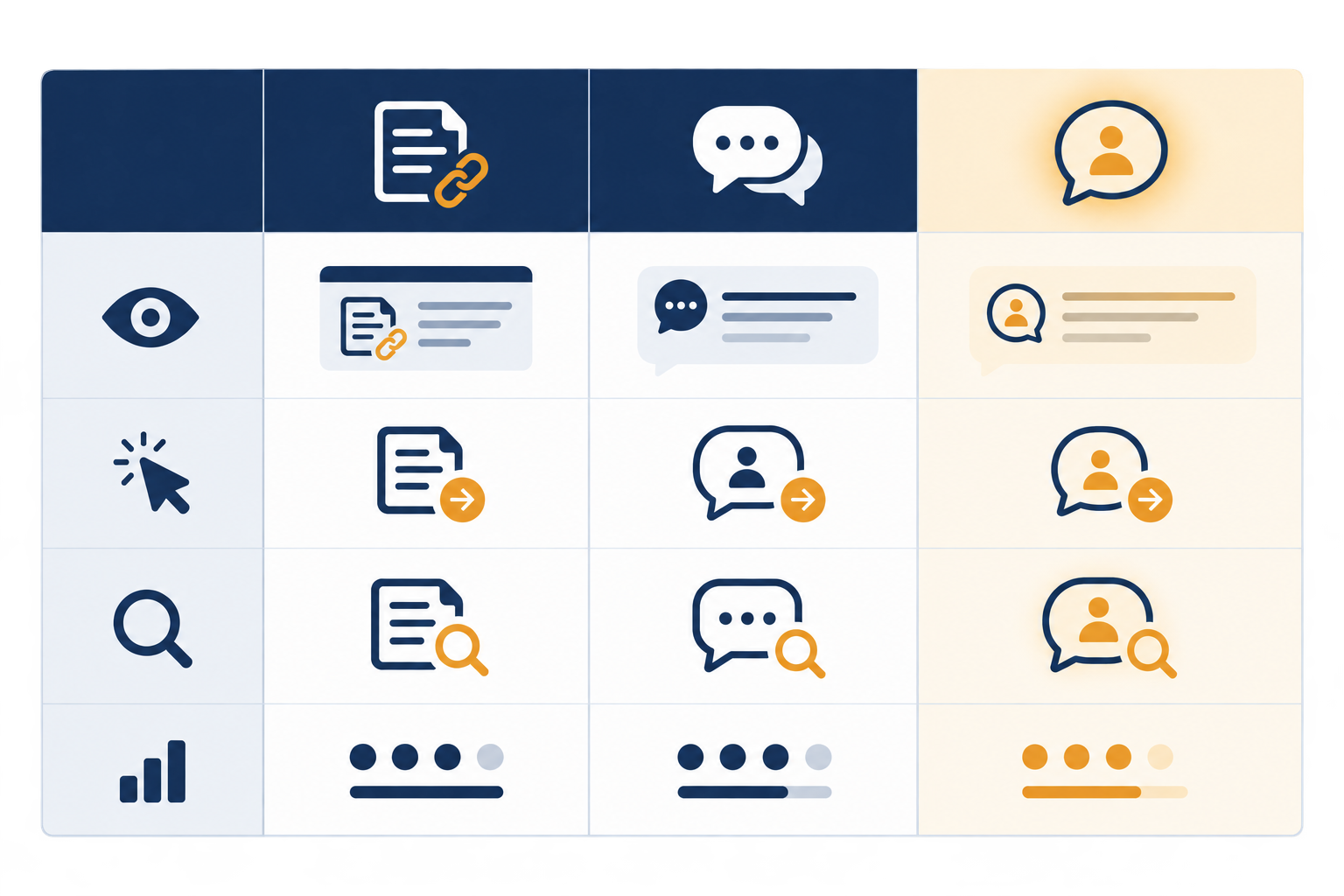
| Citation | Mention | Soft mention | |
|---|---|---|---|
| What it looks like in the answer | A numbered source, link or source card pointing to your content | Your brand named in the answer text, with or without a source | Your brand named in the text, with no source pointing to your content |
| What the buyer can do next | Click straight through to your content | Click through if a source exists, or search for you by name | Search for you by name, or carry your name into a later decision |
| How it is detected | Parsing the answer's source list and linked domains | Matching brand names and approved variants in the answer text | Matching names in the text where no source resolves to your domains |
| Suggested weight in a visibility score | Highest, because it gives a route to your content | Not scored separately; it is the umbrella for the other two states | Meaningful but lower, and always reported as its own series |
A measurement model for soft mentions that avoids double-counting
The table above describes terms, but a metric needs mutually exclusive states. The most common error I see in draft reports is counting a brand that is both cited and named once as a citation and again as a mention. I avoid this by recording one observation per brand, per answer, per run, and assigning it exactly one status:
| Status | Is the brand named in the text? | Does a source resolve to your owned content? |
|---|---|---|
| Cited and named | Yes | Yes |
| Cited only | No | Yes |
| Soft mention | Yes | No |
Three rules keep the counts consistent:
- The unit is one brand in one answer from one prompt-run on one engine. If your brand is named four times in a single answer, it is still one observation.
- Citation-linked appearances are "cited and named" plus "cited only". Soft mentions are reported as a separate series and are never added into the citation count.
- Tag the source type on soft mentions (no source, or third-party source only). That way you can see whether engines are naming you on the strength of someone else's page.
A worked example of soft mentions in AI answers
Take the purchase-decision question "Which project-management tools work well for small teams?" and three fictional brands. This illustrates how to apply the categories and is not a claim about observed model outputs.
- A Perplexity-style answer with search sources: "Acme suits small teams [1]", where source [1] is Acme's own pricing page. Acme is cited and named. "Brightboard is a popular alternative", where the only link is a third-party review site, is a soft mention for Brightboard, tagged third-party source. "Corvid also appears on many shortlists", with no link at all, is a soft mention with no source.
- A ChatGPT-style answer drawn from learned knowledge, with no search triggered: all three names may appear in a bulleted list with no links, which makes all three soft mentions.
The buyer reads the same three names either way. Only Acme's appearance in the first answer would show up in a citation-only report.
What counts as a soft mention? Edge cases
- Misspelled brand names: count them if the reference is unambiguous, and tag them as a variant so you can see how often it happens.
- Product names without the company name: count them if the product maps uniquely to your company, and keep an approved variant list.
- Brands in a bulleted shortlist: these count, and the list position should be recorded, because it feeds the weighting discussed below.
- Descriptions without a name (for example, "the tool with the board-and-timeline workflow"): these fall outside my definition. Log them as a possible reference, label your confidence, and promote them only if the reference can be verified.
Whatever rules you choose, keep the prompt, engine, date, language and market attached to every observation.
Why AI Engines Mention Brands Without Linking to Them
Answers can draw on two different things: what a model learned during training, and what a retrieval system fetches at the moment of the query. Depending on the product and whether search is active, an answer may rest on learned associations, retrieved pages, or a blend of the two. OpenAI's description of ChatGPT search and Google's AI features documentation both indicate that links appear when web retrieval is used. A brand surfaced from learned association has no fetched page behind it, so there is nothing to link to, and the mention alone does not tell you which source informed it.
Retrieval does not guarantee a tidy relationship between links and names either. Google states that its AI features may use a "query fan-out" approach, issuing multiple related searches to assemble a response, which means a cited page may support only part of an answer. You cannot judge brand inclusion purely by whether your own domain is linked.
Interface design adds more variation. ChatGPT, Claude, Gemini, Copilot and Perplexity each present sources differently, and each decides in its own way when to retrieve. The platforms document some of this behaviour and not the rest, so I will not assert how a particular engine selects sources. What I can say with confidence is that citation behaviour varies by engine and by query type, and that is why per-engine AI brand monitoring matters.
One hypothesis worth testing with your own data is that recommendation and comparison queries ("best X for Y") produce brand names with fewer links than factual queries. It is plausible, but I have not seen it established in published research, so check it against your own sampled answers before relying on it.
Two practical implications follow:
- No link does not mean no exposure. The buyer still read your name.
- No link does not mean accurate representation. A soft mention can describe you wrongly, position you poorly or attribute a competitor's feature to you, and with no linked source it is harder to trace why.
How Soft Mentions in AI Answers May Influence Buyers
The leadership question needs reframing. "Did they link to us?" is a traffic question. The more useful one is "were we in the answer the buyer read?" AI answers compress part of the research process into a single response, so a named brand has at least a chance of being considered even when no click occurs.
That last sentence is a hypothesis, and it helps to separate what has been measured from what has not.
What the evidence shows: clicks fall when AI answers appear
The published data concerns click behaviour, not consideration:
- Pew Research Center analysed the browsing of 900 US adults in March 2025, covering 68,879 Google searches. AI summaries appeared in 18% of them. Users clicked a traditional result in 8% of visits with a summary, against 15% without one, and clicked a link inside the summary in about 1% of visits. The report is observational and US-only.
- SparkToro and Datos found that 58.5% of US Google searches in 2024 data ended without a click to an external result. That figure covers all searches and does not isolate AI answers.
- Ahrefs, analysing 300,000 keywords in 2025, associated the presence of an AI Overview with a 34.5% lower average click-through rate for the top-ranking page. It is observational and not a universal effect.
- Gartner forecast in February 2024 that traditional search-engine volume would fall 25% by 2026 as users move to AI chatbots and virtual agents. That is a forecast, not a measured outcome.
Taken together, these studies show that little of the exposure inside an answer reaches your analytics. They do not show that a named brand wins consideration, and none of them measured buyer intent.
What the evidence does not show about soft mentions
I am not aware of public research that tests whether a brand named in an AI-generated answer changes shortlisting or purchase. Soft mentions can plausibly lift brand search and direct traffic, because a buyer who reads your name may type it into a search bar later. That attribution is indirect and difficult to prove. Until your own data says otherwise, treat the soft-mention series as a measure of visibility and exposure, and test the link to outcomes by watching branded search and direct traffic alongside it.
Sentiment and framing change the value too. A soft mention that calls you the "budget option" or the "legacy choice" is worth something quite different from one that names you as a leading pick, so any count of presence needs a sentiment layer.
A note on UK evidence
All the datasets above are US or global. I have not found a published UK study that measures brand exposure inside AI answers, so I have not extrapolated one. For UK reporting, run your own sampled prompts in UK English, record the market on every observation, and don't treat a US result set as representative of UK buyers.
Are soft mentions worth tracking?
My verdict is yes, under these conditions:
- Your buyers use AI assistants during research, which you can check through sales conversations and surveys.
- Your category has a small, well-defined competitor set, so a single named rival matters.
- Your referral analytics show little AI traffic, which may reflect missing links and not missing exposure.
- You need to explain why brand search or direct traffic is moving without a clear source.
If none of these apply, citations and conventional analytics may be enough.
How Soft Mentions Change AI Share of Voice
AI share of voice is a defined metric, not an industry standard, so state your denominator plainly. I use two measures, both built on the observation model above:
- Appearance rate: the percentage of sampled answer runs in which a brand appears with any status.
- Share of voice: a brand's observations divided by all observations for every tracked brand, with each brand counted at most once per answer.
Here is the arithmetic on an illustrative example, with figures invented to show the mechanics. Assume 100 sampled answer runs and three brands, and each observation carries exactly one status.
| Brand | Cited and named | Cited only | Soft mention | Citation-linked total | Citation-only share | All observations | Share including soft mentions |
|---|---|---|---|---|---|---|---|
| Brand A | 20 | 5 | 10 | 25 | 50.0% (25 of 50) | 35 | 31.8% (35 of 110) |
| Brand B | 5 | 5 | 40 | 10 | 20.0% (10 of 50) | 50 | 45.5% (50 of 110) |
| Brand C | 10 | 5 | 10 | 15 | 30.0% (15 of 50) | 25 | 22.7% (25 of 110) |
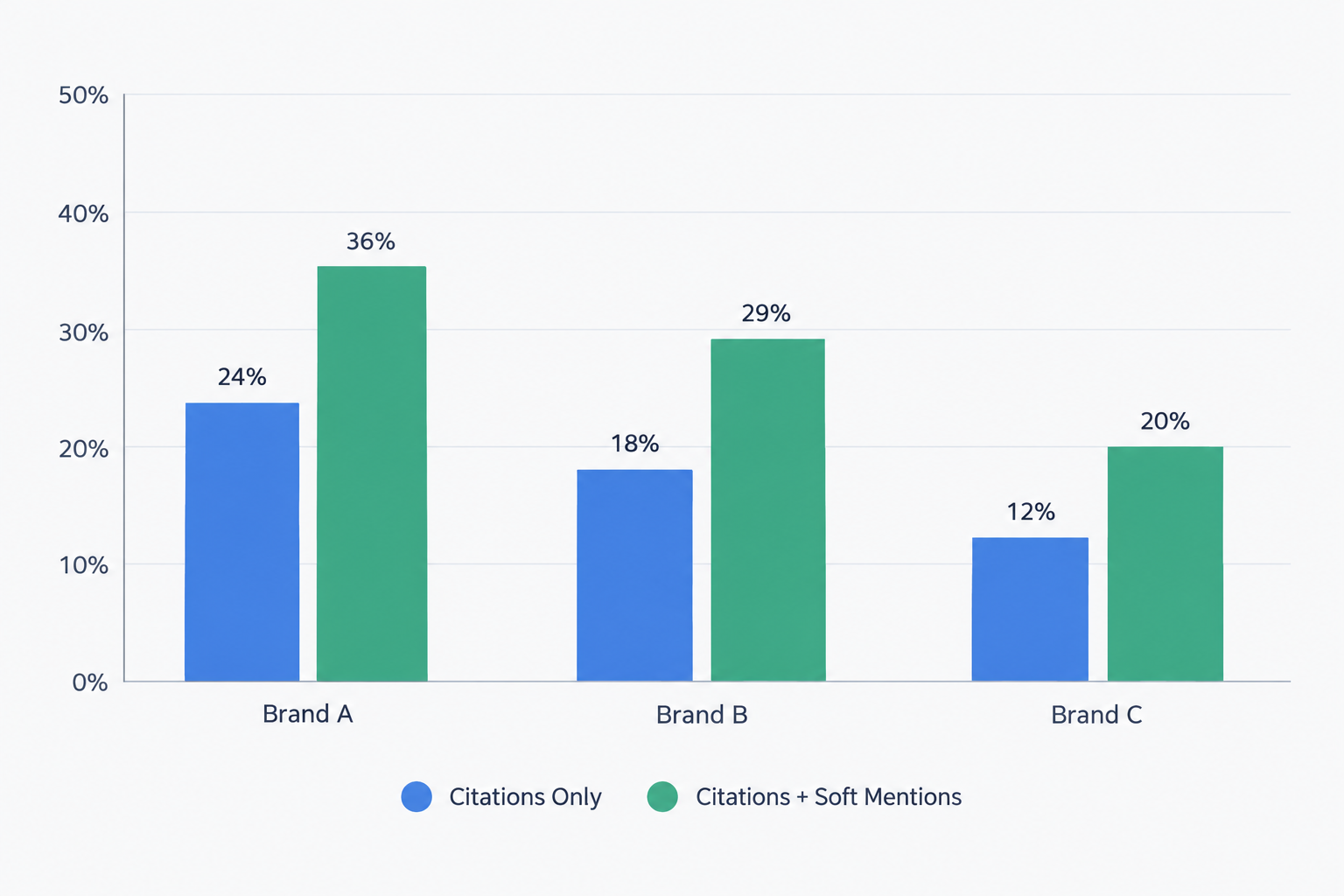
On citations alone, Brand B ranks last. Include soft mentions and it ranks first, with an appearance rate of 50%. No observation is counted twice, because a cited-and-named brand appears in the citation-linked total once and is never added to the soft-mention column. A brand with strong recognition but weak site structure can plausibly show exactly this pattern: invisible in citation-only reports while dominating the text of the answers.
Why position matters in AI share of voice
Being named first in a recommendation list is not the same as being named fifth, so the metric should also be position-weighted. The weights you choose are a judgement call. What matters is that you document them and apply them consistently across brands and over time.
Methodology for comparable soft-mention data
- Fix your prompts. Version the question set, so a change in the prompts is never mistaken for a change in visibility.
- Repeat the runs. Generated answers vary between runs, so one response is not a reliable estimate. Report ranges and trends, not one-day readings.
- Record the engine and version where the product exposes it, along with the date, language and market.
- Handle gaps explicitly. If an engine fails to respond or changes its interface, log the run as missing and exclude it from the denominator rather than counting it as zero.
- Keep denominators separate. Report citation share and all-observation share side by side, so a linked source is never confused with a spoken brand name.
- Use enough prompts. A handful of prompts tells you about those prompts, not your category.
How one vendor handles this: MentionOwl
This section is product-specific, so weigh it accordingly. MentionOwl's 0-100 visibility score combines four components: query coverage, position-weighted citations, share of voice and soft mentions. Soft mentions get their own component because collapsing them into citations would recreate the blind spot described above. It also lets you see whether a score moved because engines linked to you more or named you more. The component weights are the vendor's own, and I would ask any provider, MentionOwl included, to document its weights and classification rules before you rely on a composite score in a board pack.
How to Track Soft Mentions Without Manual Checks
Manual spot-checking fails for four reasons: the sample is too small, answers can be personalised, models update without notice, and results are inconsistent from one run to the next. The process below replaces it with something repeatable. 🔁
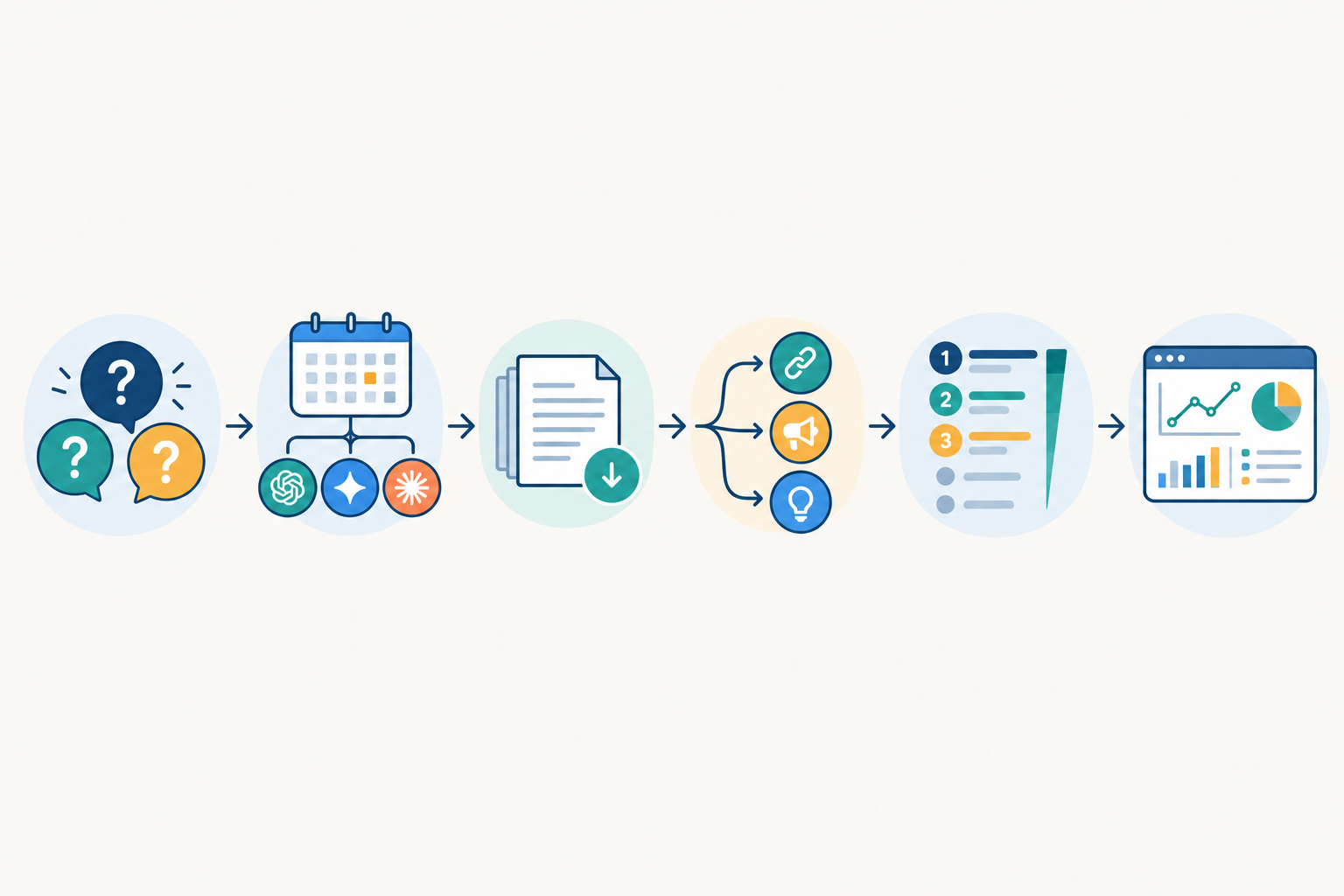
- Build a representative question set from real customer language. Cover category, comparison and problem-aware queries, and include non-branded prompts, since branded queries flatter your visibility.
- Run the set across multiple engines on a schedule. Daily repetition smooths out answer variability, and covering ChatGPT, Claude, Gemini, Copilot and Perplexity shows where your visibility is engine-specific.
- Record everything. Capture the full answer text, the citations, the sentiment and every competitor named, with the prompt, engine, date, language and market.
- Classify each brand observation as cited and named, cited only, or soft mention, applying written rules for name variants and product names.
- Weight by position and aggregate into share of voice by engine, topic and competitor.
- Review trends weekly rather than reacting to daily fluctuations.
Can I track soft mentions automatically?
Yes. This is the core of LLM brand monitoring, and tools can run the whole sequence on a schedule. MentionOwl, for example, auto-generates a question set by crawling your website, runs it daily across the five engines above, and includes competitor tracking and sentiment analysis. Its REST API and MCP server let you pipe observations into BI tools or AI agents, so the soft-mention series can sit beside your existing marketing dashboards. If you build your own pipeline instead, the classification rules above apply equally.
Improving the Odds of Soft Mentions: What to Test
Public research has not established a universal recipe for earning soft mentions, so I treat everything below as hypotheses to test and measure, not promises.
- Strengthen AI legibility. Engines need to parse who you are and what you do. MentionOwl's AI legibility audit runs 16 technical checks covering areas such as structured data, crawlability and clear entity descriptions. Google's own guidance says there are no special technical requirements for AI features beyond the foundations of Search, so treat sound technical SEO as a prerequisite, not a guarantee.
- Build consistent third-party presence. Ahrefs analysed 75,000 brands in 2025 and reported a correlation of roughly 0.664 between third-party web mentions and visibility in Google AI Overviews. That is association, not causation, and it is specific to AI Overviews, but it supports investing in reviews, comparison articles and industry directories.
- Apply generative engine optimisation principles. Use clear positioning statements, answer-first content and consistent naming across the web. The GEO paper (Aggarwal et al., KDD 2024) found that adding relevant citations, quotations and statistics improved visibility in generative-engine responses by up to 40% in its benchmark experiments. That is a ceiling in a controlled benchmark, not an expected lift.
- Use competitor tracking. Identify which queries your rivals win and which sources appear to feed those answers, then decide where you can credibly compete.
- Test, don't assume. Monitor answers after each change instead of assuming one update caused a shift.
How to Report Soft Mentions to Leadership
Leadership needs a figure it can trust and a method it can interrogate. I recommend this structure:
- Lead with one headline figure, such as overall visibility score and share of voice, with the breakdown beneath it.
- Show citation-linked appearances and soft mentions as separate series, so nobody mistakes one for the other.
- Report trends over at least four to six weeks, with engine-level splits and a named competitor benchmark.
- Add sentiment context and two or three verbatim answer excerpts. Leaders respond to seeing how the brand is actually described.
- State the methodology plainly: query count, engines covered, run frequency, denominator and classification rules.
- Close with a short "so what" that lists recommended actions and the metric each is expected to move.
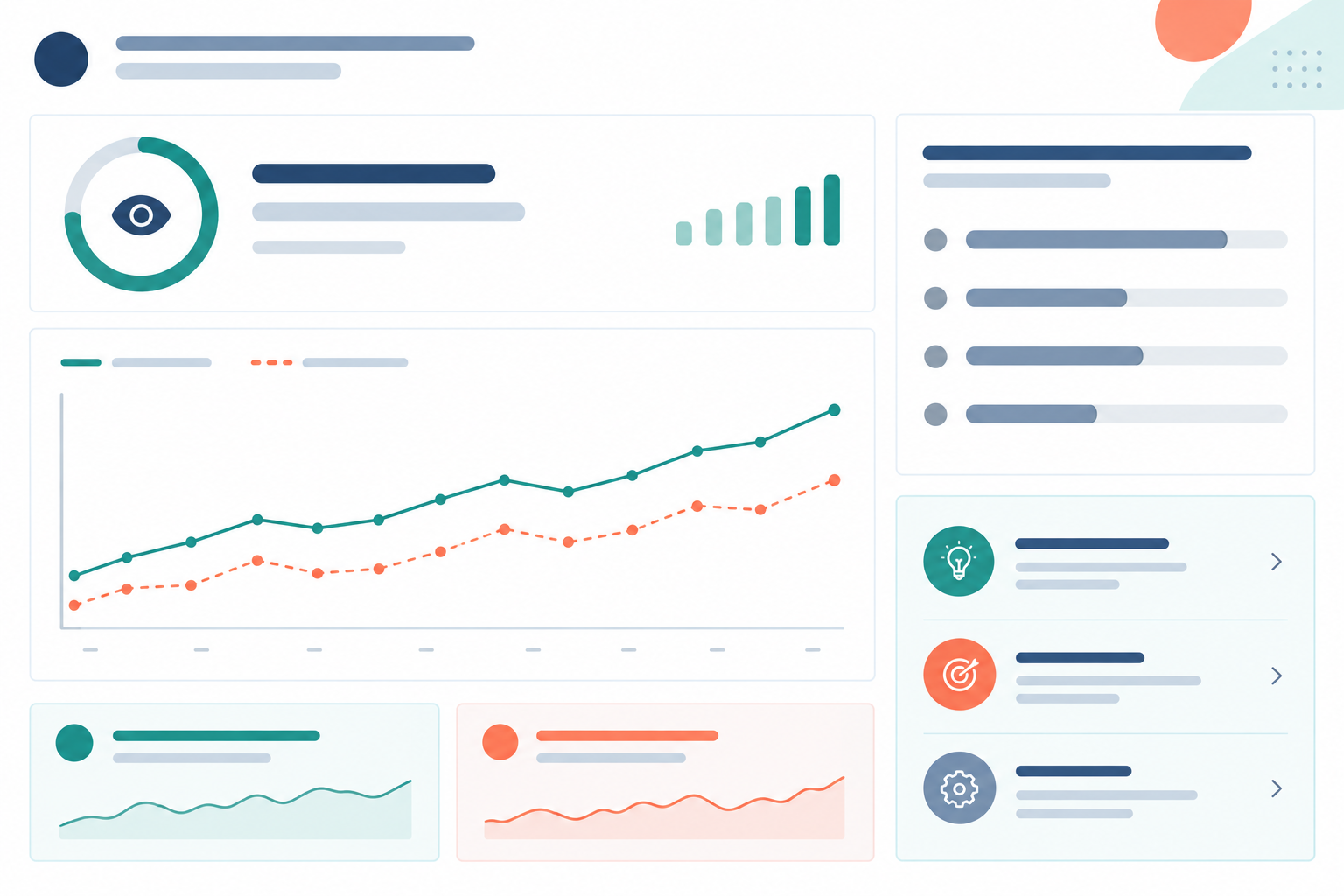
On a single page, that means a top band with the score, share of voice and period-on-period change. The six-week trend and competitor benchmark go in the upper half, the engine split and sentiment summary in the middle, verbatim excerpts and recommended actions below, and a methodology footer at the bottom.
Frequently Asked Questions About Soft Mentions in AI
What counts as a soft mention in an AI answer?
A soft mention is any appearance of your brand or product by name in the answer text where no source resolves to content you own. Name variants, such as a product name that clearly refers to your company, should be included under consistent classification rules.
Are soft mentions worth tracking if they don't send traffic?
Yes, in my view, as a measure of exposure. Soft mentions will not appear in referral analytics, so without dedicated tracking you will under-report your presence and misjudge your position against competitors. The evidence does not yet show that they cause purchases, so pair the series with branded search and direct traffic to test the link yourself.
How do soft mentions affect AI share of voice?
Including them can change the picture materially, especially for well-known brands whose content is not frequently cited. In the illustrative example above, a brand ranked last on citations ranked first once soft mentions were counted. Counting only linked citations can understate such brands and overstate those with strong technical SEO but lower brand recognition.
Can I track soft mentions automatically?
Yes. Platforms such as MentionOwl run a generated question set daily across ChatGPT, Claude, Gemini, Copilot and Perplexity, record the full answers, and classify citations, soft mentions, sentiment and competitor names without manual checking.
Should soft mentions carry the same weight as citations in a visibility score?
Not necessarily. A citation gives the buyer a route to your content, so it often deserves more weight, but soft mentions are still a real exposure signal. I recommend weighting them transparently and reporting them as a separate series.
Where to Start: Track Soft Mentions Alongside Citations
If you take one action from this article, make it this: stop reporting citations as though they were your whole presence in AI search. Define mutually exclusive statuses, record every answer in full, and keep soft mentions as their own position-weighted series. If you would like to see your own baseline, MentionOwl's 7-day trial starts at $1 and shows how ChatGPT, Claude, Gemini, Copilot and Perplexity are naming you, and your competitors, today.