Why Your SaaS Isn't Showing Up in AI Recommendations: A Diagnostic Checklist
Diagnose why AI assistants overlook your SaaS with this SaaS AI visibility checklist: improve positioning, comparison content, crawler access and third-party coverage.
If AI assistants leave your SaaS out of their recommendations, it is almost always for one of three reasons: they cannot work out what you do, they cannot read your pages, or they cannot find independent sources that back up your claims. In my experience analysing SaaS AI visibility data, the cause usually falls into one of four categories: unclear positioning, thin comparison content, blocked or unreadable pages, and weak third-party coverage. This checklist helps you work out which applies to you, in the order that tends to produce the fastest gains.
A caveat before we start. Neither OpenAI nor Google publishes a recommendation-ranking formula, so anyone promising a guaranteed fix is guessing. What follows is a diagnostic method: separate the failure points, test each one, and fix them in sequence. It is the practical core of SaaS generative engine optimization, and it works best when you treat every tactic as a hypothesis you can test, not as a proven ranking factor.
SaaS AI visibility: start with best-tool queries in your category
Diagnosis has to begin with the questions buyers actually ask, such as 'best project management tool for small agencies' or 'alternatives to [competitor]'. Searching for your own brand name flatters your results, because models will nearly always recognise a name you have typed in. The commercially valuable moments are the unbranded ones, when a buyer has no shortlist yet.
- Build a baseline of 20 to 30 category queries. Cover best-of phrasings ('best CRM for a 10-person sales team'), comparison phrasings, 'alternatives to' phrasings and use-case phrasings, and include narrow and broad versions of the same question. If you appear only for 'best project management software for a remote agency' and not for the generic version, that is a different signal from being absent from both.
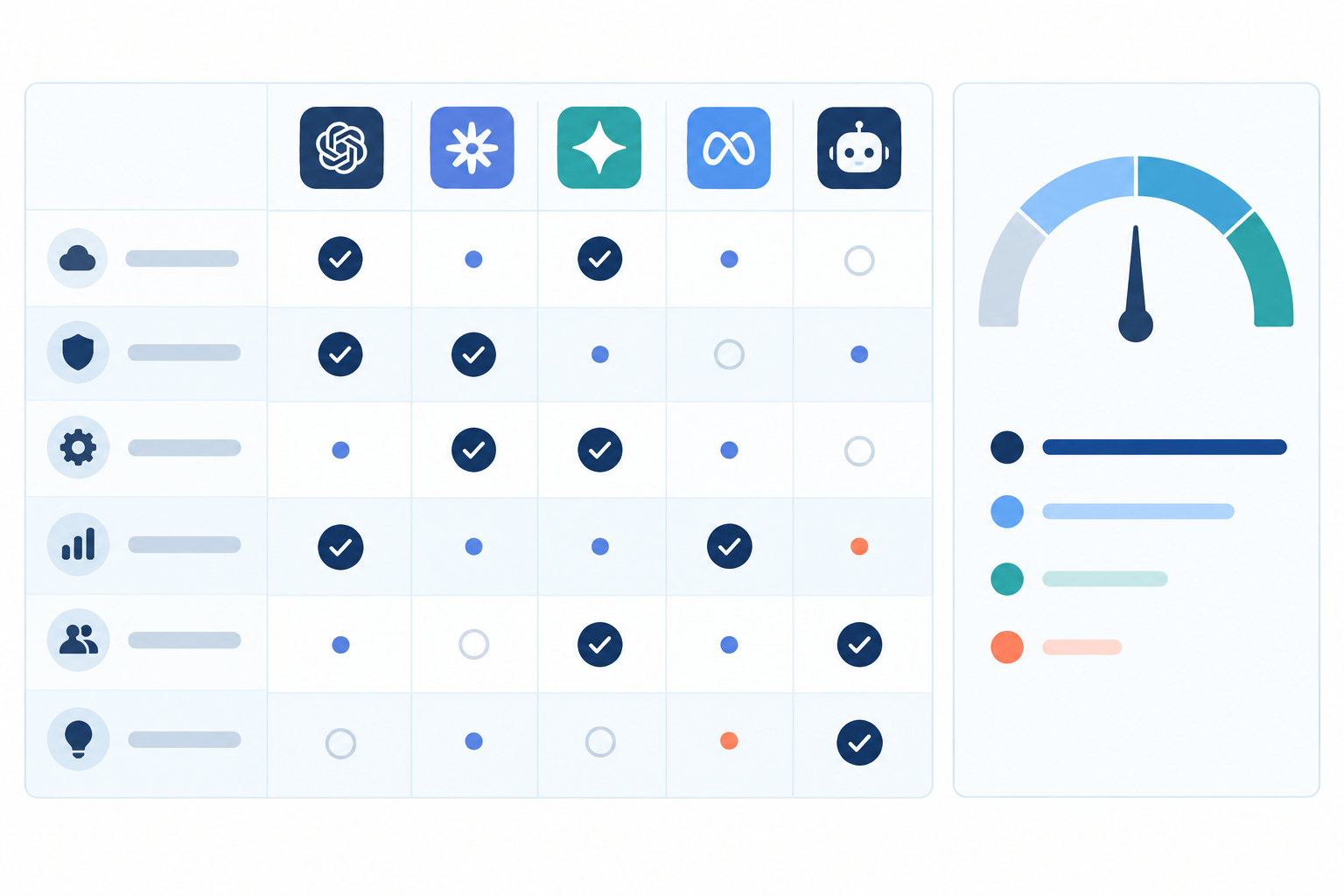
- Run every query across ChatGPT, Claude, Gemini, Copilot and Perplexity. Each engine retrieves and weighs sources differently, so a result in one tells you little about the others.
- For each answer, record whether you are named, where you sit in the list, which sources are cited, how the description reads in tone, and which competitors show up instead.
- Repeat the test. A single manual check is unreliable because LLM answers vary between runs, and repeated daily sampling gives a truer picture of query coverage than any one-off screenshot.
- Inspect the cited pages, not just the answer. Note whether the sources are vendor comparisons, review sites, documentation or independent editorial pieces, because that tells you what is shaping recommendations in your category.
- Classify the result. You are either absent entirely, mentioned but not recommended, or recommended but ranked below competitors. Each points to a different underlying problem, and the later checks deal with them.
Doing this by hand across five engines and 30 queries is a slog, which is why we built MentionOwl to automate it. It crawls your site, generates relevant customer questions, and runs them daily against the major engines, recording answers, citations, sentiment and competitor mentions. Those results roll up into a 0-100 visibility score built from query coverage, position-weighted citations, share of voice and soft mentions.
The stakes are rising. Gartner forecast in 2024 that traditional search engine volume would fall 25% by 2026 as users shift to AI chatbots and virtual agents. That is a forecast, not a measured outcome, but it explains why AI visibility monitoring has gone from curiosity to routine.
Why does AI recommend competitors over my SaaS? The mechanics
Generative engines do not copy a single universal ranking. They assemble recommendations from training data, live retrieval of web pages, and whatever sources they can cite. So the answer depends on what the system can retrieve, what it can interpret, and whether it can find the same claims repeated elsewhere. Consensus across sources matters a great deal here, because a model recommending a product wants to be confident it is describing something real.
That is why competitors with more consistent descriptions across the web are easier to recommend. If five independent sources describe a rival as 'invoicing software for UK freelancers', a model can say so with confidence. If your product is called a 'platform' on one page, a 'solution' on another and a 'workspace' on a third, there is nothing stable to repeat.
I find it useful to separate three failure points and track them independently:
- Access: can the relevant page be crawled and indexed?
- Content: does the page directly answer the buyer's question and state your differentiators?
- Corroboration: can the engine find current, independent information about you elsewhere?
There is also a distinction between hard citations (a linked source) and soft mentions (your brand named without a link). Both feed share of voice. A brand that is frequently named but never linked is still shaping buyer perception, and a brand that is cited but described blandly may be losing the comparison anyway.
The evidence is still forming and dates quickly. The academic GEO paper (Aggarwal et al.) built a benchmark of 10,000 queries and reported that selected methods, such as adding citations, quotations and statistics, improved visibility by up to 40% in its evaluations. That is a maximum under test conditions, not an uplift any SaaS company should expect. Google, for its part, states that its AI features need no special markup beyond normal Search eligibility: pages must be indexed and eligible to show a snippet. Behaviour is shifting too. Pew Research found Google users clicked a traditional result in 8% of visits when an AI summary appeared, against 15% without one, and only around 1% clicked a source link within the summary. Those figures describe US Google behaviour, so I would not generalise them to every engine, but they show why being named inside the answer matters more than being linked beneath it.
So how does SaaS generative engine optimization differ from conventional AI SEO? The overlap is real, since clear content and technical accessibility help both. The difference is that an AI answer synthesises many sources, so what the wider web says about you matters as much as how your own pages rank.
Check 1: unclear SaaS positioning
Start with the one-sentence test. After reading your homepage, can a model, or a stranger, say who your product is for, what it does and how it differs from alternatives? If not, a model will struggle too.
Common symptoms:
- Vague taglines such as 'Work smarter' that name no category or audience
- Jargon-heavy hero copy that never says what the product actually does
- Category labels that change from page to page ('CRM' on one, 'sales platform' on another)
- Names and descriptions that differ across your site, app directories and social profiles, which weakens entity recognition
How to fix it:
- Write one repeatable product definition, something like '[Product] is [category] for [audience] that [core outcome], unlike [alternative approach].' Use it word for word on your homepage, About page, pricing page and documentation, then mirror it in directory listings and social bios.
- Build use-case and persona pages. A page titled 'CRM for UK recruitment agencies' maps directly to the specific queries buyers put to AI. Google's people-first content guidance points the same way: specific use cases, limitations, integrations and pricing context beat generic keyword pages.
- Treat thin comparison content as a positioning failure. Honest 'X vs Y' and 'alternatives to Y' pages, with structured feature tables and clear pricing in pounds where relevant, give models material to quote. Say where a competitor is the better fit. Balanced pages are more credible and more likely to be reused.
- Avoid overclaiming. Unsupported superlatives such as 'the best' or 'the only' are less likely to be corroborated elsewhere, and so less likely to be repeated.
Check 2: are AI crawlers blocked or unable to read your pages?
This is the cheapest check to run and, when it fails, the highest-impact fix, which is why I put it ahead of content work in the fix order. Work through it in sequence so you separate access problems from rendering and indexing problems.
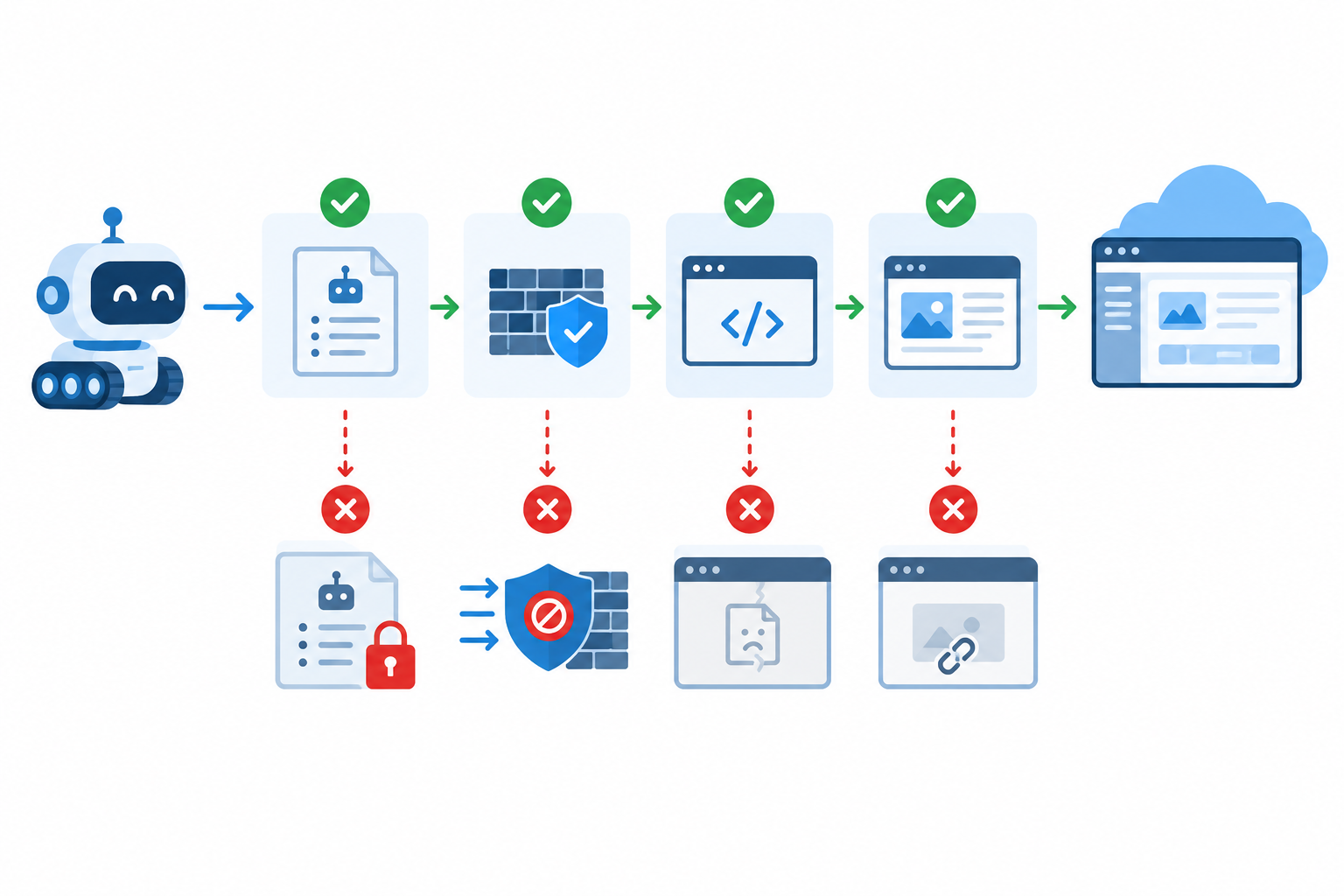
- Review robots.txt. Look for rules blocking GPTBot, ClaudeBot, PerplexityBot, Google-Extended or OAI-SearchBot, and treat them separately. OpenAI documents OAI-SearchBot as the crawler that surfaces sites in ChatGPT search, and GPTBot as associated with model training. Anthropic similarly documents ClaudeBot, Claude-SearchBot and Claude-User as distinct agents. Blocking training crawlers and blocking retrieval crawlers are different trade-offs.
- Check your firewall, CDN and bot protection. These can silently return errors to AI user agents even when robots.txt looks fine, and your server logs will show whether these crawlers receive successful responses.
- Test server-side rendering. Pages that depend heavily on client-side JavaScript may appear empty to crawlers, so view key pages with JavaScript disabled or use a rendering tool. Google can render JavaScript, but blocked scripts or API calls can still hide content.
- Put key facts in crawlable HTML. Pricing, features and integrations locked in images, PDFs, gated modals or interactive widgets cannot be quoted. Googlebot also reads only the first 15 MB of an HTML file, so keep the essentials near the top of unusually large documents.
- Audit the fundamentals. Structured data, a clean heading hierarchy, canonical tags, sitemaps and page speed all belong in an AI legibility review. Watch for accidental noindex tags and authentication barriers.
- Serve the same content to everyone. Showing crawlers materially different content from what users see risks being treated as cloaking.
Our AI legibility audit runs 16 technical checks to flag these issues in one pass. Once you have made changes, cookieless AI traffic analytics help you confirm whether AI crawlers and AI-referred visitors are actually reaching your site.
A word of realism: access is a prerequisite, not a guarantee. A crawlable page that says nothing distinctive will still be passed over.
Check 3: do G2 and review sites matter for SaaS AI recommendations?
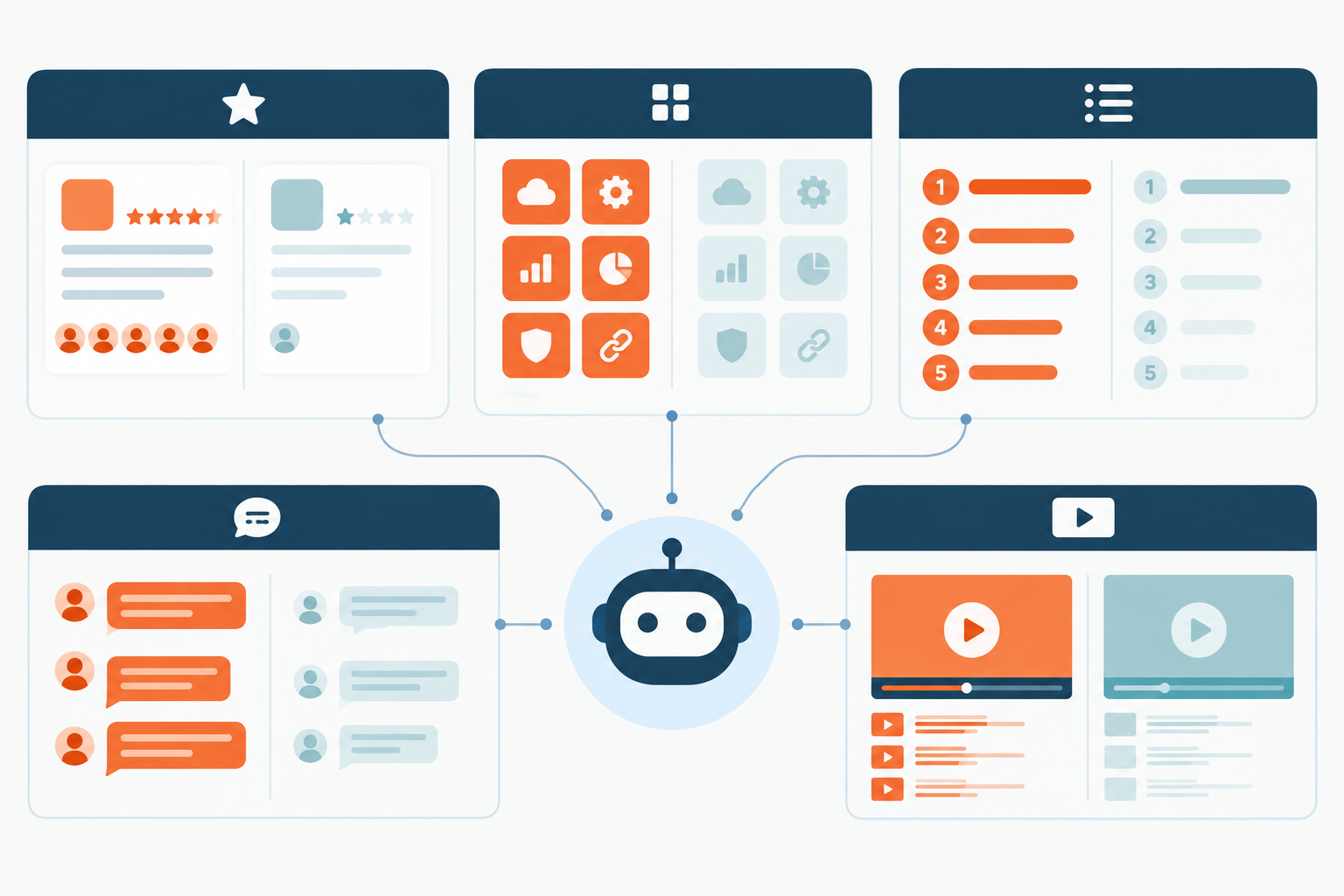
They usually do. When recommending software, AI engines lean heavily on third-party material, because self-published claims rarely carry the weight of independent corroboration. Platforms such as G2, Capterra, Trustpilot, Product Hunt and software directories publish product-specific descriptions, categories, comparisons and customer language. Beyond those, 'best of' listicles, industry blogs, Reddit threads, YouTube reviews and UK trade publications frequently turn up among cited sources.
Two caveats. Influence varies by category and by engine, and no source type has a published fixed weight, so verify against your own citation data instead of assuming. And the G2 2023 Buyer Behavior Report finding that 92% of surveyed software buyers were more likely to buy after reading a trusted review is a buyer-behaviour statistic. It is not proof that reviews cause AI recommendations. It does tell you why the profiles deserve attention regardless.
To audit your coverage:
- Collect the domains cited across your category queries.
- Mark where competitors are listed and you are not.
- Check your existing profiles for duplicates, wrong categories, thin descriptions and stale copy.
To close the gaps:
- Claim and complete your profiles using your standard product definition, consistent with your own website.
- Gather recent, genuine, verified customer reviews and respond to them constructively.
- Offer original data to journalists and bloggers, and ask to be included in relevant roundups.
- Never buy or fabricate reviews, or tie incentives to positive sentiment. The US FTC's Consumer Reviews and Testimonials Rule, effective October 2024, targets such practices, and UK consumer law also restricts fake reviews.
Review recency, volume and consistency of description matter more than a single high-profile placement. Competitor tracking and share of voice reporting in MentionOwl show which sources are driving rivals' recommendations, so you can prioritise the listings that actually move answers in your category.
SaaS AI visibility diagnostic: symptoms, likely causes and first fixes
Use this table to jump from what you observed to the relevant check.
| Symptom observed | Most likely cause | How to confirm | First fix | Expected effort |
|---|---|---|---|---|
| Never mentioned in any engine | Blocked crawlers or unreadable pages (Check 2), or no corroboration (Check 3) | Review robots.txt, server logs and rendered HTML; compare your citations with competitors' | Unblock search crawlers; expose key content in HTML | Low to medium |
| Mentioned by Perplexity but not ChatGPT | Crawler rules differ by engine, or weaker corroboration (Checks 2 and 3) | Check OAI-SearchBot access and which sources ChatGPT cites | Allow OAI-SearchBot; strengthen independent coverage | Low to medium |
| Named but described inaccurately | Inconsistent positioning (Check 1) | Compare AI descriptions with your site, directories and social bios | Publish one product definition and align every profile | Medium |
| Cited from outdated pages | Stale third-party listings or old site content (Checks 1 and 3) | Trace the cited URLs and check their dates | Update or redirect old pages; refresh listings and reviews | Low to medium |
| Competitors dominate list-style answers | Thin comparison content and weak review coverage (Checks 1 and 3) | Audit which listicles and review sites cite rivals but not you | Publish honest comparison pages; pursue roundup inclusion | Medium to high |
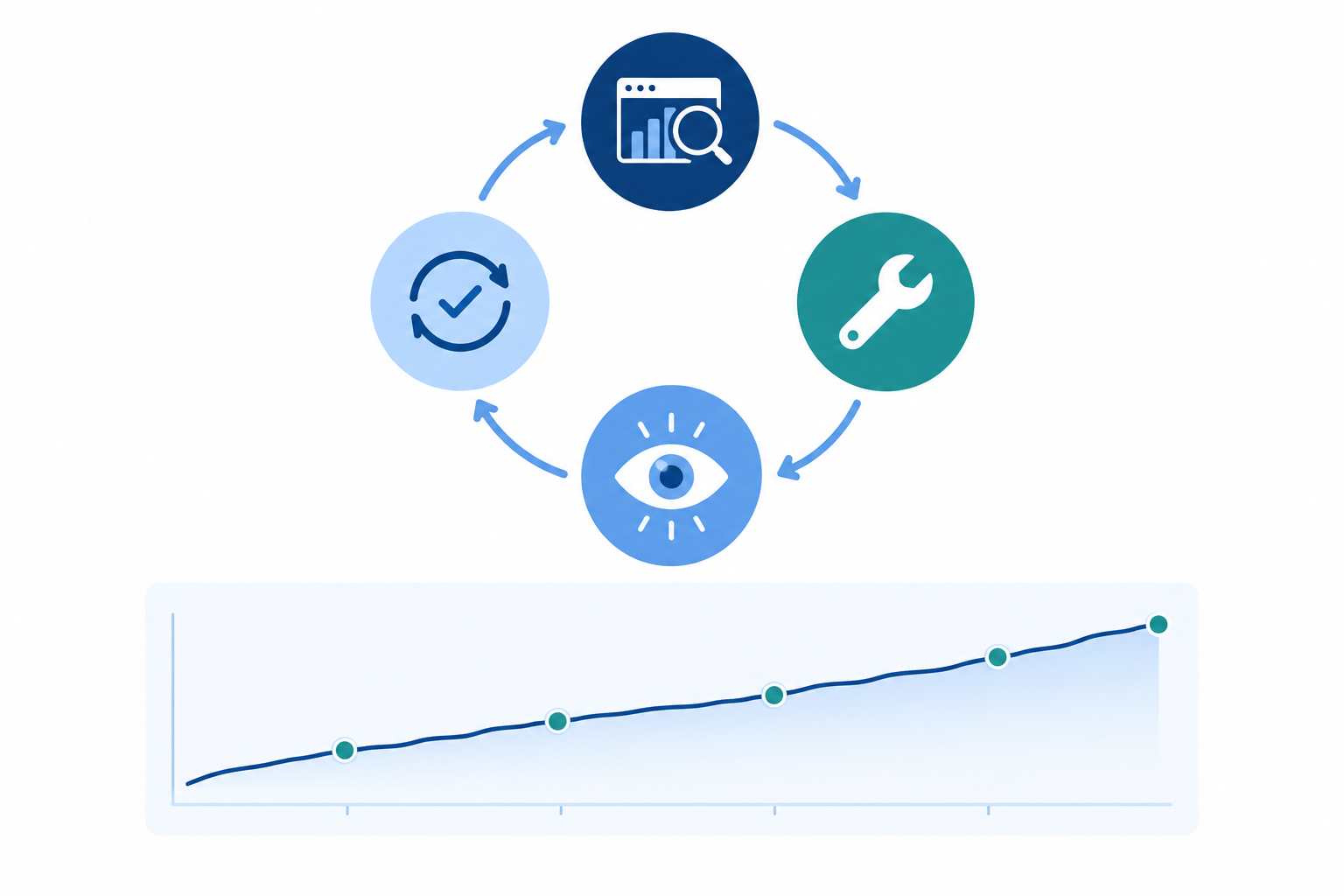
Fix, monitor and repeat: a sustainable SaaS AI visibility routine
- Prioritise by impact and effort. Unblock crawlers first, clarify positioning second, publish comparison content third, and treat third-party coverage as an ongoing programme.
- Set a baseline before changing anything. Record your visibility score so progress can be traced to specific actions and not to coincidence.
- Track sentiment as well as presence. Being mentioned negatively or inaccurately can be worse than being absent.
- Use weekly digests to spot movement without checking dashboards daily. The REST API or MCP server can feed results into your reporting or AI agent workflows.
- Re-test the same query set on a fixed schedule, and note the date of every content or technical change.
- Accept that this never really finishes. Models update, competitors publish, and answers drift, so LLM monitoring is an ongoing discipline and not a one-off project.
How long does it take for SaaS AI visibility fixes to show results?
Nobody can promise specific outcomes, and I would be wary of anyone who does. What we can say is that different fixes run on different clocks.
Technical fixes act fastest. Google's guidance says a recrawl of an already crawlable URL can take anywhere from a few days to a few weeks, and that search changes can take from a few hours to several months to take effect. Retrieval-based engines such as Perplexity may therefore respond to unblocked crawlers within days to a few weeks, depending on recrawl frequency. Content and positioning changes typically take weeks to be picked up. Model-level changes tied to training data can take far longer and are not guaranteed. Third-party coverage builds slowly, but in my view it is the most durable source of improvement.
That is why I recommend measuring over 60 to 90 days instead of reacting to day-to-day volatility. Remember too that crawler access, citation and recommendation are separate outcomes, and confirming the first does not establish the others. If you want a baseline before committing resources, MentionOwl's trial starts at $1 for seven days, which is enough to see where you stand today.
Frequently asked questions about SaaS AI visibility
Why does AI recommend competitors over my SaaS?
Usually because competitors are described more clearly and consistently across more independent sources, and their pages are easier for AI crawlers to read. Models favour products they can verify from several places, so unclear positioning, thin comparison content and limited third-party coverage all tilt recommendations towards rivals.
Do G2 and review sites matter for AI recommendations?
In most software categories, yes. Review platforms, directories and list articles are frequently cited when AI engines answer 'best tool' questions. The weight varies by engine and category, so check which domains are actually cited for your own queries instead of assuming.
How fast can SaaS AI visibility fixes show results?
Crawler access fixes can show up within days to weeks in engines that retrieve live web content. Positioning, content and review improvements generally take several weeks to a few months. Be cautious about any promise of guaranteed timing, and track changes over at least 60 to 90 days.
Should I block AI crawlers to protect my content?
That is a business decision with trade-offs. Blocking training crawlers may limit how your content is used in models, but blocking retrieval crawlers can remove you from live AI answers. Many SaaS brands allow retrieval bots and review training permissions separately.
Is SaaS generative engine optimization different from traditional SEO?
They overlap, since clear content and technical accessibility help both. The difference is that AI answers synthesise recommendations from many sources, so mentions, citations and consistent descriptions across the wider web matter as much as ranking your own pages.