How to Get Your Products Into ChatGPT Shopping Shortlists: A Store-Focused Playbook
Learn how ecommerce AI visibility works and help your store appear in AI shopping shortlists with clear product data, credible reviews and comparison content.

ChatGPT builds shopping shortlists from three things: the product information it can parse, the third-party evidence it can find (reviews, editorial roundups and forums), and the comparison content that sets your products against alternatives. To appear, I recommend making your product data unambiguous and machine-readable, earning credible reviews and mentions beyond your own site, publishing honest comparison content, and monitoring buying-intent questions so you can measure what changes. 🦉
This playbook covers each of those levers and separates what is documented from what is inference. Nobody outside the AI labs controls model outputs, and OpenAI has not published a ranking formula for shopping results. A store can improve its chances and check whether it is making progress, and that is the practical core of ecommerce AI visibility.
Disclosure: I work on the team at MentionOwl, a tool that monitors AI answers. It appears in one clearly labelled section near the end. Everything before that is general advice you can follow with a spreadsheet.
Why AI shopping tools leave your store off their shortlists
A shopper types 'best waterproof walking boots for UK winters under £150', gets a neat shortlist of four or five products, and your brand is not on it. There is no ranking page to inspect, no position 11 to investigate, and no report telling you the omission happened.
This is where generative engines differ most from classic search. In traditional search, a page ranks among many results and the shopper chooses. In a generative engine, the system interprets the request, picks a handful of candidates, summarises them and often explains why. Page one is a matter of position; a shortlist is a matter of selection, and selection is close to binary. A store that is merely 'findable' can still be left out.
From reviewing how stores are represented, I see four causes behind most omissions. These are patterns I have observed, not findings from a controlled study.
- Thin or ambiguous product data. A title such as 'Alpine Pro' that never states product type, materials or intended use gives a model very little to match against a shopper's constraints.
- Little third-party corroboration. If a claim appears only on your own site, a system that cross-checks evidence has less reason to repeat it.
- Crawler access problems. OpenAI's crawler documentation distinguishes OAI-SearchBot, which supports ChatGPT search features, from GPTBot, which relates to content that may be used for model training. A robots.txt rule that blocks OAI-SearchBot can stop your pages being surfaced in ChatGPT search. Allowing it makes you eligible, but does not guarantee a listing.
- No comparison framing. Shopping answers are comparative by nature, so if no page positions your product against alternatives, the model has to build that comparison from other people's content.
The commercial stakes are rising. Adobe Analytics reported that traffic from generative AI sources to US retail sites rose 1,300% year over year during the 2024 holiday period (1 November to 31 December), and separately that such referrals grew 1,200% between July 2024 and February 2025. Both figures come from Adobe's retail commentary, available via the Adobe newsroom. I would caution against over-reading them. They describe growth from a small base in the United States, not the share of UK shoppers using AI or the likelihood that a given product is shortlisted. What they do tell you is that this is a channel worth measuring before it matures.
The metric I rely on most is share of voice: across a defined set of buying-intent questions, the proportion of AI answers that mention your brand, compared with each named competitor. Most of what follows is a way of moving that number.
How AI builds a product shortlist
OpenAI describes its shopping research feature as asking follow-up questions where useful and producing a buying guide with product options and sources. The precise ranking logic is not public. The five steps below are a working model I put together from that description and from observable behaviour. Steps 1 and 5 are closest to what OpenAI documents; steps 2 to 4 are my inference.
- Interpreting the buying-intent prompt (observable). The engine extracts budget, use case, size, compatibility and brand preferences. For UK shoppers, implicit constraints often include delivery speed, VAT-inclusive pricing and returns terms, so pages that state these plainly are easier to match.
- Retrieving candidate products (hypothesis). Candidates plausibly come from web search results, merchant-supplied data where it exists, editorial pages and the model's training knowledge. Which sources apply varies by product, market and feature, so I would not assume any single route is decisive.
- Cross-checking claims (hypothesis). Reviews, forum threads and independent sources probably help validate whether a product fits the stated need. OpenAI says shopping results draw on details such as prices, reviews and availability, and that they are not ads.
- Filtering against constraints (hypothesis). Products that visibly fail an explicit requirement, such as budget, compatibility or stock, seem likely to be dropped, with the rest ordered by fit.
- Presenting a shortlist with reasoning (observable). The answer typically explains trade-offs and, in search-enabled modes, links to sources.

Take a prompt like 'a lightweight carry-on under £150 that fits airline overhead bins'. A bag is easier to compare when its page states external dimensions, weight, capacity, price and return terms as text. That illustrates attribute matching, not a disclosed formula.
Generative engine optimization versus traditional AI SEO
Traditional AI SEO tactics mostly extend search practice: technical hygiene, structured data, content quality and authority. Generative engine optimization shares those foundations but changes the goal from ranking a page to being selected and accurately described inside a synthesised answer. The overlap is large, so the difference is mostly one of emphasis. Generative systems appear to lean on corroboration and comparison, and to favour content that answers a specific question in a self-contained way.
I will not quote a single headline percentage for how often AI answers rely on third-party sources rather than brand-owned pages. Published figures vary by engine, category and methodology, and none I can verify covers UK shopping prompts. Measuring your own category, as covered below, will tell you more than borrowing someone else's average.
How to make product pages easy for AI to parse
OpenAI says merchants can share product feeds and that appearing in results is not guaranteed. Google's structured data documentation likewise says valid markup does not guarantee a rich result. One limit applies to everything in this section: these practices come from established search guidance. They make your information accessible and consistent, but there is no published evidence that they give you a ranking advantage in ChatGPT. Think of them as removing reasons to be excluded, not as ways to jump the queue.
- Write specific, plain-language titles and descriptions. State product type, distinguishing attributes, model or variant, and intended use, and say who it is not for. Google's Merchant Center product data specification is a good model of the fields a catalogue should maintain.
- Present attributes consistently. Dimensions, materials, compatibility, ingredients, certifications, warranty and care instructions should appear in the same format across comparable products.
- Put price, stock, delivery and returns in crawlable HTML. Show GBP pricing, availability, delivery times and returns policy as page text, not only inside scripts, images or customer-only interactions. Google's JavaScript SEO guidance explains that rendering happens in stages. Visible HTML is a prudent baseline for any crawler, though I cannot say how each AI crawler handles scripts.
- Implement and validate structured data where it fits. Product, Offer, AggregateRating and Review markup suits pages where a shopper can buy a specific item, and not every type suits every page. Markup must reflect what is visible on the page, with accurate price, currency, availability and identifiers, because mismatches between page, markup and feed create confusion.
- Check crawler access and page speed. Review robots.txt for OAI-SearchBot and other relevant crawlers, and keep pages fast. Google's 2016 mobile speed study found 53% of mobile visits were abandoned when a page took over three seconds to load. It is an older benchmark and concerns shoppers rather than AI, but it shows what sluggish pages cost.
- Add a short, factual FAQ. On key pages, answer real purchase questions: sizing, compatibility, delivery to Northern Ireland and returns windows.
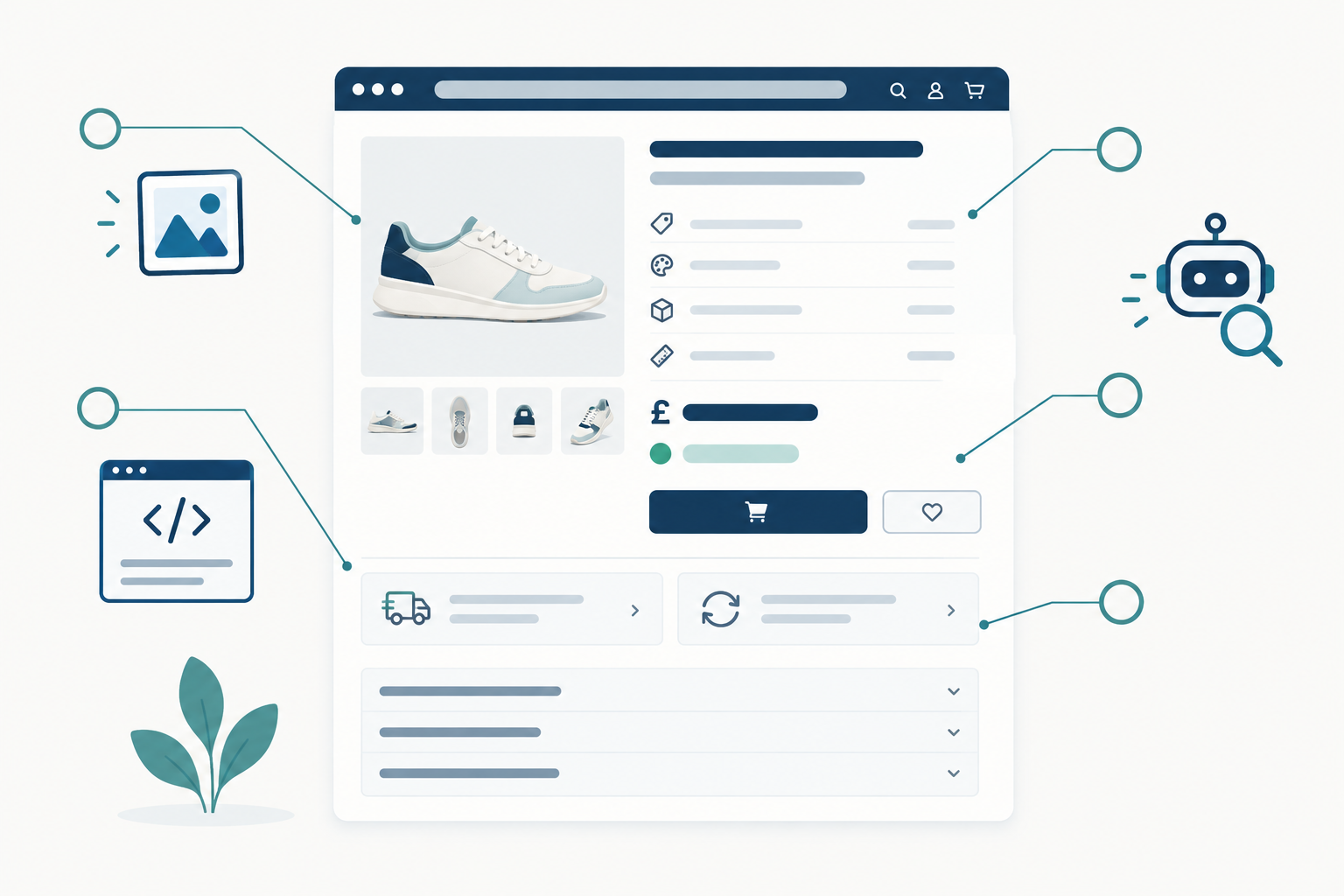
Most teams cannot see their pages the way a model does, so a systematic check pays off. Use a crawler, a schema validator or a manual review, and look for a price injected by script, a brand name spelt inconsistently across templates, and a robots rule that quietly excludes a crawler. These problems are easy to fix and invisible until you go looking.
Do reviews influence AI recommendations?
Probably, indirectly, and I want to be careful about how strongly I put that. Reviews and independent mentions are evidence an AI system can draw on when judging whether a product deserves recommending. But OpenAI's public announcements do not specify a review-based ranking formula, and there is no proof that review volume alone determines shortlist placement. I treat reviews as product information and trust evidence, not a shortcut.
The commercial case for reviews holds up without any AI angle. The Spiegel Research Center at Northwestern University published How Online Reviews Influence Sales in 2017, analysing US online retail data. It found that products with five reviews were 270% more likely to be purchased than products with none, and that the lift for higher-priced products was 380%. The finding is correlational, with diminishing returns as review counts rise, and it concerns shopper behaviour rather than AI ranking. Collecting reviews is worthwhile either way.
Which review sources may provide evidence?
Different sources may be treated differently, though I have no shopping-assistant-specific evidence ranking them.
- On-site reviews support your page and, with correct markup, your structured data, but they are self-hosted and so less independent.
- Marketplace reviews are visible to crawlers and often attached to the same product.
- Trustpilot-style platforms offer third-party attribution that engines could reference when answering questions about a brand.
- Editorial and community mentions, including roundups and Reddit or forum threads, may carry the most independent weight, since the seller did not write them and they often describe specific use cases. That is a reasoned expectation, not a measured result.
On quality, I would weigh volume, recency, specificity and sentiment together. A review reading 'kept my feet dry through a Cumbrian February on a 12-mile route' gives a model far more to work with than a bare five-star rating, because it ties the product to a use case a shopper might ask about.
Practical ways to build a credible review presence
- Send post-purchase review requests that prompt for use case, fit and conditions, not just a rating.
- Respond to criticism publicly and constructively.
- Seed products with credible UK reviewers who disclose the arrangement.
- Join relevant Reddit and forum conversations honestly, identify yourself as the brand, and never astroturf.
- Read the sentiment of AI answers about your brand. Caveats such as 'some reviewers report sizing runs small' often point to a fixable page or product issue.
Legal and ethical boundaries for reviews
Do not buy, fabricate or selectively misrepresent reviews. In the United States, the FTC's Consumer Reviews and Testimonials Rule, effective 21 October 2024, prohibits fake reviews and certain undisclosed insider reviews. In the UK, my understanding is that the Digital Markets, Competition and Consumers Act 2024 also prohibits fake reviews and requires businesses to take reasonable steps to prevent them. The CMA enforces it, and incentivised reviews need clear disclosure. I am not a lawyer, so check current CMA guidance before launching any campaign.
Comparison content that gets cited in AI shopping answers
Shopping questions are comparative by nature: 'best for', 'cheaper than', 'alternative to'. A model answering them has to weigh options against each other, so pages that already do that weighing are natural material to draw on. I cannot claim a measured citation rate for comparison pages, but the logic is hard to dispute. Making your criteria explicit, with comparable specifications, price, availability and clear trade-offs in readable text, is sound practice.
Here is a sample structure:
| Product | Best for | Key specs | Price band | Trade-offs |
|---|---|---|---|---|
| Model A | Wet, cold UK winters | Waterproof membrane, 900g | £120–£150 | Heavier; stiffer break-in |
| Model B | Summer and light trails | Breathable mesh, 650g | £90–£120 | Not fully waterproof |
| Model C (competitor) | Long-distance backpacking | Full-grain leather, 1,100g | £160–£200 | Over budget; needs care |
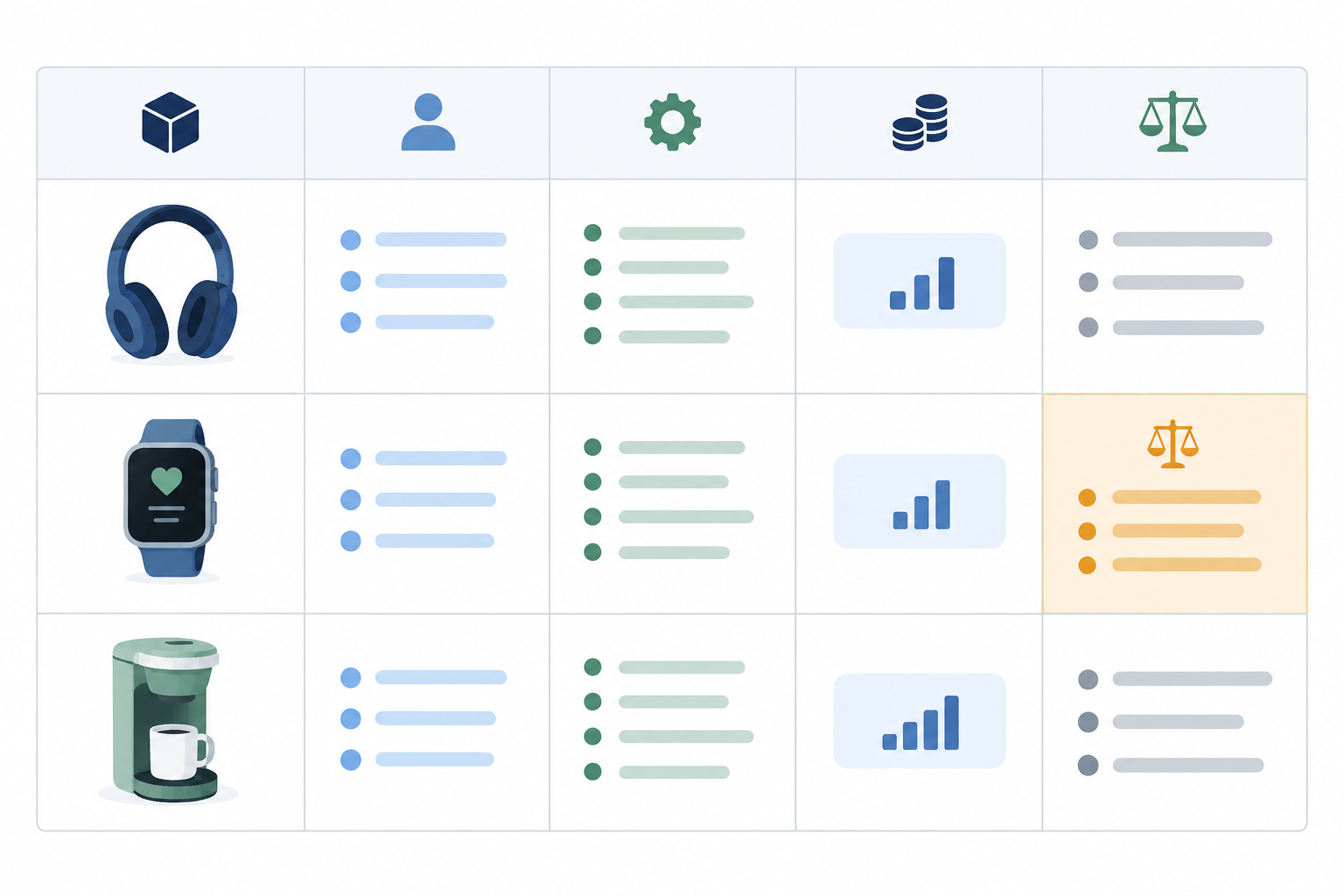
The third row names a competitor, and that is deliberate. I recommend publishing honest comparisons, including where a rival is the better fit. Balanced pages read as more trustworthy to shoppers and, I would argue, to systems assessing credibility. Avoid unsupported superlatives and make limitations visible.
Comparison page formats worth building
- Best-for-use-case guides, such as 'best kettles for small kitchens'.
- Versus pages comparing two products on consistent attributes.
- Alternatives pages targeting 'alternative to [competitor]' questions.
- Buying guides that teach shoppers how to choose, citing the evidence behind each recommendation.
Apple's model-comparison page is a useful template for side-by-side presentation, and REI's catalogue keeps specifications and customer reviews close to the buying options. Treat comparison pages and product pages as partners: the former explain selection and trade-offs, and the latter supply the precise, current attributes that back those claims.
Beyond your own site, pursue inclusion in third-party roundups by giving editors accurate specifications, review samples and clear contact routes. Competitor tracking is a good source of ideas too. If a rival keeps appearing for 'best budget option' prompts and you never do, you have found the comparison page you are missing.
How to track buying-intent prompts and product mentions
Everything above is hypothesis until measured. This is the process I use.
- Build a list of real buying-intent questions. Mine customer service logs, search queries and reviews.
- Run them consistently across engines. ChatGPT, Claude, Gemini, Copilot and Perplexity each answer differently, so one-off checks mislead.
- Repeat each prompt several times. Answers vary from run to run, so run each prompt three to five times per engine and record the mention rate (for example, 2 of 5 runs) rather than a single yes or no.
- Record the outputs using a consistent template, such as the one below.
- Calculate share of voice and link changes to actions. Log each schema fix, comparison page or review campaign so you can see what moved the numbers.
| Week | Engine | Prompt | Runs mentioning us | Typical position | Cited source | Sentiment | Competitors named |
|---|---|---|---|---|---|---|---|
| 1 | ChatGPT | Best waterproof walking boots for UK winters under £150 | 1 of 5 | 4th | Outdoor magazine roundup | Neutral; 'stiff' | Brand X, Brand Y |
| 4 | ChatGPT | Best waterproof walking boots for UK winters under £150 | 3 of 5 | 2nd–3rd | Our versus page; roundup | Positive | Brand X |
How should you read that change? Moving from 1 of 5 to 3 of 5 runs on one prompt is encouraging but small. Look for the same direction across many prompts and engines before crediting any single action, and treat a swing on one prompt as noise unless it persists for several weeks.
Example ecommerce AI visibility tool: MentionOwl (vendor-reported)
A spreadsheet works fine for a first pass, but it gets laborious fast. As disclosed above, I work on MentionOwl, which automates this process, so treat the following as vendor-reported rather than independently verified. The platform crawls your site, generates relevant customer questions, and runs them daily against the major AI engines. It records answers, citations, sentiment and competitor mentions, then produces a proprietary 0 to 100 AI visibility score built from query coverage, position-weighted citations, share of voice and soft mentions (where your brand is named without a link). It also offers an AI legibility audit of 16 technical checks, cookieless AI traffic analytics, weekly digests, a REST API and an MCP server. There is a $1 seven-day trial; please check the current terms, including what happens when it ends, before signing up. Any monitoring tool, a spreadsheet included, does the same basic job: it gives you a baseline to compare against.
A 30-day ecommerce AI visibility action plan for a small store
- Week 1: Baseline. Assemble 20 to 50 buying-intent prompts, run them across engines, and audit your pages' legibility. Record share of voice against your three closest competitors.
- Week 2: Fix the foundations. Correct product data, structured data and crawl access on your top-selling and highest-margin products first. Confirm OAI-SearchBot is not blocked, and that price, stock and returns are in crawlable HTML.
- Week 3: Publish and collect. Release two or three comparison or buying-guide pages, and begin compliant review collection on best sellers.
- Week 4: Re-measure. Compare share of voice against competitors, then decide which levers produced movement and which deserve another month.
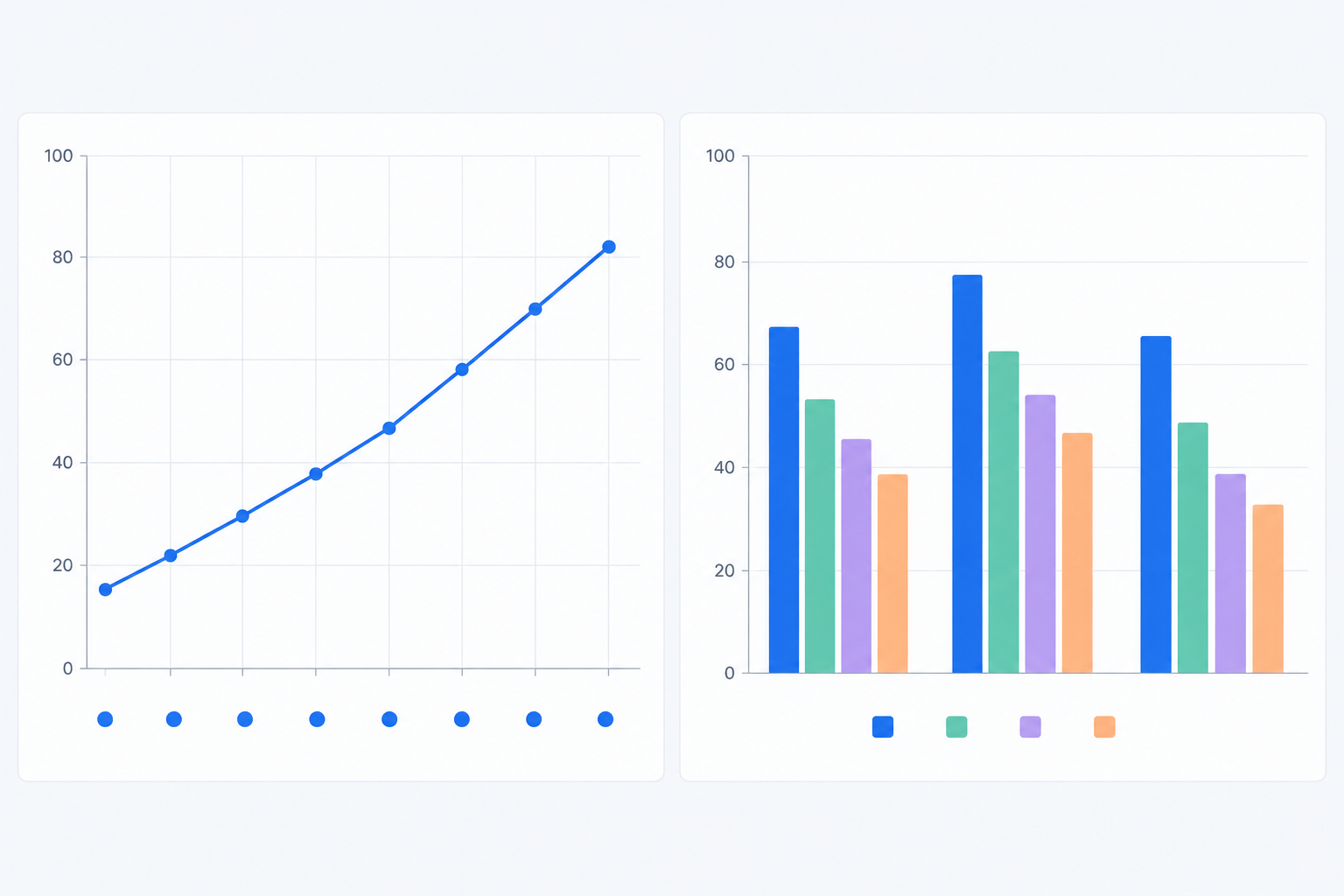
Judge trends over weeks, not single runs. A store that gains a few percentage points of share of voice across 40 prompts has learned something real. One that panics over a single missed answer has not.
FAQ: ecommerce AI visibility and product recommendations
Why do AI tools leave out my store?
Usually because the model lacks clear, corroborated evidence that your products fit the question. Ambiguous product data, few third-party reviews or mentions, blocked or poorly rendered pages, and no comparison content all reduce the chance of inclusion. A page audit and a baseline of buying-intent prompts will show which of these applies to you.
Can I pay to be included in ChatGPT shopping results?
I would not rely on any guaranteed paid route, and features change frequently, so check current OpenAI guidance. OpenAI has stated that shopping results are not ads. What you can control is the clarity of your product information, your third-party reputation and your comparison content.
Do reviews influence AI recommendations?
Probably indirectly, as part of the evidence AI systems can use, but no published formula shows that reviews determine shortlist placement. They are worth collecting anyway, given their proven effect on shopper purchase decisions.
How long does it take to see changes in AI recommendations?
It varies by engine and by how quickly new pages and reviews are discovered. Because answers fluctuate, track trends over several weeks with a consistent prompt set rather than drawing conclusions from a single result.
How do I see which of my products are mentioned?
Run a consistent set of buying-intent questions across the major AI engines, repeat each several times, and record which products and competitors appear, where, and with what citations and sentiment. You can do this by hand in a spreadsheet, or use a monitoring platform such as MentionOwl to automate the questions, daily runs and scoring.