How to Pitch AI Visibility Monitoring as a New Service: A Sales Playbook for UK Agencies
Learn how UK agencies can sell AI visibility monitoring, handle client objections, set pricing, and prove value across ChatGPT and Google AI Overviews
The strongest way to pitch AI visibility monitoring is as the next layer of search visibility work: a service that shows whether your client's brand is being mentioned, recommended, or ignored inside ChatGPT, Google's AI Overviews, Perplexity, and other AI assistants that a growing share of UK consumers now consult before they ever click a traditional search result.
In this playbook, I'll walk through how to frame AI visibility monitoring for clients who have no idea what it means, the objections I hear most often from finance directors and marketing managers, pricing models that work across different agency sizes, a seven-slide pitch deck structure you can adapt, and a realistic 30-day plan for proving value before asking for a long-term retainer. I'll also flag where the data is solid and where it's still early days, because I'd rather you pitch this honestly than oversell something the industry itself is still measuring.
Why Clients Are Asking About AI Visibility Monitoring Now
I've noticed a clear shift in the questions clients bring to review meetings. Where they used to ask about keyword rankings and backlink profiles almost exclusively, an increasing number now ask something closer to, "Why did ChatGPT recommend our competitor and not us?" That question alone is usually the opening I need.
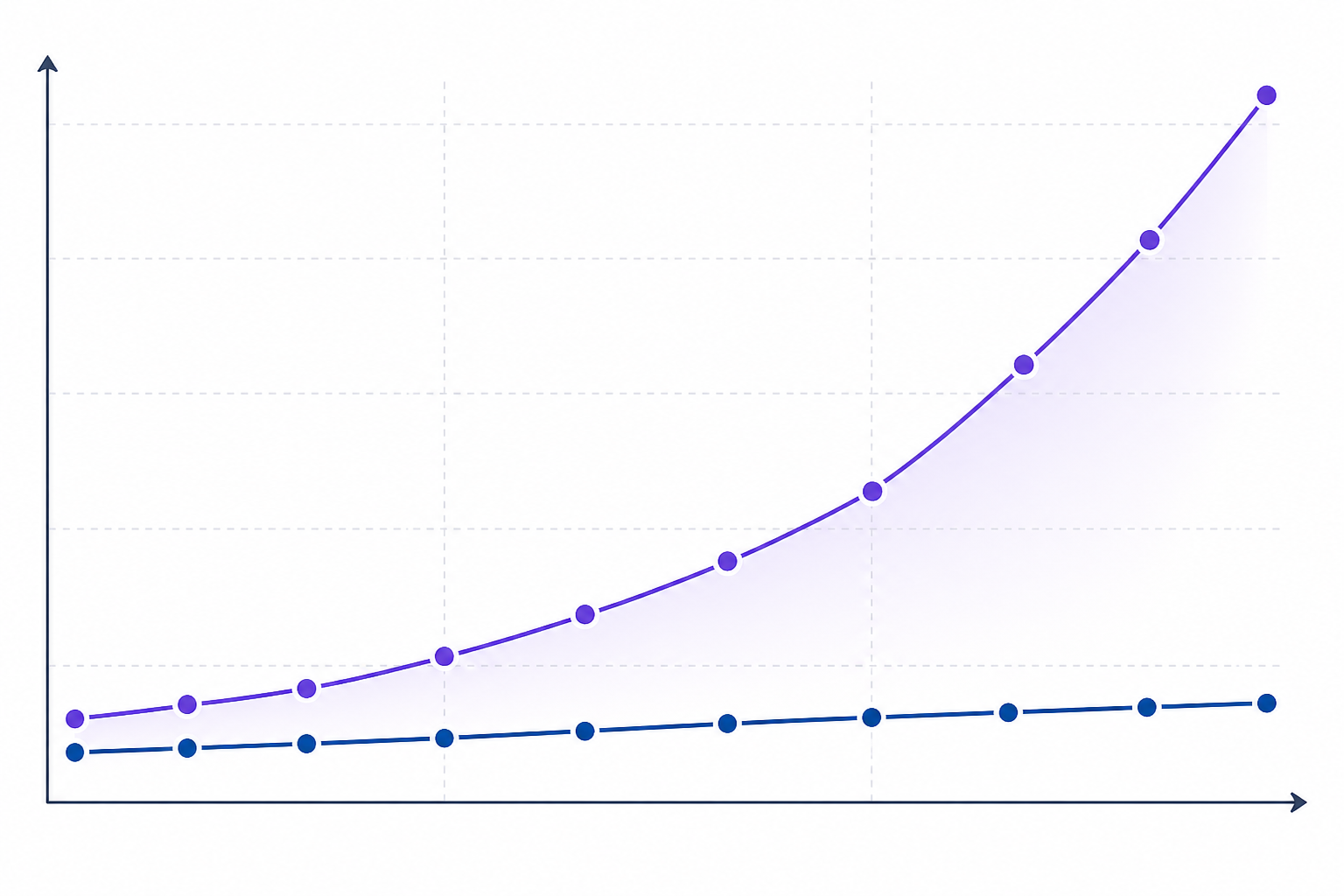
A few data points are worth grounding this in rather than relying on anecdote. Similarweb's traffic analysis, which the SEO industry has cited frequently through 2024, showed measurable growth in referral traffic from AI chat platforms to retail and B2B sites, even though the absolute volumes remain small compared with organic search in most sectors. Separately, Adobe's holiday shopping data for the 2024 season reported year-on-year increases in traffic arriving from generative AI sources, with growth rates in the triple digits for some retailers, albeit from a low starting base.
I want to be precise here: this is directional evidence of a real and growing channel, not proof that AI referral traffic already rivals organic search for most UK businesses. Presenting it any other way would be dishonest to the client and would undermine the credibility I'm trying to build for this new service line.
What I can say with more confidence, because I see it directly in client conversations, is that purchase research behaviour is changing. Buyers increasingly use conversational AI tools to shortlist options before they visit a single website, particularly in considered-purchase categories such as B2B software, financial services, and higher-ticket consumer goods.
If a brand isn't part of that shortlist conversation, it may never get the click-through opportunity a traditional SEO report would still show as "available". That's the commercial gap AI visibility monitoring is designed to close, and it's the gap I lead with in every pitch.
How to Explain AI Visibility Monitoring to Clients
Most marketing managers do not want a lecture on large language models, retrieval-augmented generation, or how citation weighting works inside an AI assistant's response engine. They want to know four things: are we visible, are we recommended, who is beating us, and what should we do about it?
I've found the most effective framing maps each technical metric directly onto a business outcome the client already cares about:
- Citation frequency (how often a brand is mentioned across a sample of AI-generated answers to relevant queries) becomes visibility: are we even in the conversation?
- Sentiment and positioning become reputation: are we being described as a leader, an afterthought, or not mentioned at all while a direct competitor is?
- Competitor share of voice across the same query set becomes competitor displacement: who is winning the recommendation that should have gone to us?
- Query coverage across the buyer journey becomes demand capture: are we present at the moments that actually influence a sale?
A short pitch script I use early in these conversations goes something like this:
"You've invested years building your SEO position and your brand reputation. AI assistants are becoming a new front door for how people research purchases, and right now you have no visibility into whether you're walking through that door or your competitor is. That's what this service tracks, month by month, with the same rigour you'd expect from any performance reporting we already give you."
It's a deliberately simple framing. Overcomplicating the pitch is one of the fastest ways to lose a non-technical buyer's attention.
Common AI Visibility Monitoring Objections and How to Answer Them
Every agency selling a genuinely new service line hits objections, and I'd be doing you a disservice if I pretended AI visibility monitoring was an easy sell. Here are the four I encounter most often, along with how I handle each one.
"We don't even know if our customers use AI assistants"
What the client is really asking is whether this is a solution looking for a problem. My response is to show, not tell: I run a live query sample across their top three buyer-journey questions before the meeting and bring the actual AI-generated answers with me.
If their brand is missing or their competitor is favourably positioned, that evidence does the persuading far more effectively than any statistic I could quote. The next step is always to offer a small, scoped diagnostic before asking for a monthly retainer.
"Isn't this the same as SEO, just repackaged?"
The client is really asking whether they're being asked to pay twice for the same work. I explain that traditional SEO optimises for how search engines crawl and rank a website, while AI visibility monitoring tracks how AI systems synthesise and present information about a brand.
That process depends on a different mix of factors, including structured content, third-party mentions, review sentiment, and how authoritative sources describe the brand elsewhere online. The evidence I show is a side-by-side comparison: strong organic rankings paired with weak or absent AI citations, which happens more often than most clients expect.
The next step is positioning AI visibility monitoring as complementary reporting, not a replacement for SEO.
"How do we know this will affect revenue?"
This is the hardest objection because attribution from AI-assisted research through to a completed sale is still genuinely difficult to track precisely, and I don't pretend otherwise.
My response leans on the buyer-shortlist logic rather than a direct revenue claim: if a customer never sees your brand recommended during research, you cannot convert a lead that never reaches your funnel. The evidence is the competitor comparison again, alongside any available referral-traffic data from the client's own analytics.
The next step is agreeing on leading indicators, covered in the 30-day section below, rather than promising a revenue figure I can't yet substantiate.
"This feels too early: is it even worth investing in yet?"
The client is really asking whether they'll look foolish for moving too soon. I acknowledge that adoption curves vary sharply by sector, and for some B2C categories the volumes are still modest.
But I frame monitoring itself as low-risk and high-information: it costs far less to track this now than to discover in twelve months' time that a competitor built an 18-month head start in a channel nobody was watching.
The next step is proposing a smaller monitoring-only package rather than a full strategic retainer, which lowers the barrier to a yes.
AI Visibility Monitoring Pricing Models for UK Agencies
Pricing this service is where I see the most agencies stall, mainly because there isn't yet an established market rate in the same way there is for SEO retainers or PPC management fees. Based on what I've seen working across small and mid-sized UK agencies, a tiered structure tends to convert better than a single flat fee because it lets clients self-select based on ambition and budget.
| Package | Platforms Monitored | Query Volume per Month | Reporting Cadence | Strategic Input | Typical Client | Illustrative Monthly Fee |
|---|---|---|---|---|---|---|
| Monitoring Only | 2-3 (e.g. ChatGPT, Google AI Overviews) | 15-25 tracked queries | Monthly dashboard, no commentary | None | Small business testing the waters | £150-£250 |
| Monitoring + Reporting | 3-4 | 25-50 tracked queries | Monthly report with written analysis | Light commentary on trends | Growing SMB or franchise | £250-£400 |
| Monitoring + Strategy | 4-5 | 50+ tracked queries, competitor benchmarking | Monthly report plus quarterly strategy session | Full recommendations and content briefs | Mid-market client already investing in SEO/content | £400-£800+ |
I want to be clear that the £150-£800 range above is illustrative based on current UK market conditions, not a fixed industry standard. Your pricing should reflect your agency's overheads, tooling costs, and the margin you need to protect.
Several purpose-built AI visibility tracking tools have entered the market with subscription costs ranging from roughly £50 to £300 per month, depending on query volume and platform coverage. Your pricing needs to comfortably cover that underlying tool cost while still leaving a healthy margin for your team's analysis and strategic input.
I'd recommend piloting your pricing with two or three existing clients before rolling it out agency-wide. Real client budgets will tell you more about willingness to pay than any pricing table ever will.
A Seven-Slide AI Visibility Monitoring Pitch Deck
I've found a tight seven-slide deck works better than a long one for this pitch because the goal is to create urgency and curiosity, not to exhaustively cover the topic in the first meeting.
- Title slide: Service name, client's brand name, and the date. Presenter note: keep it simple and specific to the client, not a generic template look.
- The shift in buyer behaviour: Headline: "Your customers are researching differently." Evidence: one or two cited statistics on AI-assisted research growth. Visual: a simple growth chart. Presenter note: acknowledge this is an emerging channel, not yet dominant, to maintain credibility.
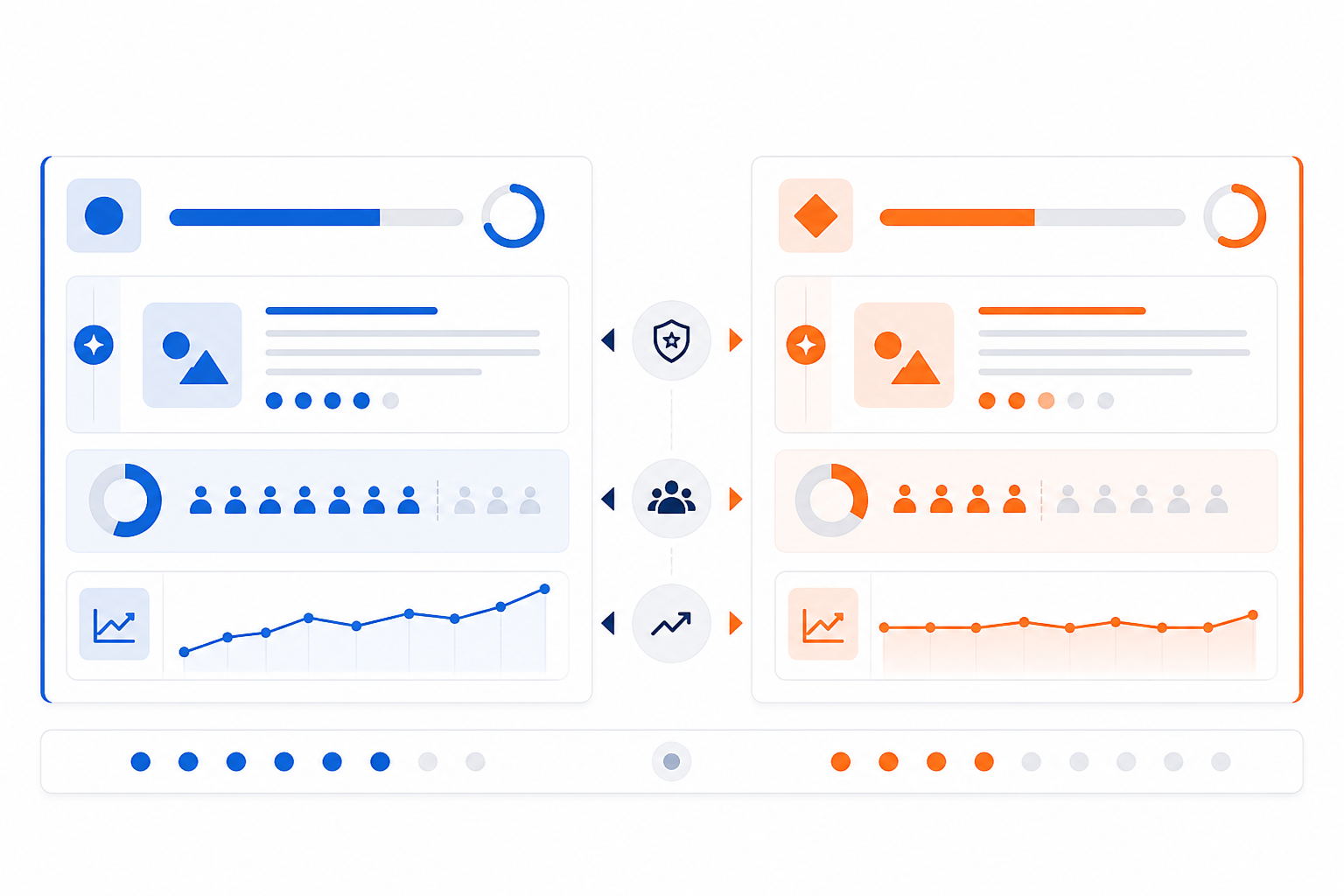
- Your current AI visibility: Headline: "Here's what AI assistants say about you right now." Evidence: actual screenshots of real AI responses to the client's top buyer-journey queries. Visual: side-by-side screenshots. Presenter note: this slide almost always creates the strongest reaction in the room.
- Where your competitors are winning: Headline: "They're being recommended. You're not." Evidence: comparable screenshots showing a named competitor favourably positioned. Visual: comparison table. Presenter note: handle this diplomatically, focusing on opportunity rather than alarm.
- What we'll track and report: Headline: "Here's exactly what you'll see every month." Evidence: a mock-up of the actual monthly report. Visual: sample dashboard. Presenter note: this is where you introduce the pricing tiers.
- The first 30 days: Headline: "Here's what we'll prove within one month." Evidence: the baseline-and-leading-indicator plan from the next section. Visual: simple timeline graphic. Presenter note: under-promise slightly here to over-deliver later.
- Next steps: Headline: "Let's get started." Evidence: a clear call to action with a specific start date and package recommendation. Visual: none needed. Presenter note: ask for the decision in the room rather than following up a week later.
How to Demonstrate AI Visibility Monitoring Value in 30 Days
I'm always careful about what I promise in the first month, because AI visibility monitoring is not a channel where dramatic movement happens overnight. Setting unrealistic expectations is one of the fastest ways to lose a client's trust in month two.
What I can realistically deliver within 30 days is a clean baseline: a documented snapshot of exactly how the client's brand appears, or fails to appear, across the agreed query set and platforms, alongside the same snapshot for two or three named competitors.
From that baseline, the leading indicators I track are:
- Query coverage: has the number of tracked queries where the brand appears at all increased?
- Sentiment shift: has the framing moved from neutral or absent to positive?
- Competitor gap movement: has the visibility gap between the client and its strongest competitor narrowed?
These are meaningful early signals of progress, but I'm explicit with clients that they are not the same as proven revenue impact. Establishing traffic or revenue impact typically requires a longer measurement window of three to six months, given how AI-referral attribution currently works in most analytics platforms.
What I cannot reliably promise within 30 days is a measurable increase in AI-referred traffic or conversions. The underlying platforms are still evolving quickly, and sample sizes at the 30-day mark are usually too small to draw a statistically sound conclusion. I'd rather set that expectation honestly upfront than have an awkward conversation about it later.
Frequently Asked Questions About AI Visibility Monitoring
How do I explain AI visibility monitoring to a non-technical client?
I describe it as tracking whether a brand is mentioned, recommended, and positioned positively when AI assistants such as ChatGPT or Google's AI Overviews answer questions relevant to that brand's industry, in much the same way SEO tracks visibility in traditional search results.
What should I charge for AI visibility monitoring?
Based on current UK market conditions, tiered pricing from roughly £150 to £800 per month tends to work, depending on platform coverage, query volume, and whether strategic recommendations are included. Your own tooling costs and margin requirements should ultimately set the final figure.
What objections should I expect from clients?
The most common objections are scepticism about whether customers use AI assistants at all, confusion about how this differs from existing SEO work, uncertainty about revenue attribution, and hesitation about whether it is too early to invest. Each is best answered with a live, evidence-based demonstration rather than a theoretical argument.
How do I demonstrate value in the first 30 days?
Focus on establishing a clear baseline and tracking leading indicators such as query coverage, sentiment shift, and competitor gap movement. Be transparent that proven traffic or revenue impact typically takes longer than a single month to establish with confidence.
Bringing It All Together
AI visibility monitoring is still an emerging service line, and I'd encourage any UK agency considering it to pitch it with the same rigour and honesty you'd want applied to any other performance channel you sell.
The evidence for growing AI-assisted research behaviour is real, even if it is not yet universal across every sector. The commercial argument, that a brand invisible to AI assistants is a brand missing from an increasing share of buyer research, holds up well under client scrutiny when it's backed by a live demonstration rather than a slide full of abstract statistics.
Start small, price AI visibility monitoring in tiers, prove value with a clean 30-day baseline, and let the client's own competitive gap do most of the persuading for you. 📊