What Is AI Visibility and Why It Matters for Your Brand (A Solo Founder's Guide)
Learn what AI visibility actually means, why ChatGPT and other AI engines are becoming a real discovery channel, and how to track your brand mentions
AI Visibility: How Solo Founders Can Monitor Brand Mentions in AI Search
AI visibility is the measurable degree to which your brand appears, gets cited, and gets recommended when people ask AI assistants like ChatGPT, Perplexity, or Gemini questions related to your industry. It matters because a growing share of purchase research now happens inside these chat interfaces rather than on a traditional search results page. If your brand doesn't show up in those answers, you're invisible to a customer who never even opens a browser tab to Google.
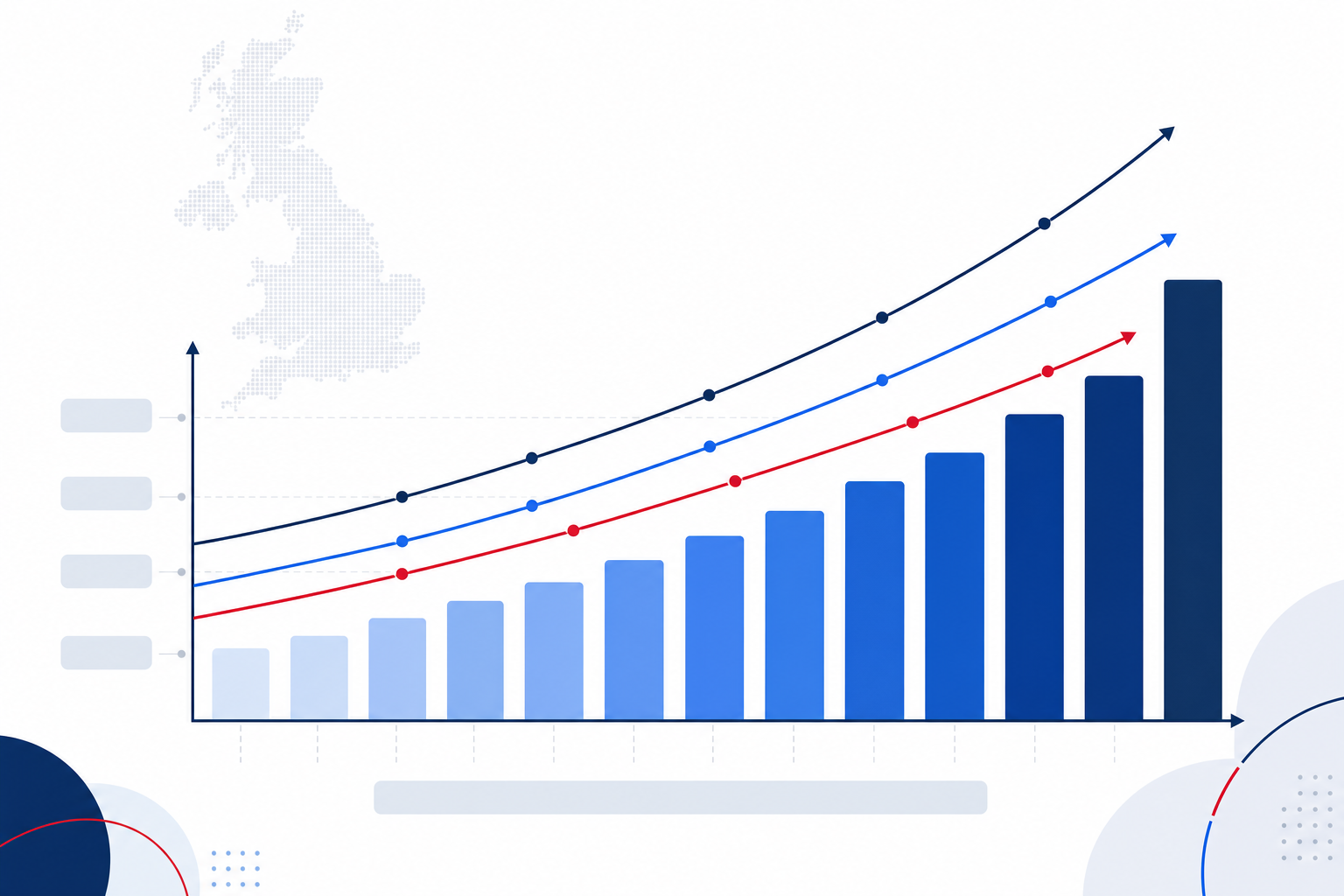
I want to be precise about why this matters right now, in 2025, rather than treating it as a speculative future concern. Gartner has forecast that traditional search engine volume will decline by 25% by 2026 as generative AI chatbots and virtual agents absorb a portion of queries that once went straight to a search box. Google itself confirmed in November 2024 that AI Overviews had expanded to more than 100 countries and territories and were reaching over a billion monthly users. That's not a niche behaviour confined to early adopters. It's becoming the default entry point for a meaningful slice of commercial research.
As a data analyst, I find the Adobe Analytics figures from the 2024 holiday season particularly telling: traffic referred from generative-AI sources to US retail websites grew by 1,300% year-on-year, and visitors arriving via those AI sources converted at a rate 9% higher than visitors from other channels. The volume is still small relative to organic search, but the trajectory and the purchase intent behind it are both unambiguous.
For solo founders, this creates a specific and slightly uncomfortable problem: you cannot manage what you cannot measure. Until recently, there's been no reliable way to measure how AI engines talk about your business without manually typing prompts into five different chat interfaces every day. That's the gap this guide is meant to close.
What Does AI Visibility Actually Mean for Your Brand?
I think the single biggest misconception founders bring to this topic is that AI visibility is a binary, either ChatGPT "knows about you" or it doesn't. In practice, it's a composite metric, and treating it as one is the only way to track it meaningfully over time. When we built MentionOwl's visibility score, we deliberately constructed it from four separate signals rather than a single yes/no check:
- Query coverage — the proportion of realistic customer questions in your category where your brand appears in the answer at all.
- Position-weighted citations — where you sit within the answer when you do appear. Being the first brand named and linked carries far more weight than being buried in a list of "other options."
- Share of voice — how often you appear relative to named competitors across the same set of questions.
- Sentiment — whether the tone attached to your mention is positive, neutral, or actively unfavourable.
This distinction between a soft mention and a genuine citation is one I'd urge every founder to internalise. A soft mention is something like "there are other providers in this space worth considering," with no name attached. It does little for you commercially. A position-weighted citation is your brand being named directly, ideally early in the response and with an accurate description of what you actually do. The two look similar at a glance but carry wildly different value, which is precisely why a single visibility score built from all four components is more useful than eyeballing a handful of chat transcripts.
It's also worth stressing that AI visibility isn't uniform across engines. ChatGPT, Claude, Gemini, Copilot, and Perplexity each use different retrieval and ranking mechanisms. OpenAI's own documentation on ChatGPT Search notes that answers draw on live web sources including news, shopping, and local information, a different retrieval pathway from, say, Perplexity's citation-first model. A brand can be prominently cited by one engine and entirely absent from another for what is functionally the same question. Tracking a 0–100 score across all five platforms, rather than fixating on ChatGPT alone, is the only way to get an honest read on where you stand.
![Diagram: A simple diagram showing four components feeding into a single 'AI Visibility Score' gauge from 0-100: query coverage, position-weighted citations, share of voice, and sentiment for What Is AI Visibility and Why It Matters for Your Brand(https://www.mentionowl.com/blog/sentiment-matters-why-ai-mentions-arent-enough-for-founders), minimal flat design with labelled arrows]
Why AI Search Engines Are Becoming a New Discovery Channel
The research here is consistent enough that I don't think founders can reasonably dismiss it as hype. OpenAI's October 2024 announcement of ChatGPT Search explicitly framed the product as a discovery tool spanning shopping, travel, and local recommendations, not merely a conversational novelty. Microsoft has positioned Copilot along similar lines, and Google's AI Overviews now sit above the organic results for a substantial share of commercial queries.
Academic researchers from Princeton, Georgia Tech, the Allen Institute for AI, and IIT Delhi coined the term generative engine optimization (GEO) in a 2023 study precisely because they recognised this was a distinct optimisation problem from classic SEO. Their benchmark experiments found that GEO-style techniques could improve visibility in generative answers by up to 40% in controlled settings.
Three structural shifts explain why AI search behaves so differently from the search results page founders have spent two decades learning to optimise for:
- Fewer clicks, more direct answers. When an AI engine synthesises a single response, the user often gets what they need without visiting any website at all. There's no guaranteed click, which means the old model of "rank well, earn the click, convert on-site" partially breaks down.
- Single-shot recommendations replace ranked lists. Instead of ten blue links, the user sees one answer, often naming two or three brands. If you're not one of them, you don't get a consolation prize at position eleven. You simply don't exist in that conversation.
- Synthesis draws from third parties, not just your homepage. AI engines lean heavily on review sites, comparison articles, forums, and independent publications when constructing an answer. Your own website copy is one input among many, and often not the most influential one.
This last point deserves emphasis because it's counterintuitive to founders who've spent years polishing their own site. Entity clarity (consistent naming, accurate pricing, clear product descriptions, and legitimate third-party corroboration) matters more for AI retrieval than beautifully written homepage copy that only your own visitors ever read. Founders who are actively pursuing GEO understand this and are placing content in the exact locations these engines pull from. Every month you're not tracking this is a month a competitor could be quietly building that advantage while you stay unaware it's happening.
How AI Visibility Differs From Traditional SEO Rankings
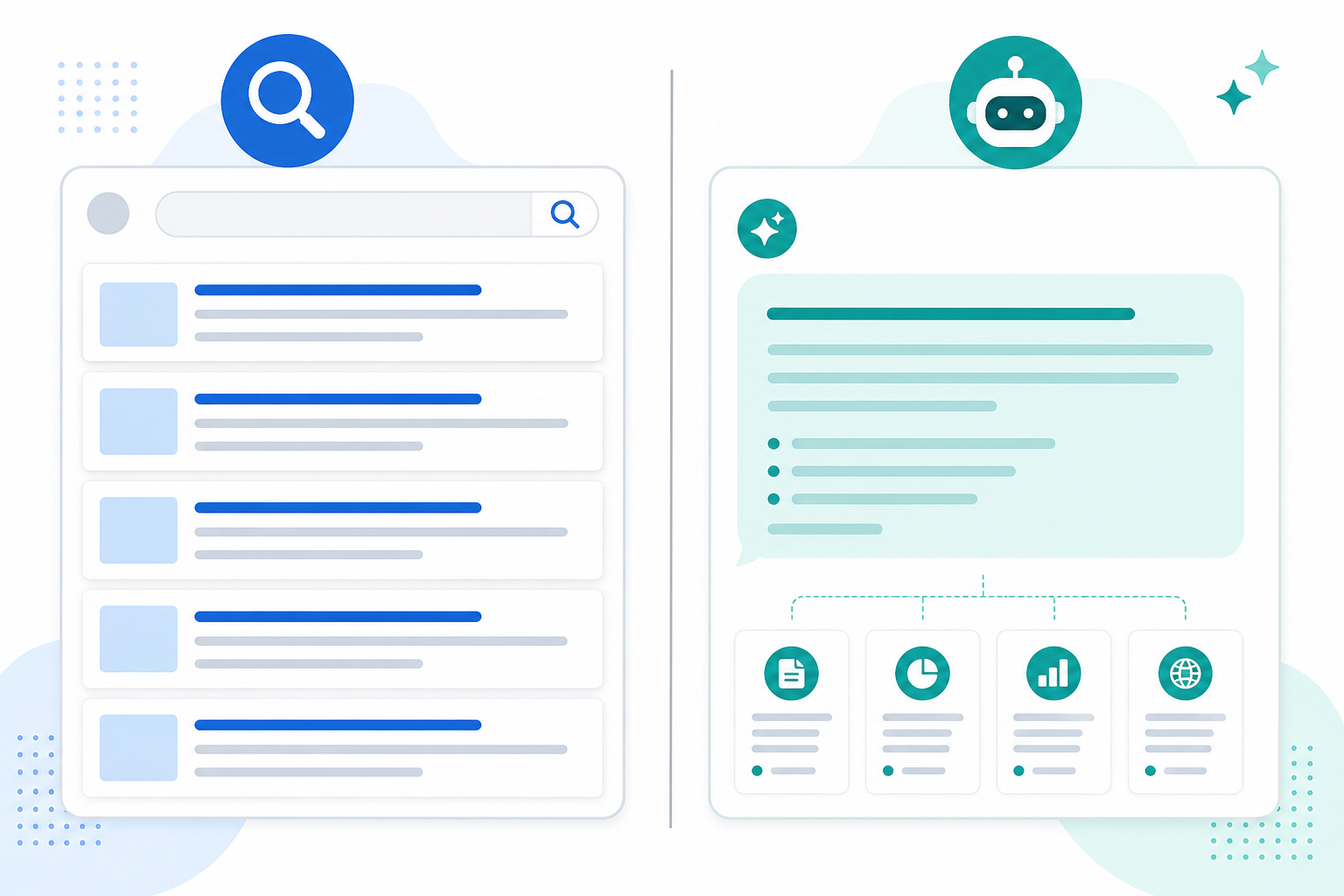
I think a side-by-side comparison makes the distinction clearer than any amount of prose, so here's how I'd frame it for a founder who's spent years thinking primarily in terms of Google rankings.
| Dimension | Traditional SEO | AI Visibility |
|---|---|---|
| Output format | Ranked list of ten-plus clickable links | Single synthesised answer, often naming two to three brands |
| Success metric | Position in search results, click-through rate | Inclusion in the answer, citation position, sentiment |
| Primary driver | Keywords, backlinks, domain authority | Structured content clarity, third-party corroboration, factual accuracy |
| Click guarantee | Reasonably strong for top three positions | None, the user may never visit your site at all |
| Volatility | Relatively stable, changes over weeks/months | Can shift with model updates, prompt phrasing, user location, and even time of day |
| Optimisation discipline | Search engine optimisation (SEO) | Generative engine optimization (GEO) |
The practical consequence is one I've seen trip up otherwise savvy founders: strong Google rankings do not guarantee strong ChatGPT citations, and the reverse is equally true. Your SEO investment isn't wasted. The Princeton-led GEO research and Google's own guidance on "helpful, reliable, people-first content" both confirm that clear, well-structured, evidence-backed content genuinely serves both disciplines at once.
But GEO and SEO aren't interchangeable. Founders who assume ranking well on Google automatically means they're being cited well by AI engines are operating on an untested assumption that, in my experience reviewing visibility data across dozens of small businesses, turns out to be wrong more often than it's right.
Signs Your Brand Might Be Invisible to AI Assistants
Before founders invest in fixing anything, they need a way to diagnose whether a problem exists at all. Based on the patterns we track across MentionOwl's client base, here are the warning signs worth checking for directly:
- ChatGPT names three competitors but never you. Even when you ask a branded query where your own company should logically be the answer.
- Basic facts are wrong or outdated. Pricing, features, or availability described inaccurately, which erodes trust the moment a prospective customer notices the discrepancy.
- You only receive vague soft mentions. Phrases like "there are several providers to consider" with no name attached, which as I outlined earlier carries almost no commercial value.
- Competitor tracking shows a consistent pattern. Rivals reliably outrank you in "best of" or "alternatives to" comparisons across multiple engines, not just one.
- Your site fails basic AI legibility checks. Unclear page structure, missing FAQ schema, and thin factual content that gives an AI model nothing confident to cite, even if it wanted to recommend you.
That last point is why we built a 16-point AI legibility audit into MentionOwl rather than treating monitoring as a standalone activity. Knowing you're invisible is only useful if you can also diagnose the technical and content reasons why.
How Solo Founders Can Monitor AI Mentions Today
Here's the sequence I'd recommend, based on what actually scales for a founder running a business single-handedly rather than a marketing team with headcount to spare.
- Manually test a handful of realistic buyer questions. Try phrasings like "best invoicing software for freelancers" or "alternatives to [competitor]" across ChatGPT, Claude, Gemini, and Perplexity to get an initial feel for where you stand.
- Recognise why this doesn't scale. AI answers shift with model updates, subtle changes in prompt wording, user location, and, as OpenAI's own documentation acknowledges, even the time of day. A single check tells you almost nothing reliable. It's one noisy data point, not a trend.
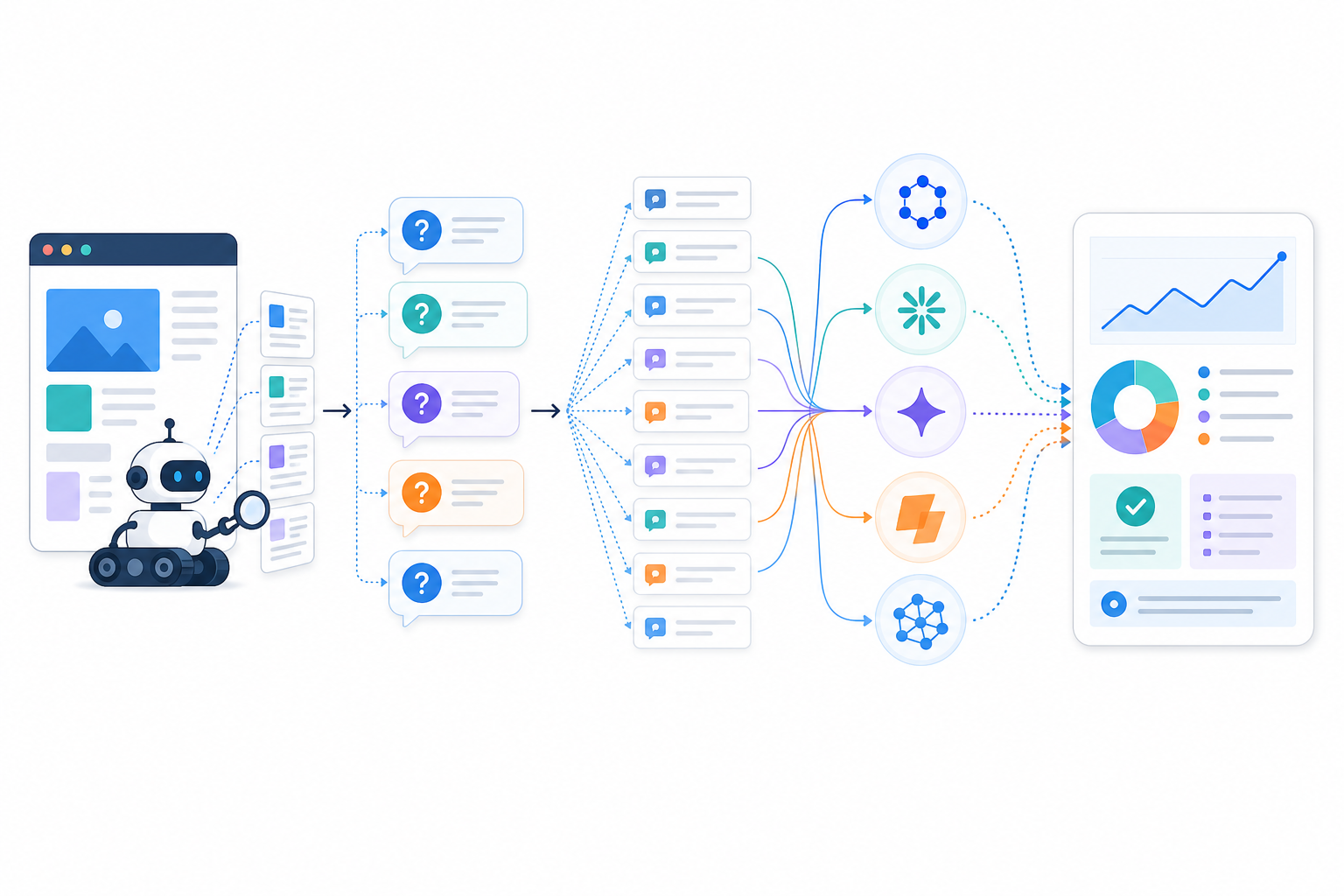
- Set up automated daily monitoring. This is the point where manual spot-checking becomes impractical for anyone running a business alone. MentionOwl crawls your website, auto-generates the realistic questions your actual customers would ask, and runs them daily against ChatGPT, Claude, Gemini, Copilot, and Perplexity.
- Track your visibility score and share of voice over weeks, not snapshots. A single good or bad answer means little; a declining trend over three weeks against a named competitor means a great deal.
- Run an AI legibility audit. Fix the structural and factual gaps, unclear page hierarchy, missing schema, outdated pricing, that stop AI engines from citing you with confidence even when they're aware you exist.
- Review weekly digests instead of checking chatbots yourself. This is the step that actually gives you time back. Instead of opening five tabs every morning, you get a compiled report of your visibility score, competitor positioning, and sentiment trend once a week.
Frequently Asked Questions About AI Visibility and Brand Monitoring
What does it mean for a brand to be visible in AI answers?
It means that when someone asks an AI assistant a question relevant to your industry, like "best invoicing software for freelancers," your brand actually appears in the response, ideally with an accurate, positive citation rather than being omitted entirely or mentioned vaguely without your name attached.
How do I know if ChatGPT even knows about my business?
The only reliable way is to test it directly, but a single check tells you almost nothing because answers vary by phrasing, model version, and even the day you ask. Automated monitoring that runs the same set of realistic buyer questions daily across multiple AI engines gives you a consistent, trustworthy picture instead of one noisy data point.
Is AI visibility different from ranking on Google?
Yes, meaningfully so. Google SEO is about earning a position in a ranked list of clickable links, whereas AI visibility is about being included, accurately and favourably, in a single synthesised answer with no guaranteed click at all. Strong Google rankings help but don't guarantee strong ChatGPT citations, which is why generative engine optimization is treated as a related but distinct discipline.
Can I track this without constantly asking chatbots myself?
Yes. Tools like MentionOwl automate the entire process by crawling your website, generating the kinds of questions real customers would ask, and running them daily against ChatGPT, Claude, Gemini, Copilot, and Perplexity. The results are then compiled into a visibility score, competitor comparison, and sentiment report so you're not manually typing prompts every morning.