A Guide to Managing Brand Reputation Across AI Search Platforms
Learn AI search reputation management for UK agencies: monitor, correct and prevent brand reputation issues across ChatGPT Gemini and Google AI Overviews.
AI Search Reputation Management: A Practical Workflow for UK Agencies
An actionable guide to monitoring, correcting, and preventing brand reputation problems in AI-generated answers — built for agencies extending existing online reputation management (ORM) and SEO retainers into ChatGPT, Gemini, Copilot, Perplexity, and Google AI Overviews.
Managing brand reputation across AI search platforms follows the same broad discipline as traditional online reputation management: monitor, detect, correct, and prevent. The difference is the surface. Instead of managing a page of search results or individual reviews, agencies are monitoring answers generated by large language models.
I've found that agencies that treat AI search reputation management as a standing retainer line item, rather than a one-off audit, are more likely to identify an inaccurate citation, stale pricing claim, or unfavourable competitor comparison before a client notices a change in lead numbers. That's a defensible operational benefit, not a guarantee — I want to be upfront that I don't have controlled data proving this catches problems “weeks” before every client would notice on their own. What I can say is that monitoring surfaces changes in AI answers well before they would typically appear in conventional analytics, because there is currently no dashboard most businesses check for this by default.
The workflow below covers detection, correction, and prevention. It provides a practical operating structure agencies can adapt into a client retainer, including how UK agencies might price and package AI search reputation management services.
Why Brand Reputation Management Now Extends to AI Answers
The scale of the shift is worth grounding in actual numbers, with the caveats those numbers deserve. Pew Research Center's survey work in early 2024 found that a meaningful share of US adults had tried ChatGPT, with a notable proportion of those users saying they had used it specifically to research a topic. Gartner has separately forecast that traditional search engine volume could fall by as much as 25% by 2026 as more queries move to AI chatbots and assistants — but it is important to be clear that this is a forecast, not an observed decline, and Gartner has revised search-related predictions before as the market evolved.
Both data points are US-centric. I have not seen an equivalent, methodologically comparable UK study on AI assistant adoption, so if you are reporting this to a UK client, it is worth stating explicitly that the evidence base is American and the UK picture may develop at a different pace. This is particularly relevant given different search engine market shares: Google remains dominant in the UK, while Bing's integration with Copilot and Microsoft 365 gives it a foothold in UK business software that it does not have to the same degree in the US.
Whatever the precise UK trajectory turns out to be, the direction is clear: a growing share of research that once happened across a page of links now takes place inside a single generated answer. For agencies, that means AI search visibility and brand reputation are becoming connected parts of the same client strategy.
What Makes AI Search Reputation Management Different?
The core challenge for agencies running ORM programmes is structural, not cosmetic. It is also not uniform across platforms. Treating ChatGPT, Gemini, Copilot, Perplexity, and Google AI Overviews as one undifferentiated channel is itself a mistake worth avoiding.
A traditional search result is a link you can act on. You can build a case for why it should rank higher, request its removal under specific policies, or outrank it with fresher, more authoritative content. Traditional ORM also includes tools beyond links, such as review platform dispute processes, Google Business Profile edits, PR-driven suppression, and, in some cases, legal or platform-policy routes. It is therefore more accurate to describe traditional ORM as a system with multiple formal correction mechanisms, not purely a link-ranking exercise.
AI answers work differently, and those differences affect what agencies can promise clients:
- ChatGPT without browsing enabled draws on its training data, which has a knowledge cutoff. However, OpenAI updates and retrains models periodically, so a “fixed cutoff” is not permanently fixed; it simply is not live.
- Perplexity and Copilot are retrieval-based by default, actively searching the live web and citing sources. These visible links can often be inspected, which is a meaningful difference from a model working purely from training data.
- Google AI Overviews sit inside Google Search itself, summarising web sources with citations that are often visible and clickable, even if users click them infrequently.
- Gemini can operate in both modes depending on the context and whether browsing tools are invoked.
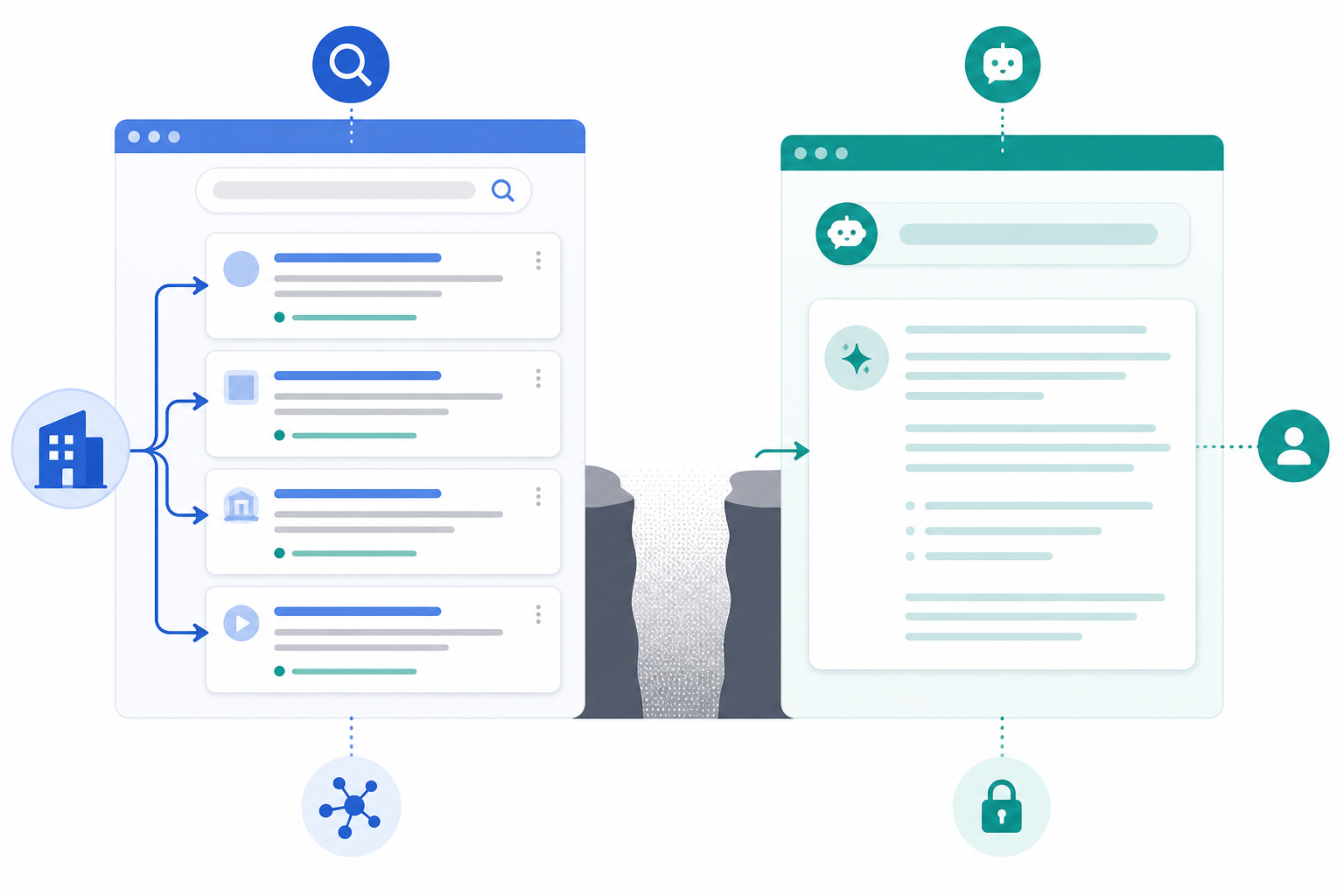
The common thread is not that “no links exist” — several of these systems do show citations. The common thread is that there is no universal dispute form or formal “report this answer” workflow with guaranteed resolution. There is also no way to directly edit the generated synthesis in the same way you might request the removal or correction of a review. With AI search reputation management, you are influencing inputs rather than editing outputs.
There is a separate, genuinely under-appreciated point about how people behave once an AI answer appears. Pew's March 2025 analysis of Google Search specifically found that when an AI summary appeared on the results page, users clicked through to a traditional search result in only about 8% of visits, versus roughly 15% when no summary appeared. Users clicked a link inside the AI summary itself in just 1% of visits.
That is a real, measured behaviour change, but it is specific to Google AI Overviews inside Google Search. It would be unwise to assume identical click patterns on ChatGPT, Perplexity, or Copilot, which have different interfaces and user intents. The Google data supports a hypothesis, not a proven fact across every AI search platform: for at least one major AI search surface, summary text may be doing more of the persuasive work than the underlying source page. Agencies should measure this by platform rather than assume it generalises to standalone AI assistants.
There is also a compounding risk that traditional ORM teams may not be used to considering: retrieval lag and prompt variability. A model can resurface a client's retired pricing page or a complaint resolved eighteen months ago and present it as current, particularly if that old page still carries stronger backlink authority than the client's updated content.
Separately, the same question asked with slightly different wording, from a different location, or in a different session can produce a different answer. Model outputs are not fully reproducible in the way a Google ranking position is, which has direct implications for how you document evidence of a problem.
Google's own guidance on AI features in Search states that AI Overviews use a customised model layered on standard web systems and that the feature can produce inaccurate results. In other words, Google itself acknowledges that these systems are not infallible.
The practical takeaway is that AI search reputation management deserves its own monitoring cadence, correction playbook, and client reporting language. It should sit alongside — not be folded silently into — existing SEO and ORM workstreams.
How Outdated or Inaccurate Facts Enter AI-Generated Answers
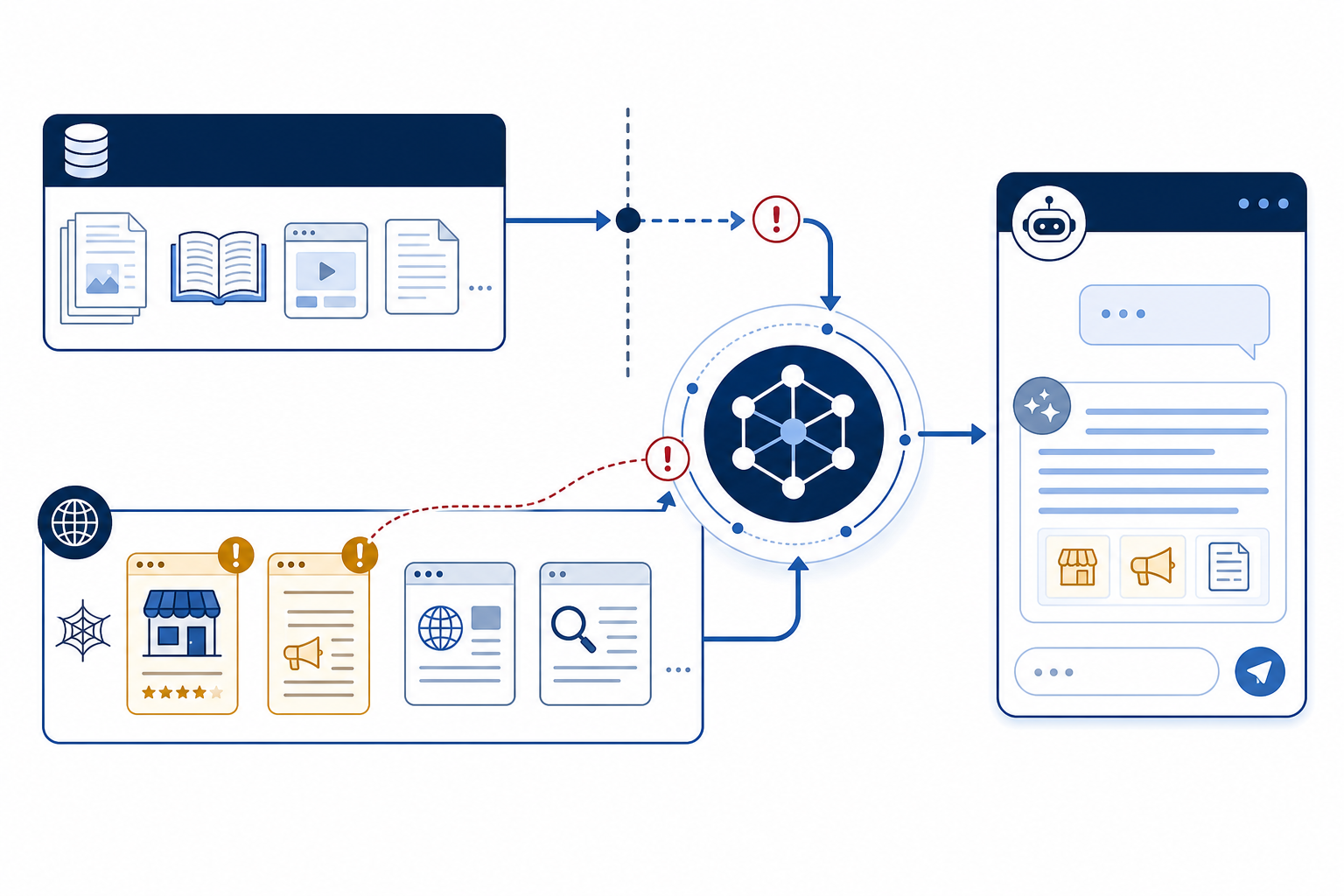
Before fixing a problematic AI answer, it helps to understand where the inaccuracy entered the pipeline. Across the accounts I've reviewed, the failure points cluster into a handful of repeatable patterns:
- Training data cutoffs. Anything that changed after a model's last training run — new leadership, revised pricing, or a resolved dispute — may not be reflected until retraining or a live retrieval layer bridges the gap.
- Retrieval weighting favouring established authority over new accuracy. Retrieval-based platforms pull from live sources but tend to weight domain age, backlinks, and historical citation count over a client's recently updated FAQ or pricing page. A five-year-old third-party review site can outrank content published last month.
- Thin or missing structured content pushing models towards third-party sources. When a client's own site does not clearly answer a question in text a model can parse, the gap may be filled by directories, forums, or outdated press releases — none of which the brand controls.
- Competitor content being cited as “neutral”. A comparison article written by a rival and framed as objective can answer a question clearly enough for a model to treat it as trustworthy, even when the framing disadvantages your client.
- Entity ambiguity. Similar company names, legacy brand names, franchisees, or executives with common names can cause a model to blend facts from entirely different organisations into one answer.
- Prompt wording and model variability. The exact phrasing of a question, the user's apparent location, session history, and model version can all change the result. This is why a single screenshot of a bad answer is not proof of a systemic problem — you need to reproduce it.
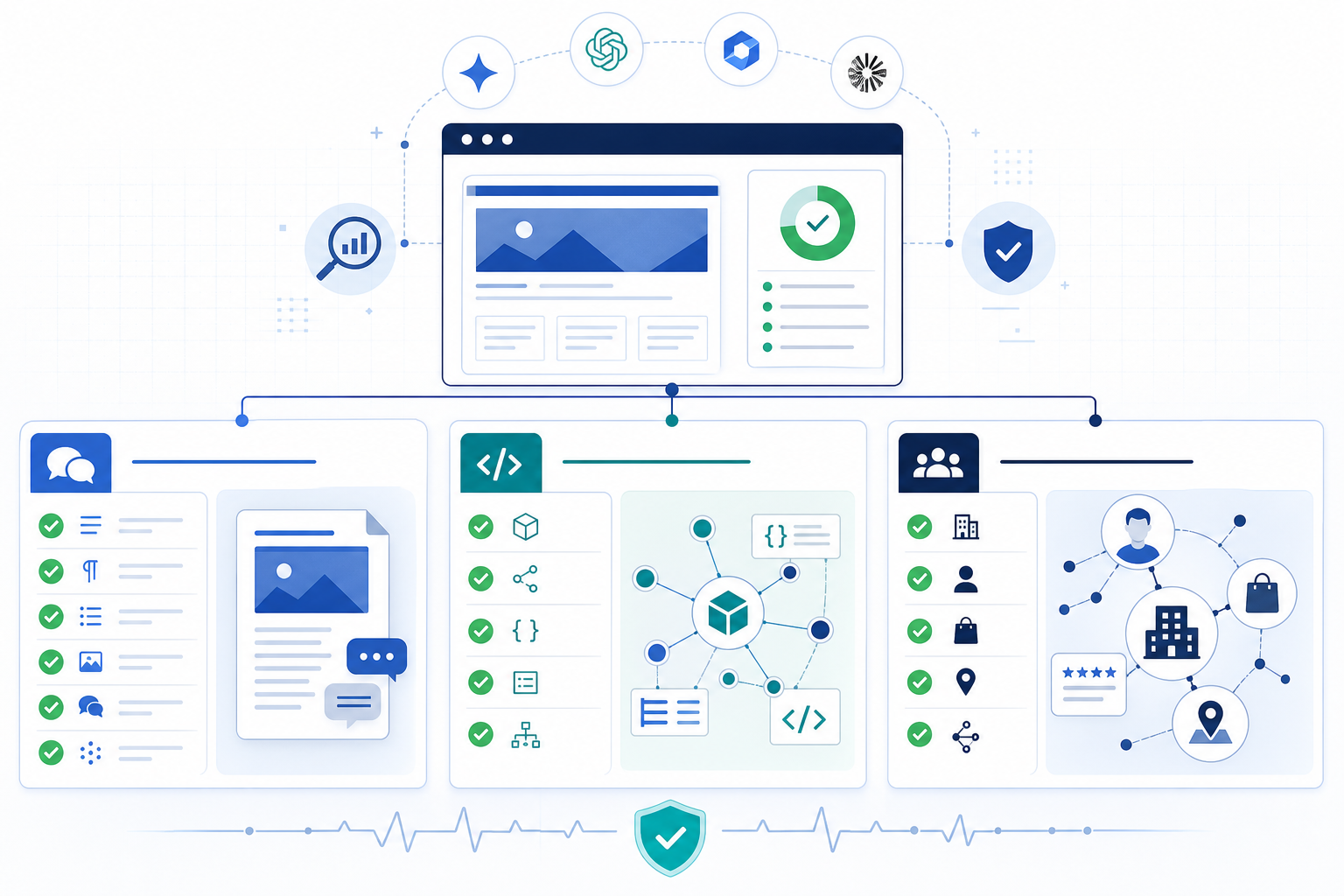
An AI legibility audit — checking for missing schema, ambiguous entity data, and thin service descriptions — is one useful way to find where a site is failing to provide AI systems with accurate information before those gaps are filled elsewhere. This can be done manually with a structured checklist or through specialist tooling. MentionOwl is one tool that runs a standard set of technical checks for this purpose, and I will flag it again briefly later, but the underlying audit logic works regardless of which tool runs it.
How to Detect Inaccurate or Outdated AI Mentions
Detection is where many agencies currently fall short, largely because tools built for traditional ORM — rank trackers and review monitoring dashboards — were not designed to query conversational AI systems. Here is the sequence I would build into an AI search reputation management retainer. It works whether you assemble the process from spreadsheets and manual queries or use a dedicated platform:
- Establish a baseline by running a fixed set of real customer questions against ChatGPT, Claude, Gemini, Copilot, and Perplexity for each client. Record the answer, date, and platform. This is your comparison point, not a one-time snapshot.
- Use real customer questions, not only branded queries. “Best marketing agency Manchester” surfaces different reputation risks from “Is [client] legit?”, and both matter for a UK client base.
- Re-run the same questions regularly — weekly at minimum for higher-risk clients. AI answers can shift with source updates faster than Google rankings typically do, and a monthly check can miss a two-week window in which a damaging answer was live. Note the date and exact query wording each time, because reproducibility matters here in a way it does not for a stable search ranking.
- Track sentiment per mention, not just presence or absence. “More expensive than competitors” may be technically accurate and still cost leads if it is repeated across every relevant query.
- Monitor competitor mentions in the same answer sets. Share-of-voice erosion on comparison-style queries often appears before a direct reputation hit.
A simple way to structure this without expensive tooling is a shared tracking sheet with these columns:
| Query | Platform | Date checked | Claim made | Sentiment | Source cited | Accuracy status | Severity | Owner | Action | Recheck date |
|---|
For severity, I would use a simple four-tier scale so account managers can triage consistently:
- Critical — safety, legal, or materially false claims, such as a discontinued product presented as available or a false regulatory claim.
- High — incorrect pricing, service availability, or contact details that directly affect purchase decisions.
- Medium — outdated but non-critical descriptions, such as an old office address or former partnership.
- Low — wording or emphasis issues that do not misstate a fact.
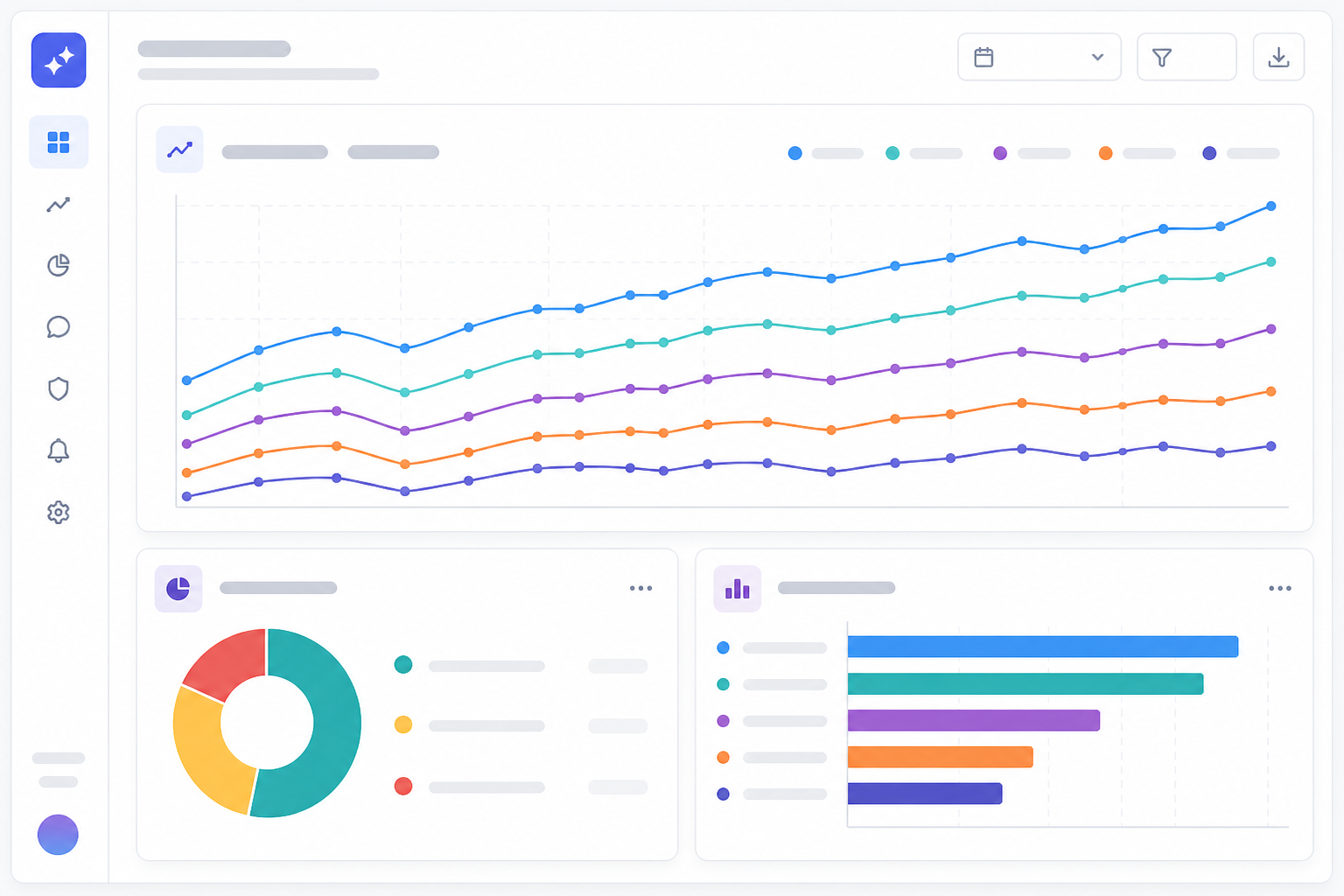
Rolling this into a single visibility score — something like a 0–100 figure combining query coverage, citation position, and share of voice — makes trend reporting easier. However, any score is only as trustworthy as its published methodology. If you are using a vendor tool that offers a proprietary score, MentionOwl's is one example built from query coverage, position-weighted citations, share of voice, and sentiment. Ask for the weighting logic before presenting it to a client as a defensible metric, or build a simpler transparent version using the table above.
How to Correct the Record Across AI Search Platforms
The first thing to tell a client is that you cannot directly edit what ChatGPT or Gemini says in the same way you might request a Google review removal or update a Google Business Profile listing. There is no universal dispute form for a model's output. Setting that expectation early changes how success is measured and reported, and protects the agency from over-promising.
A practical correction sequence, roughly in priority order, is:
- Identify and prioritise issues using the severity scale above. Critical and high-severity issues require immediate attention; low-severity wording issues can enter a routine content update cycle.
- Confirm reproducibility. Run the same query at least three times, ideally from different accounts or sessions, before treating a single bad answer as a systemic issue rather than a one-off variance.
- Correct the cited source directly, where one exists. If a directory listing, forum thread, or outdated press release is the source cited by a retrieval-based platform, outreach to correct or update that source is often the highest-leverage action available.
- Publish clear, current, structured first-party content — including updated FAQs, schema-marked pricing pages, and explicit corrections of outdated claims — on pages the retrieval layer can parse. This improves the odds of being cited accurately; it does not guarantee it. Agencies should be honest with clients that there is no confirmed mechanism guaranteeing propagation speed or outcome.
- Request recrawls where the platform supports them, and check that the client's own site is submitting updated sitemaps promptly.
- Escalate genuinely harmful cases. If an AI answer makes a defamatory, materially false, or safety-related claim, the issue may move beyond a content and SEO fix into a legal or platform-policy conversation. Most major AI providers have some form of feedback or reporting channel for harmful content. For UK clients, this may also intersect with ICO data protection considerations if personal data is involved. Know when to bring in legal counsel rather than trying to “content-market” your way out of a defamation-adjacent problem.
- Re-run monitoring after every correction pass to confirm that the answer changed, and log the before-and-after results with dates.
- Document platform-specific turnaround expectations for client reporting. Retrieval-based platforms may reflect a source correction within days to a few weeks, while a model relying purely on a training snapshot may not reflect a change until its next retraining or update cycle. Avoid promising a specific timeline you cannot control.
Preventing AI Reputation Issues Before They Surface
Detection and correction matter, but the most cost-effective work happens upstream. Agencies can reduce avoidable problems by:
- Running an AI legibility audit at the start of the relationship. Missing schema, ambiguous entity information, and unclear product naming create the gaps that models may fill with guesses or third-party sources.
- Keeping pricing, service, and leadership information current on the pages most likely to be retrieved. Treat this as ongoing maintenance rather than a one-off fix.
- Tracking competitor share of voice on comparison-style queries so you notice a rival gaining ground before it becomes a client-facing problem.
- Using short, regular digests to catch sentiment shifts early rather than discovering an issue at a quarterly review once the damage has compounded.
- Being realistic about AI traffic analytics. Most AI assistant interactions will not produce an attributable visit in the same way as a search click. There is often no referral data, and “dark traffic” — direct or unattributed visits following an AI recommendation — is common. Where a platform does pass referral data or supports UTM tagging, use it, but do not build a client report that implies more measurement precision than currently exists. Server-side analytics can help fill some gaps, but full attribution for AI-driven traffic is not yet standard.
AI Search Reputation Management vs Traditional ORM and Google Reviews
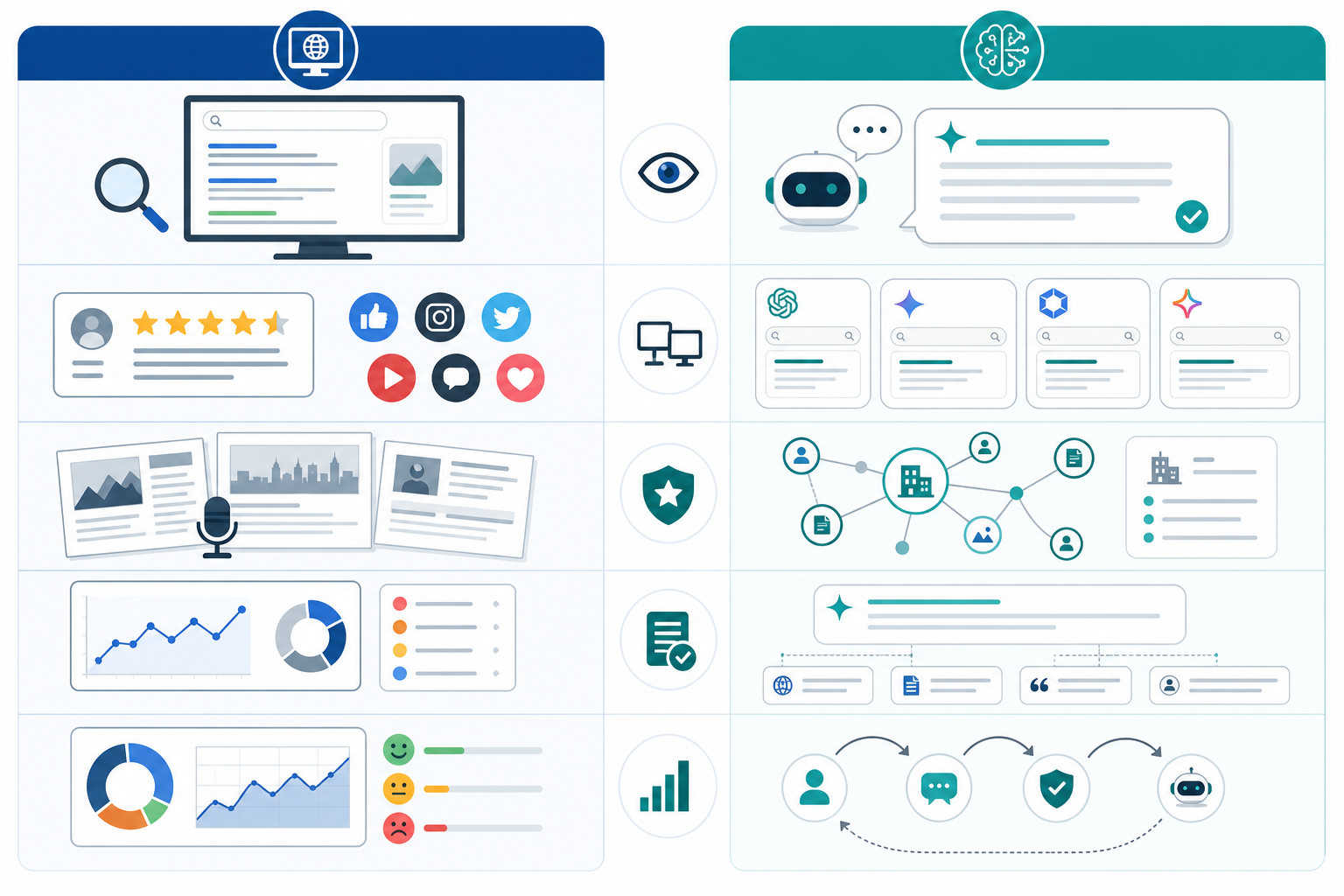
| Dimension | Traditional ORM | AI Search Reputation Management |
|---|---|---|
| Correction mechanism | Formal dispute routes exist for some channels, including review removal requests, right of reply, and platform policy reports | No formal dispute process for model output; correction happens indirectly through source content and, in serious cases, legal or platform escalation |
| Stability | Search rankings and published reviews are relatively stable once resolved | Answers are generated per query and can vary between platforms, sessions, and even identical prompts |
| Source structure | Often a single identifiable source, such as a review, listicle, or profile | Synthesised from multiple sources at once; one answer may blend accurate and outdated information |
| Monitoring tools | Built around search rank trackers and review platform dashboards | Requires LLM-specific monitoring: repeated querying, citation tracking, per-platform sentiment, and share of voice |
| Crisis visibility | Often immediate and visible, such as a bad review or news story | Can be silent for weeks until a client asks why an AI assistant said something specific about them |
How to Add AI Search Reputation Management to Client Retainers
Once the workflow above is running, the commercial case is straightforward. The following recommendations can help UK agencies package AI search reputation management alongside existing SEO and online reputation services:
Position it as a distinct line item alongside existing SEO and social reputation services. Ongoing monitoring, correction outreach, and reporting represent real hours that should not be absorbed for free.
Structure a tiered offering based on scope, not only price:
- Foundation (roughly £250–£450/month): weekly automated query checks across 3–5 platforms, a monthly sentiment summary, and no active correction work.
- Standard (roughly £600–£950/month): the above plus quarterly legibility audits, competitor share-of-voice tracking, and a defined number of correction-outreach hours per month.
- Managed (roughly £1,200+/month): daily monitoring on priority queries, unlimited severity triage, active correction campaigns, and escalation support for legal or regulatory cases.
Treat these as illustrative starting points to adapt to your client base and local market conditions, not fixed pricing.
Use a short weekly or fortnightly digest as a built-in touchpoint, giving account managers a low-effort, recurring way to demonstrate value.
Bring competitor share-of-voice data into quarterly business reviews as evidence of relative reputation strength, not just absolute performance.
Start new clients on a short trial period to gather baseline data before committing to the full retainer scope. Several monitoring tools, including MentionOwl, offer low-cost short trials for this purpose.
Pull data into existing reporting dashboards where your tooling supports API access, rather than asking clients to check another standalone platform.
Frequently Asked Questions About AI Search Reputation Management
Can I actually correct what an AI says about a client?
Not directly on most platforms. There is no equivalent of a review removal request or search console disavow tool for LLM output. What you can do is influence the sources a model retrieves from: publish clear, current, well-structured content on the client's own site, correct third-party listings and directories that are being cited, and monitor to confirm that the answer changes afterwards.
It is an indirect process and tends to move faster on retrieval-based platforms such as Perplexity or Copilot than on models relying purely on a training snapshot. For genuinely harmful or false claims, escalation through a platform's feedback channel or legal advice may be necessary rather than relying on content fixes alone.
How do outdated facts get into AI answers?
There are several possible causes: training data cutoffs, where a model has not seen anything after a certain date; retrieval weighting, where a live-search model favours older, higher-authority pages over a client's more recent updates; thin structured content on the client's own site, which pushes the model towards third-party sources; and prompt or session variability, where slightly different wording produces a different answer.
Any one of these can be the culprit, which is why reproducing an issue before acting on it matters.
How is AI reputation management different from managing Google reviews?
Google reviews and most traditional ORM channels have formal dispute or correction mechanisms and relatively stable outputs once resolved. AI answers are regenerated per query, synthesised from multiple sources at once, and have no formal correction process. You are influencing inputs rather than editing an output directly.
It is also a quieter problem: a bad review is visible immediately, while reputation drift inside AI answers can go unnoticed for weeks unless someone is actively checking.
What tools help detect reputation issues across AI search platforms?
At minimum, you need a repeatable way to run real customer queries against several AI platforms on a regular schedule and log the answer, source, sentiment, and competitor mentions. This can be done manually with a shared spreadsheet for a small client roster.
The approach becomes difficult to scale once you manage more than a handful of accounts. That is where dedicated monitoring platforms can help. MentionOwl is one option built specifically for this, automating query generation and rolling results into a trend-trackable score. It is worth evaluating any tool against the operating table and severity framework outlined above rather than adopting a vendor's score without understanding what feeds it.
Final Takeaway: Make AI Search Reputation Monitoring an Ongoing Process
AI-generated answers are becoming an important part of how customers research brands, products, and services. For agencies, this creates a new reputation surface alongside Google Search, reviews, social media, and traditional PR.
The most practical approach is not to promise control over every AI answer. Instead, build a repeatable workflow: establish a baseline, monitor real customer questions, verify problematic claims, correct the sources, publish clear first-party information, and report changes with appropriate caveats.
By treating AI search reputation management as an ongoing service rather than a one-off audit, UK agencies can extend their existing ORM and SEO expertise into the AI answer layer without compromising accuracy or client trust.