How AI Answer Engines Are Reshaping SaaS Buyer Journeys (And Where You're Getting Skipped)
A data-driven look at how ChatGPT, Perplexity, and Gemini are inserting themselves into SaaS research funnels—and what UK SaaS and DTC brands need to
AI Answer Engines and the SaaS Buyer Journey: A Guide to Generative Engine Optimization
AI answer engines like ChatGPT, Perplexity, and Gemini aren't a novelty in SaaS research anymore. Increasingly, they're the first stop, compressing what used to be a multi-touch funnel of blog posts, review sites, and comparison pages into a single conversational answer. If your brand isn't showing up, cited, or favourably positioned in these responses, you're being filtered out before a prospect ever reaches your website. Traditional SEO or review-site strategies alone won't fix that. Winning here means understanding exactly where in the buyer journey AI intervenes, then optimising your content so it gets pulled into those answers.
I want to walk through this methodically, because most marketing teams I talk to genuinely underestimate the scale of this shift. This isn't a marginal channel change. It's a structural rewiring of how SaaS and DTC buyers move from "I have a problem" to "I've picked a vendor," and the data behind it is now substantial enough that treating it as speculative would be a mistake.
The traditional SaaS research funnel, and why it's breaking down
For the better part of two decades, the SaaS buyer journey followed a fairly predictable shape. Awareness came from blog content and organic search rankings. Consideration happened on comparison pages, category round-ups, and review platforms like G2 and Capterra, where a prospect might consult anywhere from five to ten distinct sources before narrowing a shortlist (a pattern Gartner has documented well in its B2B buying-complexity research). Decision-stage activity involved demos, trials, and sales conversations, each one a fresh data point a marketing or revenue team could track in a CRM.
Critically, this entire model assumed a human being manually clicking from a search results page to a vendor site, reading gated content, comparing browser tabs, and gradually surfacing as a lead somewhere in the funnel. Every stage produced a session, a form fill, or a trackable event. That assumption is now breaking down, and the numbers show it clearly. Gartner has predicted that traditional search engine volume will drop by 25% by 2026 as users shift toward AI chatbots and virtual agents. Separate analysis from SparkToro and Datos found that 58.5% of Google searches in the US, and 59.7% in the EU, ended without a single outbound click in 2024. On mobile, that zero-click figure climbed to 77.2%. Ahrefs, looking specifically at AI Overviews, found their presence associated with roughly a 34.5% drop in click-through rate for the top-ranking organic result.
What these numbers tell me, taken together, is that the linear funnel was already under strain before generative AI showed up. AI answer engines have simply accelerated a trend zero-click search had already started. The buyer hasn't disappeared. They've just stopped generating the click-based evidence trail our analytics stacks were built to capture.
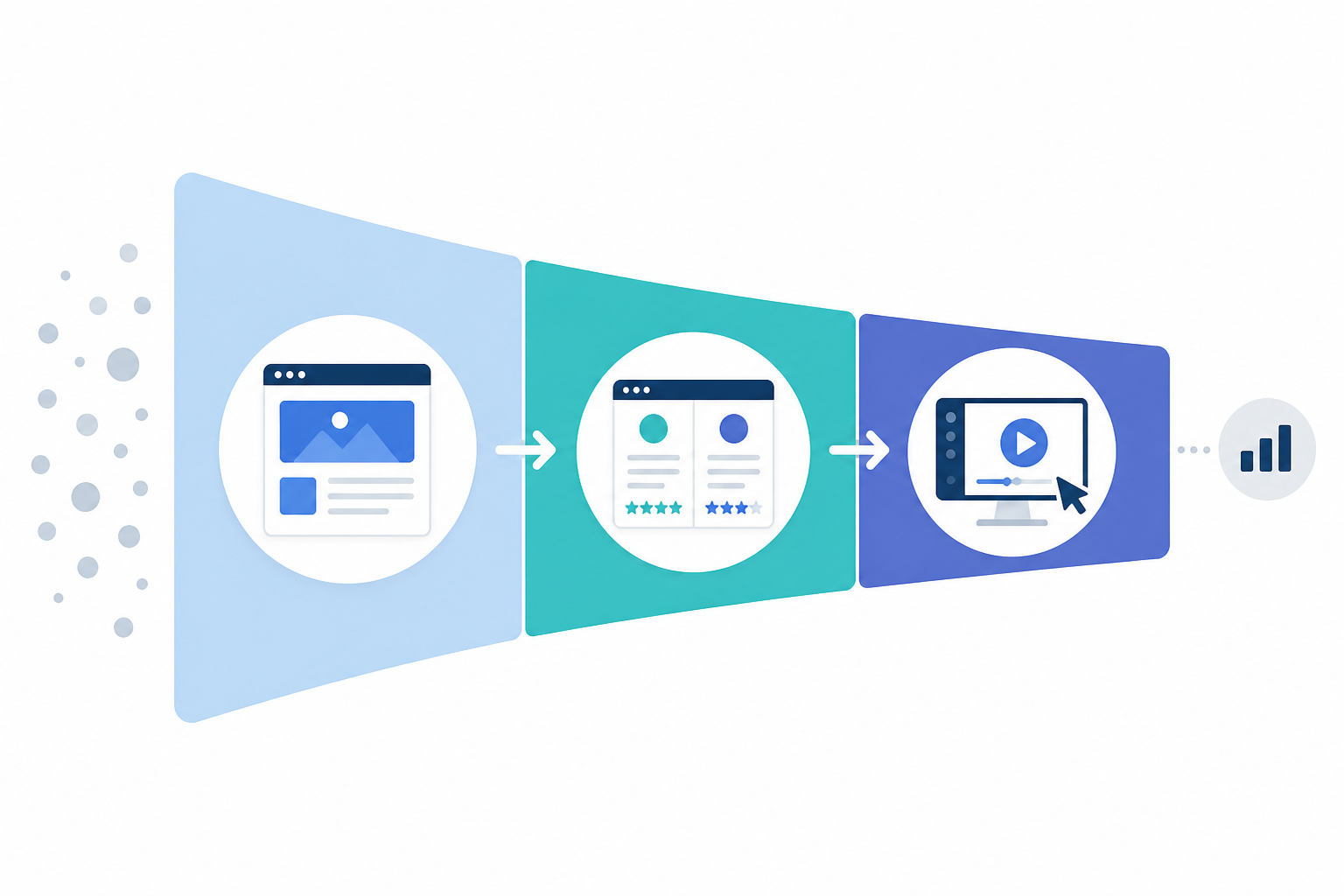
Where AI answer engines now intervene in the buyer journey
Rather than replacing one stage of the funnel, AI answer engines are inserting themselves at multiple points at once, which is part of why the effect feels so disorienting for teams trying to diagnose where they're losing prospects. Based on how these platforms currently behave, here's how I'd break the intervention points down:
- Early-stage category queries get answered directly. A question like "what's the best project management tool for a 10-person agency" no longer reliably triggers a Google search followed by ten blue links. ChatGPT Search, Perplexity, and Google's AI Overviews will synthesise an answer on the spot, often naming three or four tools with brief justifications.
- AI engines fold review sites, Reddit threads, and comparison articles into one recommendation. Instead of a buyer reading a G2 category page and a Reddit thread separately, the AI engine has effectively already read both and distilled them into a single paragraph, deciding for the buyer which points from each source are worth surfacing.
- Mid-funnel "X vs Y" comparisons increasingly get resolved inside the chat window. Instead of visiting a vendor's dedicated comparison landing page (content teams have spent years optimising these), buyers ask the AI engine directly and get a comparison built from whatever sources the model can retrieve and trust.
- Zero-click research is becoming the norm, not the exception. A prospect can build an entire shortlist, understand relative pricing, and identify a frontrunner without visiting a single vendor website. That means the "first touch" in your analytics may not occur until far later in their actual decision process, if it occurs at all.
Adobe Analytics recorded a 1,200% increase in generative-AI-referred traffic to US retail sites between February and July 2024. That figure comes from retail rather than SaaS, but it's a useful proxy for how fast this behaviour is scaling. McKinsey's early-2024 survey found that 65% of organisations were already using generative AI regularly in at least one business function, nearly double the share from the prior survey. That tells me the buyers on the other end of your funnel are increasingly comfortable using these tools for exactly this kind of research.
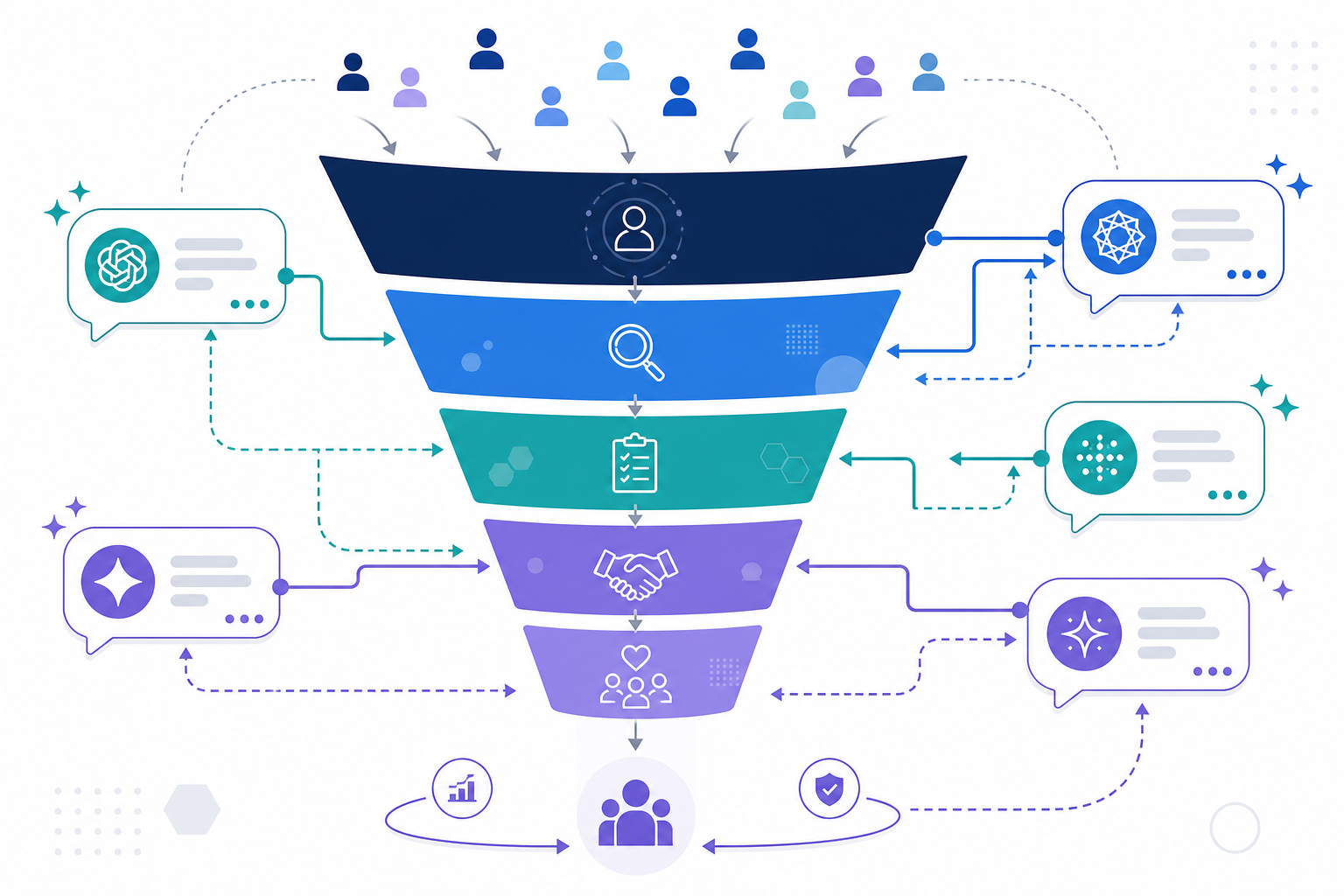
How AI answer engines are changing top-of-funnel discovery
The practical consequence of all this is that discovery isn't primarily a keyword-matching exercise anymore. It's a citation and retrieval exercise. Ranking first on a Google results page still matters, but it matters less than being one of the three or four brands an AI model chooses to name when synthesising an answer, because that's the shortlist the buyer actually sees. Share of voice inside AI-generated answers is becoming a more meaningful competitive metric than page-one search rankings, and I think marketing teams that haven't started measuring it yet have a genuine blind spot.
This is also where AI legibility starts to matter as much as conventional on-page SEO. In practical terms, AI legibility refers to how easily a language model's crawler or retrieval system can parse your site's structure, extract clear entity signals about who you are and what you do, and verify specific claims like pricing, integrations, or security certifications. A page that reads beautifully to a human but buries its core facts inside JavaScript-rendered components or vague marketing language gives an AI system very little to work with. It will simply cite a competitor whose documentation is cleaner.
This is the practical territory generative engine optimization (GEO) occupies. It's not a replacement for SEO. It's a complementary discipline that treats being retrieved, understood, and cited by AI systems as a distinct and measurable goal, separate from but overlapping with ranking in traditional search. Research from Princeton, Georgia Tech, the Allen Institute for AI, and IIT Delhi on generative engine optimization found that specific content techniques (adding relevant statistics, direct quotations, and more authoritative phrasing) improved visibility in generative-engine responses by as much as 40% in their experimental testing, though results varied considerably by domain and method. That's not a guaranteed uplift for every brand, but it's strong evidence that content structure and evidentiary weight genuinely influence whether a model chooses to cite you.
Do AI answer engines replace review sites like G2 and Capterra?
No, and I want to be precise about this because I see brands drawing the wrong conclusion. Review platforms remain important as source material. AI answer engines frequently pull directly from G2, Capterra, and Reddit when constructing their answers, which means your review profile is still one of the inputs the model weighs. What's changed is the buyer's direct relationship with those platforms. Fewer prospects land on a G2 category page and read twenty reviews themselves; more of them get a summarised version of that same sentiment filtered through an AI intermediary.
The implication is that maintaining strong reviews, responding to feedback, and keeping your category pages accurate on third-party platforms is still necessary groundwork, but it's no longer enough on its own. You now need visibility at two removes: the reviews need to be strong, and the AI systems summarising those reviews need to represent them accurately and favourably when they cite you.
Risks of being skipped by AI-assisted buyers
This is where the commercial risk gets concrete rather than theoretical. I'd name three distinct failure modes:
- Invisible funnel drop-off. If a prospect asks an AI engine for recommendations, never sees your brand named, and never clicks through, you have no record of that interaction anywhere in your analytics stack. You don't just lose the deal, you lose the ability to even know it existed.
- Competitor bias risk. If a competitor is cited more often, or described more favourably, the AI engine has effectively pre-selected a shortlist that excludes you before the buyer has done any independent research of their own.
- Sentiment risk. Even when you are mentioned, outdated or negative sentiment embedded in an AI answer can quietly hurt your conversion odds before a demo is ever booked. Because the buyer never articulates this bias back to you, it's genuinely hard to detect through conventional feedback loops.
The reason standard web analytics can't catch any of this comes down to structure: AI-referred discovery is largely cookieless, citation-based, and doesn't generate the referral headers your analytics platform is built to parse. You're essentially trying to measure a channel using instruments that weren't designed to see it.
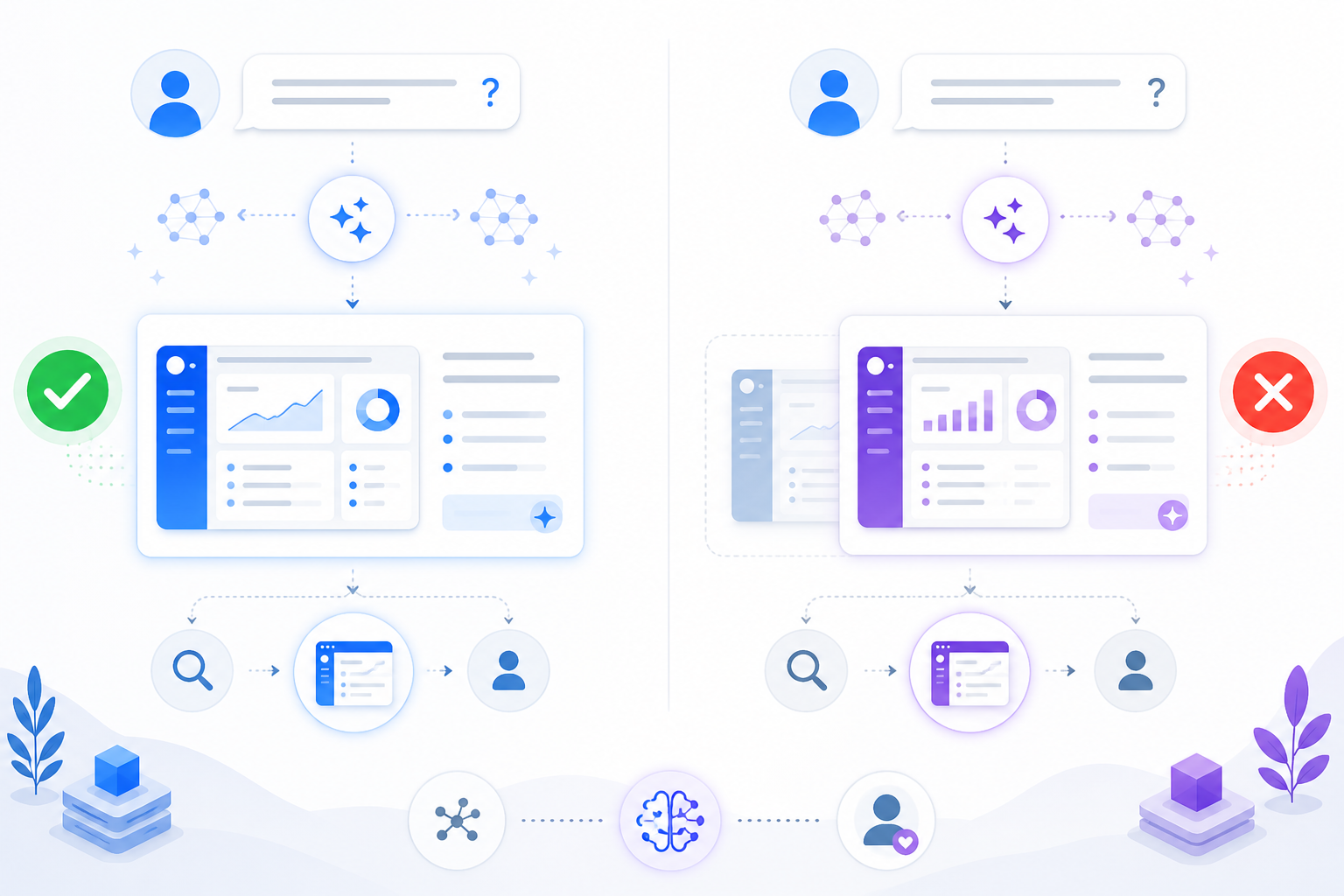
How do I know if I'm being skipped in AI-assisted research?
The good news is that this is measurable, provided you're willing to be systematic about it. Here's the process I'd recommend:
- Query the major AI platforms directly with the realistic questions your buyers would ask. ChatGPT, Claude, Gemini, Copilot, and Perplexity should all be included, since each retrieves and weighs sources differently.
- Track whether you're mentioned, in what position, and alongside which competitors. Position matters here in a way that mirrors search rankings; being named first in a synthesised answer carries more weight than being an afterthought in the fourth sentence.
- Check sentiment and factual accuracy, not just presence. Being mentioned inaccurately or with outdated pricing can be worse than not being mentioned at all.
- Repeat this consistently over time. AI answers shift week to week as models update and retrieval sources change, which is exactly why manual spot-checks eventually become unsustainable at scale. This is the gap a dedicated AI visibility score and daily LLM monitoring is built to close. At MentionOwl, we run this as an automated daily process across all five major engines, scoring visibility from 0-100 based on query coverage, position-weighted citations, and share of voice, so teams aren't relying on someone remembering to check ChatGPT once a quarter.
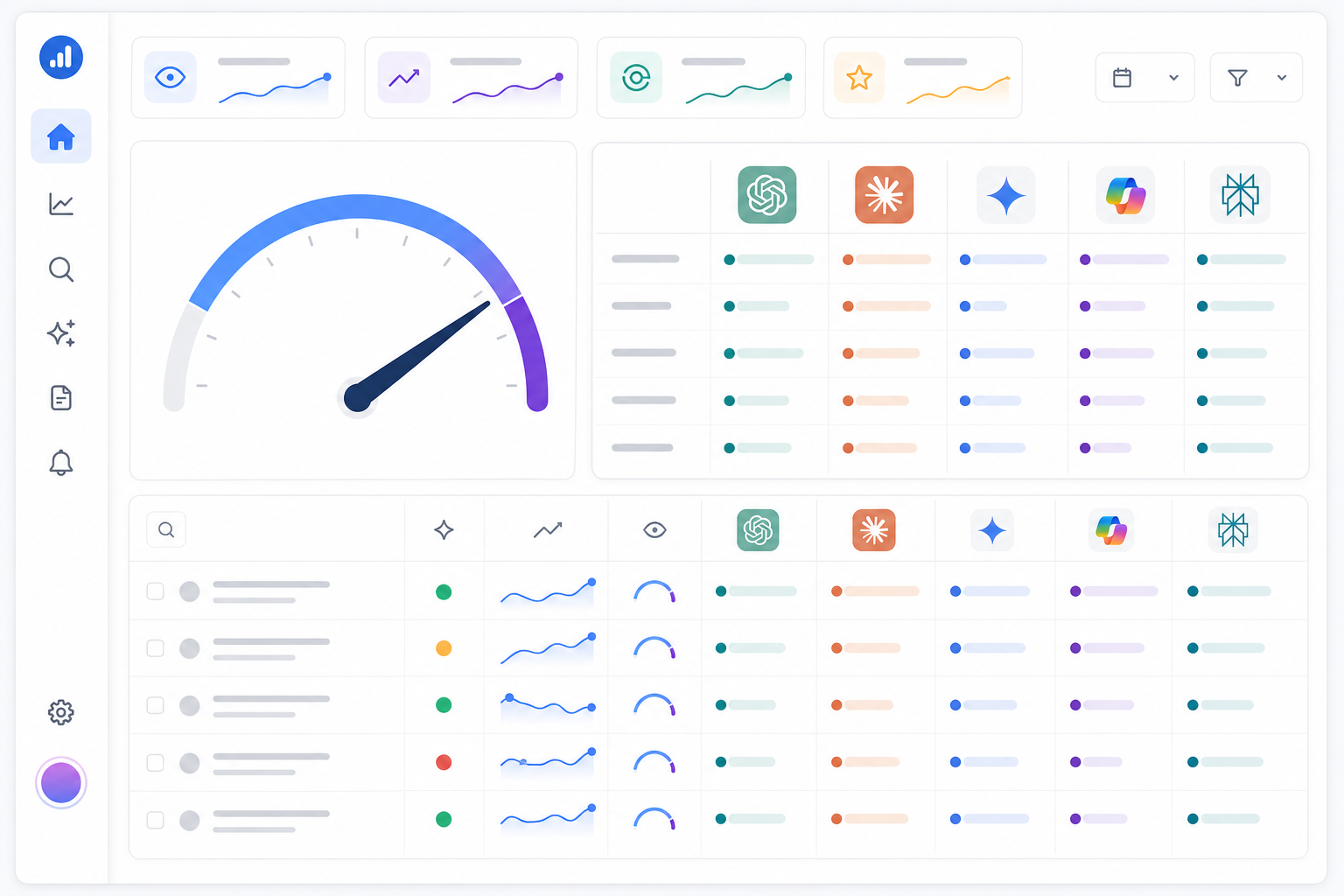
What content works best for AI-assisted discovery?
From what we're seeing across client accounts, and what the underlying GEO research supports, a few content traits consistently line up with stronger AI citation:
- Clear, structured comparison and "best for" content that an AI model can extract cleanly, rather than prose that requires inference to identify the actual recommendation.
- Direct, factual answers to specific buyer questions, like pricing ranges, plan limits, integrations, security posture, rather than vague positioning language that reads well but verifies nothing.
- Technical AI legibility improvements, including clean structured data, crawlable HTML rather than JavaScript-locked content, and unambiguous entity signals that tell a model exactly who you are and what category you compete in.
- Consistency and freshness across your entire footprint, your own site, your review platform presence, and third-party mentions, since AI models appear to weight agreement across sources when deciding what to trust and cite.
How to adapt your SaaS funnel and content strategy
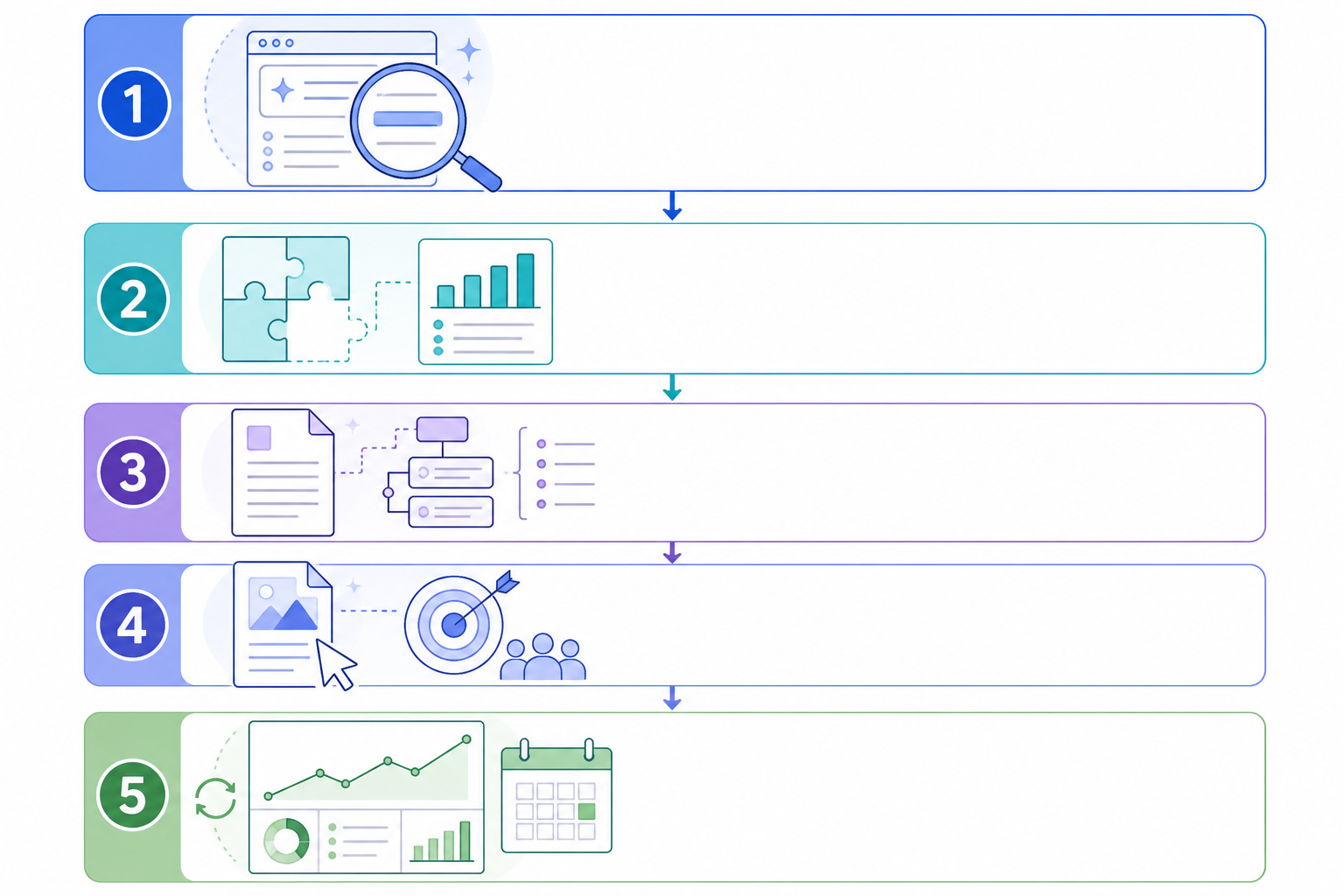
Putting this together, here's a five-step process I'd suggest for any SaaS or DTC team looking to adapt deliberately rather than reactively:
- Audit your current AI visibility score and query coverage across the major engines before changing anything, so you have a genuine baseline rather than a guess.
- Identify content gaps where competitors are cited and you aren't, using competitor tracking to prioritise which gaps carry the most commercial weight.
- Run an AI legibility audit to find and fix the technical barriers that prevent AI crawlers from accurately parsing your site. MentionOwl's audit covers 16 specific checks.
- Build content that directly answers the questions your prospects are actually asking AI assistants, rather than the questions you assume they're asking based on old keyword research.
- Monitor weekly, not as a one-off project. Generative engine optimization is an ongoing discipline because model behaviour, retrieval sources, and competitor positioning all shift continuously. Treat this as a single sprint and you'll be accurately measured for exactly one month before the data goes stale.
FAQ: AI answer engines and generative engine optimization
At what stage of buying do people actually use AI assistants?
Based on what we're seeing across client accounts, AI answer engines get used earliest at the awareness and shortlist-building stage, when someone types something like "best project management tool for a 10-person agency" rather than a branded query. But usage doesn't stop there. Buyers increasingly return to AI tools mid-funnel to resolve direct comparisons ("X vs Y") before ever visiting a vendor site or booking a demo, which means AI influence now spans nearly the entire pre-purchase research phase, not just the top of the funnel.
Does this replace review sites like G2 and Capterra?
No, but it changes their role. AI engines frequently pull from G2, Capterra, and Reddit as source material for their answers, so those platforms remain important inputs into what the AI eventually says. What's changed is that buyers increasingly interact with a summarised version of that information via ChatGPT or Perplexity rather than visiting the review site directly. Your review profile still matters, but it's no longer the final word buyers see.
How do I know if I'm being skipped in AI-assisted research?
The most reliable way is to systematically query the major AI platforms with the exact questions your buyers would ask, then track whether you appear, where you rank relative to competitors, and how favourably you're described. Doing this manually is time-consuming and inconsistent, which is exactly the gap tools built for daily LLM monitoring and AI visibility scoring are designed to close, turning a one-off spot check into an ongoing, measurable process.
What content works best at this new discovery stage?
Structured, specific, and factually clear content tends to perform best: think direct comparison pages, "best for X use case" breakdowns, and pages that answer real buyer questions plainly rather than burying the answer in marketing language. Pair that with strong AI legibility (clean structured data and crawlable pages) and you give AI models the clearest possible signal to cite you accurately when a relevant question comes in.